
Photographing the Invisible: Revealing Emotion Through the Image
Photographing the Invisible: Revealing Emotion Through the Image
Photographing the Invisible
The Art of Revealing What the Eye Does Not Always See
There are images that show. And then there are images that suggest.
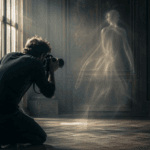
Photography has never been only the art of capturing what stands in front of the lens. It is also, and perhaps above all, the art of revealing what escapes the immediate gaze: a tension, an absence, a memory, a fragility, a silent emotion. To photograph the invisible is to give shape to what cannot be touched. It is to transform a sensation into an image.
In a world saturated with spectacular, perfect, instantly readable photographs, the invisible becomes a precious territory. It forces the photographer to slow down. To observe differently. To stop looking only for a beautiful subject and begin searching for a presence. An atmosphere. A feeling.
What We Do Not See, But Feel
A great photograph does not always say everything. It leaves room for mystery. It opens a door without imposing an answer.
The invisible can be found everywhere: in a gaze turned away, in a hand resting on a table, in an empty room, in light crossing a curtain, in a silhouette walking away. It does not need to be spectacular. On the contrary, it is often discreet. Almost fragile.
To photograph the invisible is to understand that emotion is not always found in action, but sometimes in waiting. In the silence between two gestures. In what happens just before, or what remains after.
A person standing alone by a window does not only speak of solitude. The image may evoke hope, absence, memory, or the desire to be elsewhere. The photograph then becomes larger than its subject.
Photography as an Inner Language
Every photographer has a unique way of seeing the world. Two people can photograph the same place, the same face, the same light, and create two completely different images. Why? Because the camera does not capture only reality. It also captures intention.
The invisible often begins with this intention.
What do we want the viewer to feel? What do we want to suggest? What emotion should remain after the first glance?
A powerful photograph is not simply looked at. It stays with us. It continues to act after we have seen it. It returns to memory like a sentence we have not fully understood, but that continues to follow us.
That is where its strength lies.
Light as the Material of the Invisible
Light is one of the greatest tools for photographing what cannot easily be named. Harsh light can create tension. Soft light can suggest tenderness, nostalgia, or intimacy. A shadow can hide as much as it reveals. A backlight can transform a body into a silhouette, erasing details to preserve only the essential. Light is not only used to illuminate. It is used to write. In an image, an area of darkness can sometimes be more expressive than a perfectly visible face. Blur can say more than sharpness. Underexposure can create a feeling of secrecy. Overexposure can evoke dreams, disappearance, or memory. Photographing the invisible therefore requires accepting that not everything needs to be shown. Sometimes, certain things must be left in the shadows.
Absence as a Subject
One of photography’s most beautiful paradoxes is its ability to make absence visible. An empty chair. An unmade bed. A street after the rain. A dress hanging in silence. A half-open door. These elements can speak of a disappeared presence, a passage, a story we sense without fully knowing it. Absence gives the viewer an active role. They imagine. They complete. They project their own emotion into the image. This is why silent photographs can be so powerful. They do not give everything away. They leave space for interpretation. An image that is too explicit can sometimes close too quickly. An image that suggests continues to live.
The Body, the Gesture, the Detail
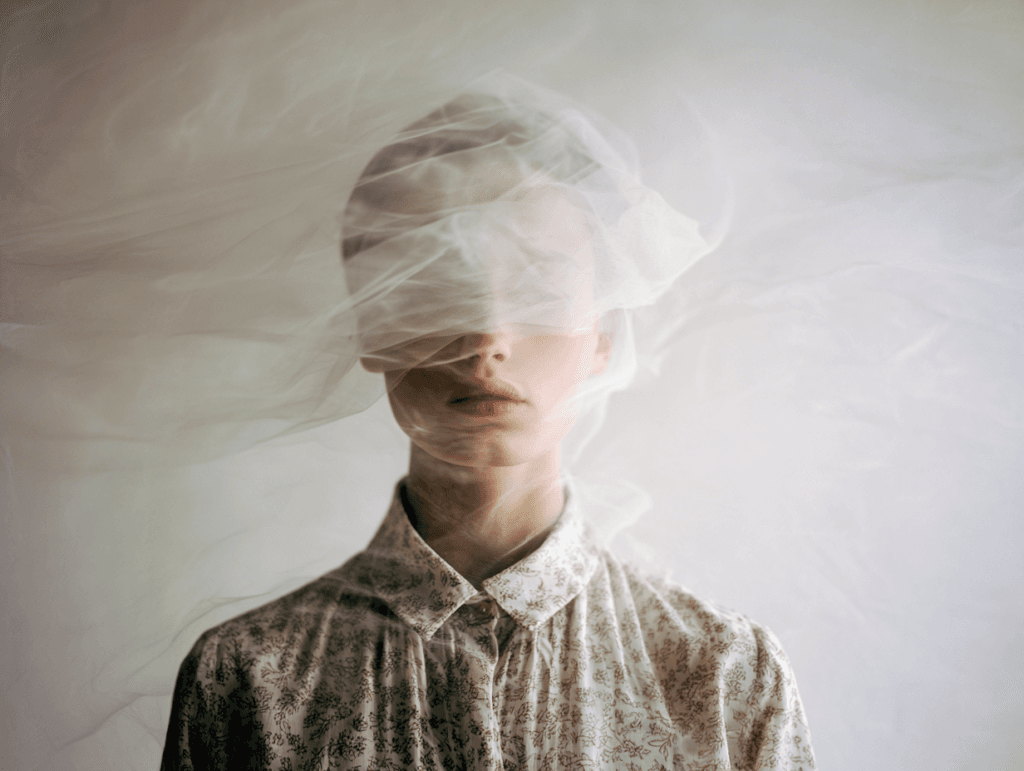
Photographing the invisible does not mean photographing emptiness. It can also pass through the body. A turned back, a neck, tense fingers, a slightly lowered shoulder, a partially hidden face: these discreet signs can reveal an inner state. The detail becomes essential. The purpose is no longer simply to show a person, but to reveal an emotion through them. In fashion, portrait, or beauty photography, this approach can transform an aesthetic image into a profound one. Clothing, makeup, pose, and setting are no longer only decorative. They become elements of a more intimate visual language. The viewer no longer only looks at an image. They feel a presence.
Silence in the Image
Some photographs are loud, created to immediately attract attention. Others are silent. They ask for time. Visual silence can come from empty space, a minimal composition, a soft color palette, an isolated subject, or a lost gaze. This silence is not weakness. It is strength. It allows emotion to exist without being forced. In a photography competition, this subtlety can make all the difference. An image does not need to shout to impress a jury. It needs to be true. Sincere. Inhabited.
The Invisible as an Artistic Signature
The most memorable photographers are not always those who show the most. They are often those who know how to create a universe. A universe is not built only with locations, models, or techniques. It is built with sensitivity. With a way of feeling light. With a way of framing the world. With loyalty to certain emotions. To photograph the invisible is, in the end, to photograph one’s own perception of reality. This is where artistic signature begins. When a photographer manages to make us feel melancholy, grace, strangeness, solitude, freedom, or desire without ever naming them, they go beyond simple representation. They enter the territory of art.
For Photographers: How to Approach the Invisible
Before pressing the shutter, it may be useful to ask one simple question: what do I want this image to make people feel? Not only: what am I going to photograph? But: what emotion should pass through this image? Then, everything becomes a choice: light, framing, distance, color, movement, sharpness, shadow, setting, silence. A strong image does not always come from great technical means. It can come from intuition. From a fragile instant. From special attention to what others do not notice. To look better is already to photograph differently.
Photographing the invisible means accepting that photography is not only proof of reality, but an interpretation of the world. It means searching for what trembles behind appearances. What remains between the lines. What is not said, but what the image can make us feel. In this pursuit, the photographer becomes more than an observer. They become a messenger of emotions. They reveal the intimate, the fragile, the secret. And sometimes, in a simple light, in a lost gaze, in an empty space, they manage to show what no one had seen before.
Gil Zetbase




Comments are closed.