
Helmut Newton, the Riviera as a Theatre of Desire
Helmut Newton, the Riviera as a Theatre of Desire
Helmut Newton the Riviera as a Theatre of Desire
Helmut Newton never merely photographed fashion. He staged it as a territory of power, provocation, mystery and elegance. Born Helmut Neustädter in Berlin in 1920, he grew up in a Europe on the edge of catastrophe. After training with the photographer Yva, he fled Nazi Germany in 1938, passed through Singapore and arrived in Australia in 1940, where he served in the army before becoming an Australian citizen. It was there that he met June Brunell, an actress, muse, accomplice and later a photographer under the name Alice Springs. They married in 1948 and became one of the most remarkable couples in the history of photography.
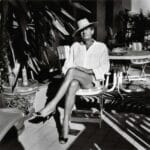
In Newton’s private life, June was essential. She was not simply the photographer’s wife; she was his parallel eye, his mirror, and sometimes his silent editor. In 1970, when Helmut fell ill, she replaced him on an advertising assignment and began her own photographic career as Alice Springs. Together they shared a vision of the world that was lucid, ironic, sophisticated and free. In their life, art, fashion, friendship, desire and daily ritual seemed to belong to the same visual universe.
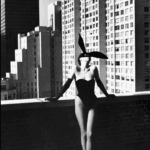
Paris was Newton’s great stage for many years. He worked for Vogue, Elle, Harper’s Bazaar and developed a signature that became instantly recognizable: powerful women, sculptural silhouettes, high heels, hard light, cold sensuality and dangerous elegance. His photographs were not designed to reassure. They disturbed, fascinated and questioned the codes of fashion and desire. Newton created a world in which women appeared both as subjects and enigmas, dominant and unreachable, fashion icons and cinematic characters.
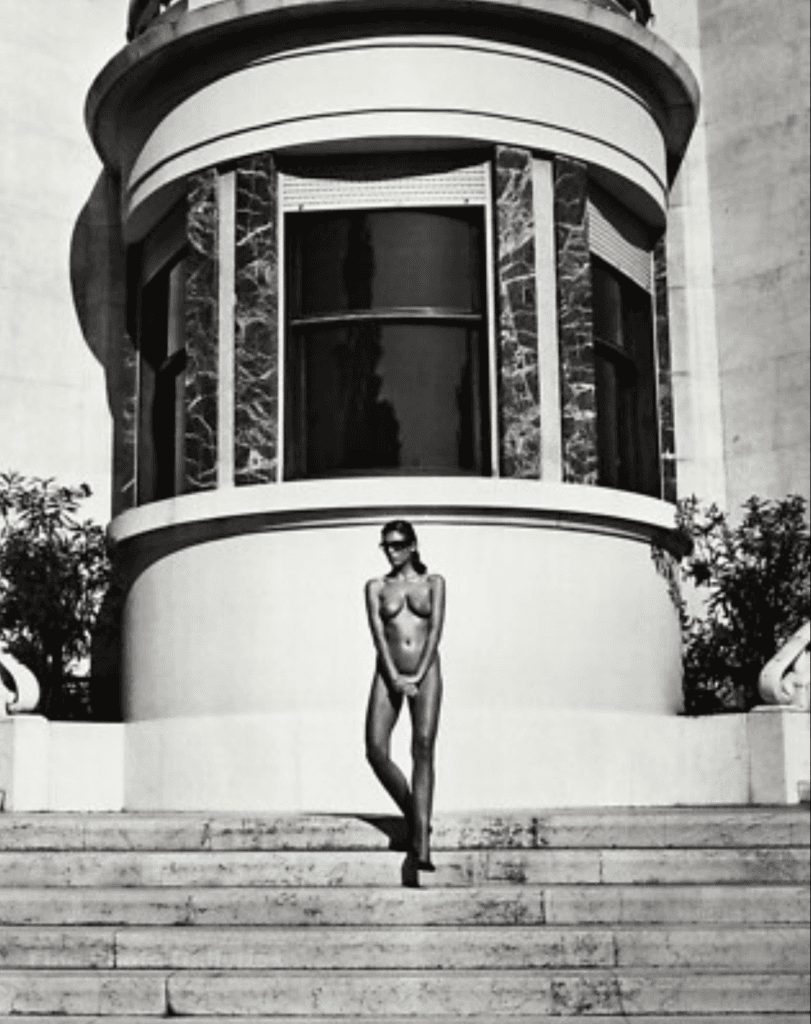
Yet it was on the Riviera that his work found another rhythm. As early as 1964, Helmut and June bought a small stone house near Ramatuelle, in the Var, not far from Saint-Tropez. The house became their summer retreat, but also a creative space. Far from the Paris studios, Newton photographed the dry light of the South, nudity, fashion, bodies and landscapes with a more intimate sense of freedom. The Helmut Newton Foundation notes that the Ramatuelle house was also a working place, where he produced black-and-white images for Vogue US and color photographs for a Pentax calendar.
Ramatuelle was more than a private address. It was a state of mind. The vineyards, the heat, the dust, the proximity of Saint-Tropez and the shade of the pine trees offered Newton the perfect contrast to the artificial world of luxury. In that house, the Riviera became more raw, more sensual, less social. One can imagine June, visiting friends, artists, slow afternoons, suspended evenings, and Newton already observing how a damaged façade, a tree, a white wall or a slice of late sunlight could become the setting for an unforgettable image.
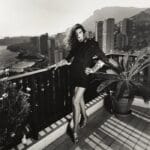
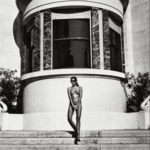
In 1981, Helmut and June left Paris for Monaco. This move marked a major turning point. Newton was already in his sixties, yet the Monaco years would become among the freest and most prolific of his career. Monaco became his open-air studio: construction sites, apartment towers, car parks, swimming pools, terraces, balconies and garages replaced the classical sets of fashion photography. The Nouveau Musée National de Monaco emphasizes that Newton even used the garage of his apartment building as a stage for fashion editorials, while the city inspired portraits, landscapes and more personal series such as Yellow Press.
His Monte Carlo apartment became an observation post. Located on the nineteenth floor of the Parc Saint Roman tower, it overlooked the city, the sea and Monaco’s distinctive vertical architecture. From there, Newton watched the world as if it were a stage. The balcony became a set. The terrace became a studio. The Mediterranean became a photographic backdrop. The apartment was not only a home; it was an extension of his imagination. After June’s death, personal belongings, furniture, artworks and archival material from their large Monaco apartment were transferred to the Helmut Newton Foundation in Berlin, creating an intimate continuation of their private universe.
In Monaco, Newton also photographed the society of the Principality: members of the princely world, dancers from the Ballets de Monte-Carlo, passing celebrities, elegant women and solitary figures. He captured the city as a theatre of appearances, at once luxurious and unsettling. The façades shine, the bodies tense, the gazes resist. Nothing in Newton’s work is entirely natural, and that is precisely where its truth lies. He reveals artifice in order to expose desire, domination, solitude and social performance.
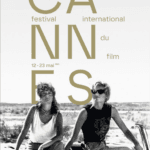
Helmut Newton died in Los Angeles in 2004. Yet his work remains deeply connected to the geography of the South: Paris, Ramatuelle, Monaco, Cannes, Nice, Cap d’Antibes, Saint-Jean-Cap-Ferrat. On the Riviera, he did not simply find locations. He found the perfect theatre for his obsession: beauty when it becomes power, luxury when it becomes tension, light when it reveals as much as it conceals. Newton did not photograph Monaco as a postcard. He photographed it as a dangerous dream.

Comments are closed.