
Black and White Photos: A History of Monochrome Photography
Black and White Photos: A History of Monochrome Photography
Summary: Black-and-white photography began with the first permanent camera images in the 1820s because early processes recorded light without color. Its history then moved through daguerreotypes, paper negatives, dry plates, roll film, photojournalism, fine art, and digital monochrome. The medium remains important because it turns light, texture, and time into a focused visual language.
The history of black-and-white photography begins with a technical limitation that became an artistic language. Early photographic materials responded to light, but they could not reproduce color. If you are tracing the history of black-and-white photos, our history of black-and-white photography offers a useful companion perspective on why this restrained palette still feels powerful.
The story is not only about replacing monochrome with color. It is also about how photographers learned to use contrast, texture, atmosphere, and timing. In 2026, a 2026 study found that color imagery can also create nostalgia for Generation Z, adding an important nuance to the familiar idea that black and white automatically means the past.
When did black-and-white photography begin?
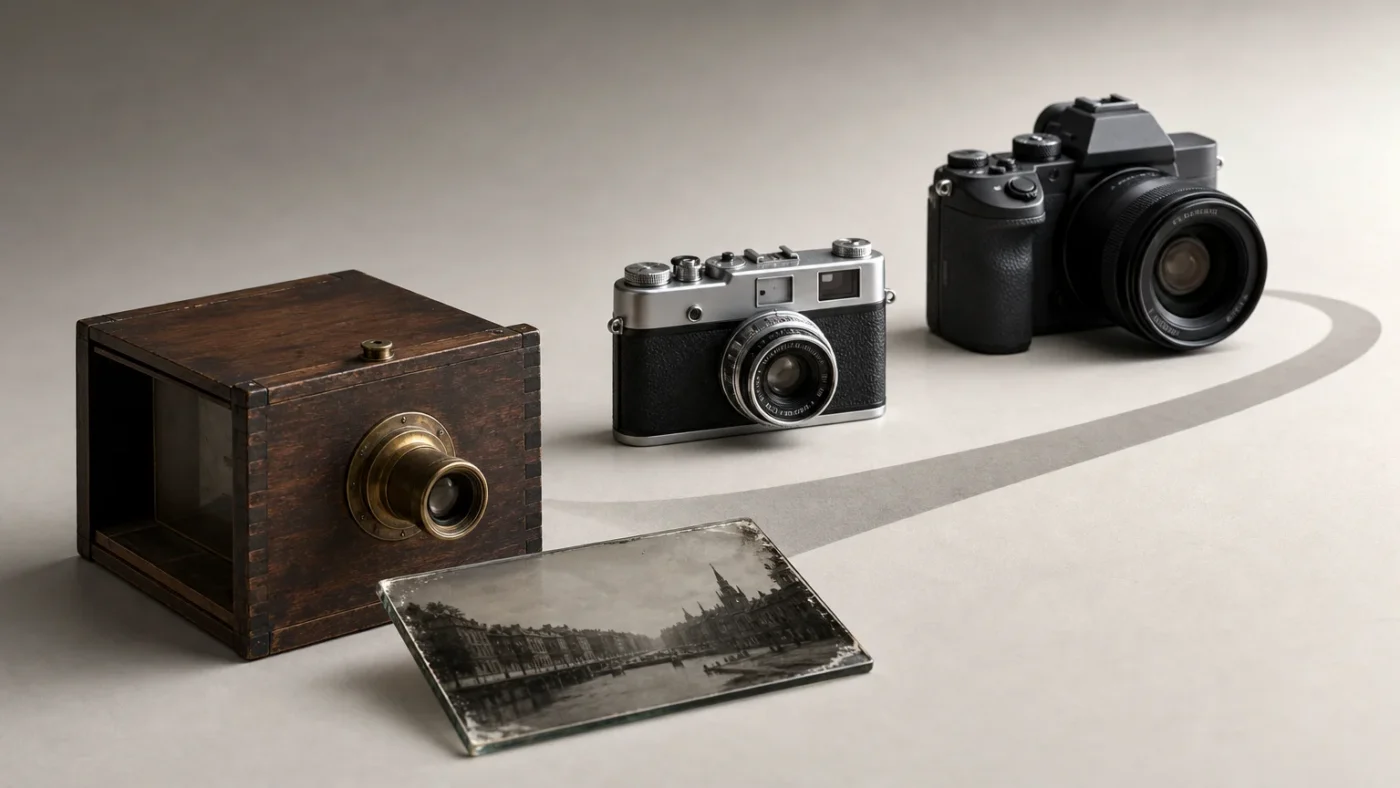
The first chapter of photographic history is effectively a chapter in monochrome. In 1826, French inventor Joseph Nicéphore Niépce created View from the Window at Le Gras, widely regarded as the earliest surviving photograph made from nature. The image required a long exposure and produced a limited range of tones, but it established the basic possibility of fixing a camera image permanently.
Louis Daguerre’s daguerreotype, publicly announced in 1839, made photography more practical and detailed. It used a polished, silver-plated copper plate treated with light-sensitive chemicals. The resulting image was extremely precise, but each plate was a unique object rather than a reproducible negative.
William Henry Fox Talbot developed another important direction with the calotype process, patented in 1841. Unlike the daguerreotype, the calotype created a paper negative that could produce multiple positive prints. This distinction helped establish photography as both a record and a reproducible medium.
These early photographs were not always pure black, white, and neutral gray. Many appeared in brown, sepia, or blue tones because of their chemical processes and later treatments. In technical terms, they were monochrome images because they recorded variations in brightness rather than the full range of visible hues.
Why did monochrome dominate the early medium?
For much of the 19th century, black and white was not simply a stylistic preference. It was the practical result of available chemistry, materials, exposure times, and printing methods. Wet collodion plates required photographers to prepare, expose, and process glass plates while they were still wet. This created a demanding workflow that favored trained professionals.
Richard Leach Maddox’s gelatin dry plate process, introduced in 1871, made photography more flexible. Plates could be prepared in advance and processed later. George Eastman then helped industrialize photography by developing machinery for producing dry plates, followed by flexible roll film and portable Kodak cameras.
Portability changed who could make photographs. Photography gradually moved beyond studios and professional laboratories. Families, travelers, scientists, journalists, and amateurs could document daily life with equipment that was easier to carry and operate.
The material side of this history remains important. The 2024 Yale symposium on photographic research examined how datasets can reveal patterns in photographic collections, including preservation, artistic intention, regional practice, and the influence of shared materials. This approach treats a photograph as more than an image. It also treats the paper, emulsion, format, and process as evidence.
How did cameras and photographers expand its visual language?
By the early 20th century, improvements in film sensitivity and camera design allowed photographers to work with greater speed and precision. The Leica, introduced in the 1920s, used 35mm film and offered a compact format suited to travel, street photography, and reportage.
This portability encouraged a new interest in candid moments. Henri Cartier-Bresson used small cameras to explore what he called the decisive moment, when gesture, movement, and composition briefly aligned. His photographs demonstrated that an ordinary street could become visually significant when observed with patience.
Black and white also became a language for social documentation. Dorothea Lange photographed the human consequences of the Great Depression, while documentary photographers used monochrome to record labor, migration, poverty, war, and political change. The absence of color did not remove emotion. It often concentrated attention on expression, posture, gesture, and context.
Ansel Adams expanded the possibilities of landscape photography through carefully controlled exposure and development. His photographs of the American West used a broad tonal range, from deep shadows to luminous highlights. The landscape became not only a subject, but also a study in atmosphere, structure, and light.
Robert Frank approached American life differently. His book The Americans used rougher compositions, ambiguity, and visual tension to question familiar ideas about the country. If you want to place this work within a wider photographic context, our Robert Capa feature also considers how photography connects visual authorship with historical experience.
These photographers did not use black and white in exactly the same way. For Adams, tonal control could create grandeur and clarity. For Frank, uneven framing could suggest uncertainty. For Lange, a face or a pair of hands could make a social crisis personal.
Why did black and white remain important after color?
Color photography developed gradually during the 19th century, but practical color film became more influential during the 20th century. Kodak introduced Kodachrome in the 1930s, and later improvements made color photography increasingly accessible for advertising, family albums, magazines, and travel.
Even as color became commercially dominant, black and white retained a strong position in documentary photography, portraiture, fine art, cinema, and photojournalism. The reason was not only nostalgia. Removing color can simplify a scene, strengthen visual hierarchy, and make relationships between light and shadow easier to perceive.
In a monochrome image, a red coat and a green wall may become similar gray values. The photographer must therefore consider brightness, contrast, texture, and separation before pressing the shutter. A scene that appears colorful in person may become visually flat after conversion if its colors have similar luminance.
A 2022 PLOS study identified 1,201 black-and-white photographs within a high-quality image dataset while examining photographic aesthetics. The figure does not measure public preference, but it illustrates how monochrome can be studied as a distinct visual category rather than a simple absence of color.
Black and white can also create historical distance, although that effect requires caution. A photograph made in the 1960s may feel older because viewers associate monochrome with earlier eras. That impression can strengthen the image’s authority, but it can also make recent history seem more remote than it was.
How is the photographic archive changing in 2026?
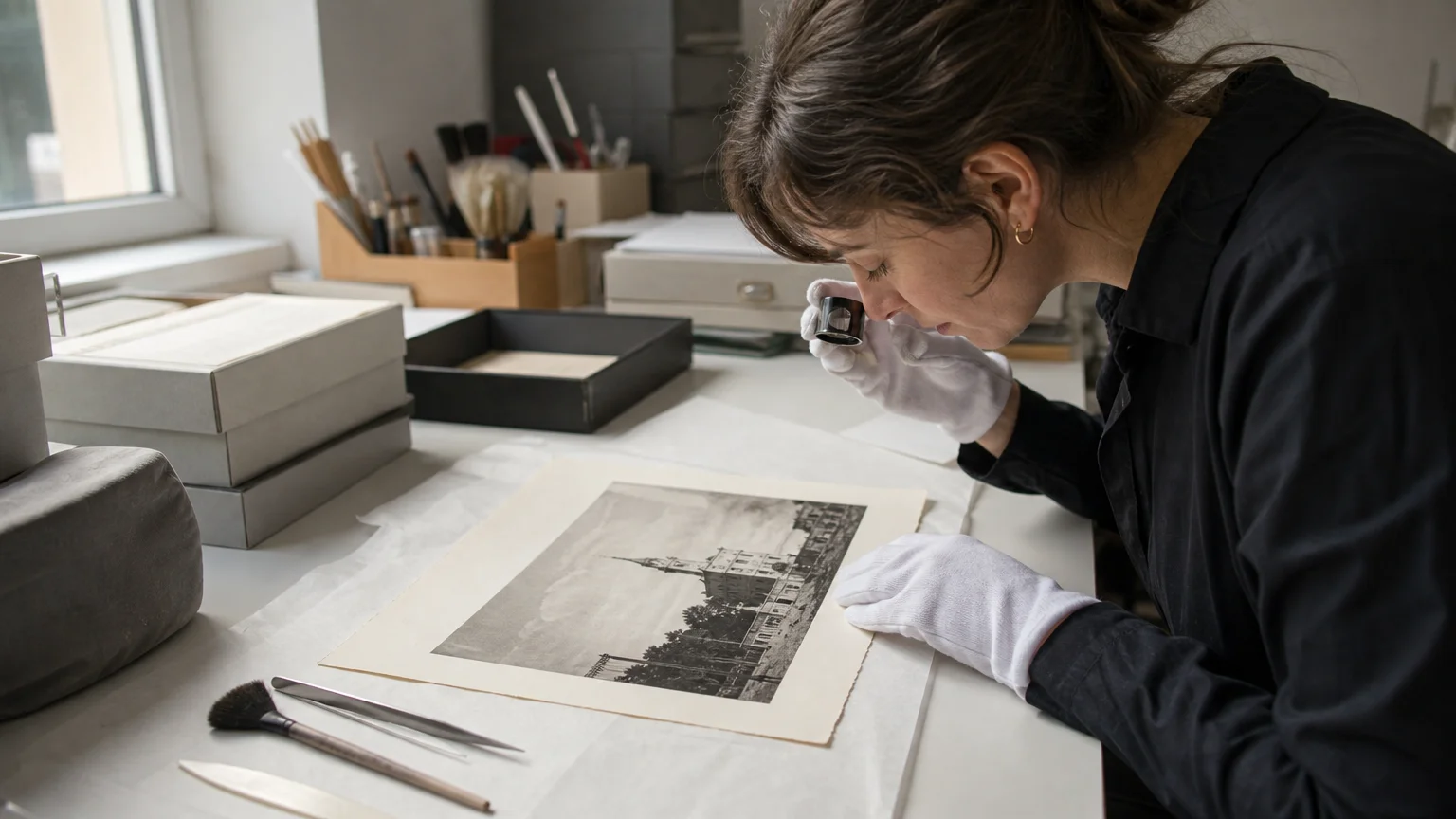
Historical photographs are increasingly treated as archival objects that require interpretation and care. Their meaning depends on the visible scene, the photographer’s purpose, the subject’s circumstances, the caption, and the physical condition of the print or negative.
Preservation also affects what future audiences can study. Silver-based prints, glass plates, film negatives, albums, and photographic papers respond differently to humidity, light, handling, and storage materials. A damaged print may lose detail in its shadows, while fading can alter the balance between highlights and midtones.
Digitization can widen access, but it does not remove the need for context. A scan may preserve the appearance of a print while separating it from its original folder, caption, sequence, or collection. Researchers must therefore consider metadata, provenance, ownership, and the circumstances in which the photograph was created.
A 2026 paper in a 2026 study described a robot-assisted process used to digitize 1.7 million historical aerial photographs from 65 countries. The project reported a 30-fold increase in worker productivity, showing how technical systems can help make large photographic archives more accessible.
Access still requires judgment. Historical photographs can document violence, colonial power, displacement, or personal suffering. Showing them without captions or community context may reproduce the limitations of the original archive. Responsible viewing asks who made the image, who was represented, who was absent, and how the photograph has been circulated.
How can you read and create meaningful monochrome images?
Whether you are studying historical photographs or making new ones, begin by looking beyond the label “black and white.” Ask what the image gains from the absence of color. If the answer is only that it looks vintage, the conversion may be decorative rather than purposeful.
Strong monochrome photographs often depend on a clear relationship between subject and background. Light can isolate a face, define a building, or turn a landscape into a pattern of planes. Shadows can add mystery, but they can also hide essential information when they become too dense.
Texture is another important element. Skin, stone, fabric, water, smoke, and paper all respond differently to light. In color photography, hue may separate objects. In black and white, texture and luminance must often perform that role.

A practical reading method is to examine three layers. First, study the light and tonal structure. Second, identify the subject and the choices that direct your attention. Third, investigate the historical context, including date, location, photographer, purpose, and audience.
- Study the light: Notice where the brightest and darkest areas appear, then observe how they shape the subject.
- Check the contrast: Decide whether the image feels soft, dramatic, documentary, intimate, or deliberately ambiguous.
- Look for context: Read captions, dates, collection notes, and available information about the people represented.
- Assess the medium: Consider whether the image is a print, negative, scanned film frame, or digital file.
For photographers, the same principles apply during production. You can preview a scene in monochrome, use color filters with black-and-white film, or adjust individual color channels during digital editing. To compare the creative decisions behind each workflow, you can also consult our film photography and digital photography guide.
Editing should support the photograph rather than disguise a weak composition. Adjust exposure, highlights, shadows, and local contrast with restraint. A successful conversion preserves detail where detail matters, while allowing selected areas to remain quiet or undefined.
Understanding the lasting value of monochrome photography
The history of black-and-white photos is a history of invention, access, documentation, and artistic choice. What began as a limitation became a flexible visual language for portraits, landscapes, street scenes, war photography, social records, and contemporary digital work.
When you view a monochrome image, consider both its appearance and its conditions of creation. The strongest interpretation combines attention to light and composition with respect for historical context, material evidence, and the people represented.
Take action with Art Vision Awards
Studying monochrome photography can sharpen your understanding of light, atmosphere, gesture, and visual storytelling. Creating your own work gives you an opportunity to turn that understanding into a considered photographic statement.
We welcome photographers and visual creators who want their work reviewed through an international competition process. Our jury evaluates submitted work for quality, originality, and visual impact, while selected participants may receive awards, certificates, editorial publication, social media exposure, or other applicable recognition benefits. Learn more about our black-and-white photography award and review the current participation details before submitting.
Frequently Asked Questions
When were the first black-and-white photographs made?
The earliest surviving photograph made from nature is generally dated to 1826, when Joseph Nicéphore Niépce created an image from a camera obscura. Public photographic processes followed in the late 1830s and early 1840s.
Why were early photographs usually monochrome?
Early photographic materials recorded differences in light but could not reproduce color accurately. Chemical limitations, long exposures, and difficult processing made monochrome the practical standard.
Did black-and-white photography disappear after color film became popular?
No. Black and white continued in documentary work, portraiture, landscape photography, fine art, cinema, and journalism. Many photographers valued its ability to emphasize light, texture, contrast, and emotional atmosphere.
What is the difference between monochrome and black-and-white photography?
Monochrome describes an image made with one color family or tonal range. Black and white is the most familiar form of monochrome, but sepia, cyanotype, and other tinted processes also qualify.
Can you submit black-and-white photographs to Art Vision Awards?
Our competitions accept photographic work and visual creations for professional jury review, subject to the applicable competition requirements. Selected creators may be eligible for awards, publication, certificates, or visibility benefits depending on the competition and plan.

Comments are closed.