Ari Rex: The Canberra Photographer Behind Stellar Images
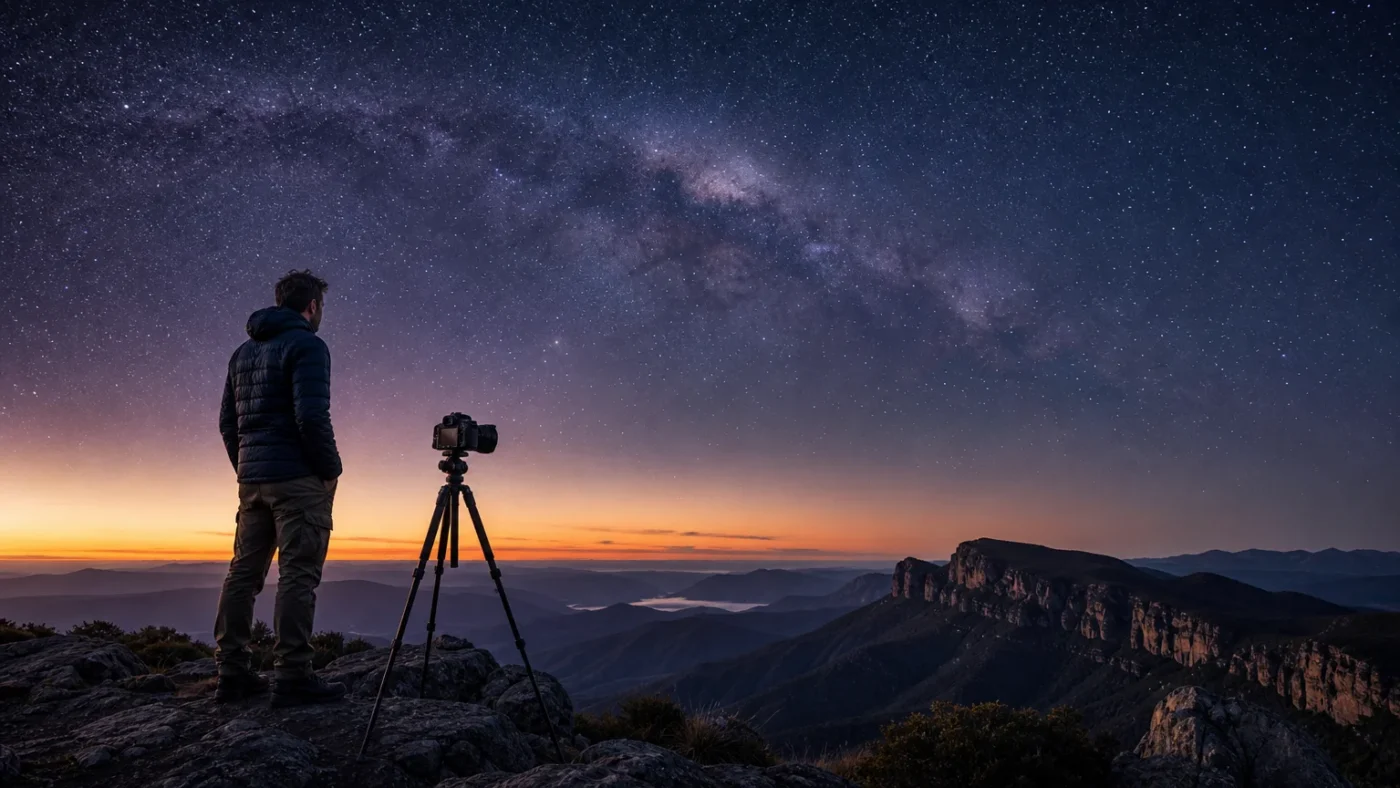
Ari Rex: The Canberra Photographer Behind Stellar Images
Summary: Ari Rex is a Canberra-based photographer recognised for atmospheric landscapes, astrophotography, portraits, and visual storytelling. His work combines careful planning with emotional interpretation, from the award-winning Black Mountain image to his Milky Way workshops. His career offers useful lessons about patience, technical control, creative intent, and presenting photographs for professional recognition.
Ari Rex has built a distinctive photographic career by connecting technical precision with atmosphere and emotion. His portfolio moves between dramatic landscapes, portraits, architecture, still life, macro work, and night skies. If you are studying how portrait artists create meaningful images, our photographers of portraits guide offers useful context for understanding that wider tradition.
Born in Vlore, Albania, Ari Rex moved to Canberra in 2011 and began dedicating more time to photography. He studied photography at CIT Canberra from 2013, graduating in 2016 with high distinction. His IPA interview also describes the development of his creative practice, teaching work, and award-winning photographs.
Who is Ari Rex, and what is he known for?
Ari Rex is an Australian photographer based in Canberra, with a practice shaped by both commissioned work and personal projects. His commercial subjects include corporate environments, portraits, architecture, and events. Alongside this work, he has developed a strong reputation for landscapes and astrophotography, especially images that combine a recognisable Australian setting with a dramatic sky.
That range is important because it prevents his work from fitting into only one category. A portrait can depend on atmosphere, just as a nightscape can depend on human scale. In both cases, the photograph must guide attention while retaining a sense of place. This balance helps explain why his portfolio appeals to clients, collectors, workshop participants, and photography audiences.
His online art collections include images such as Black Mountain, Destiny, My Sanctuary, Wonderful Milky Way, Thor Strike, and Cosmic Hiker. These titles suggest more than a record of locations. They frame each image as a visual story with its own mood, symbolism, and emotional direction.
How does Ari Rex create atmosphere in an image?
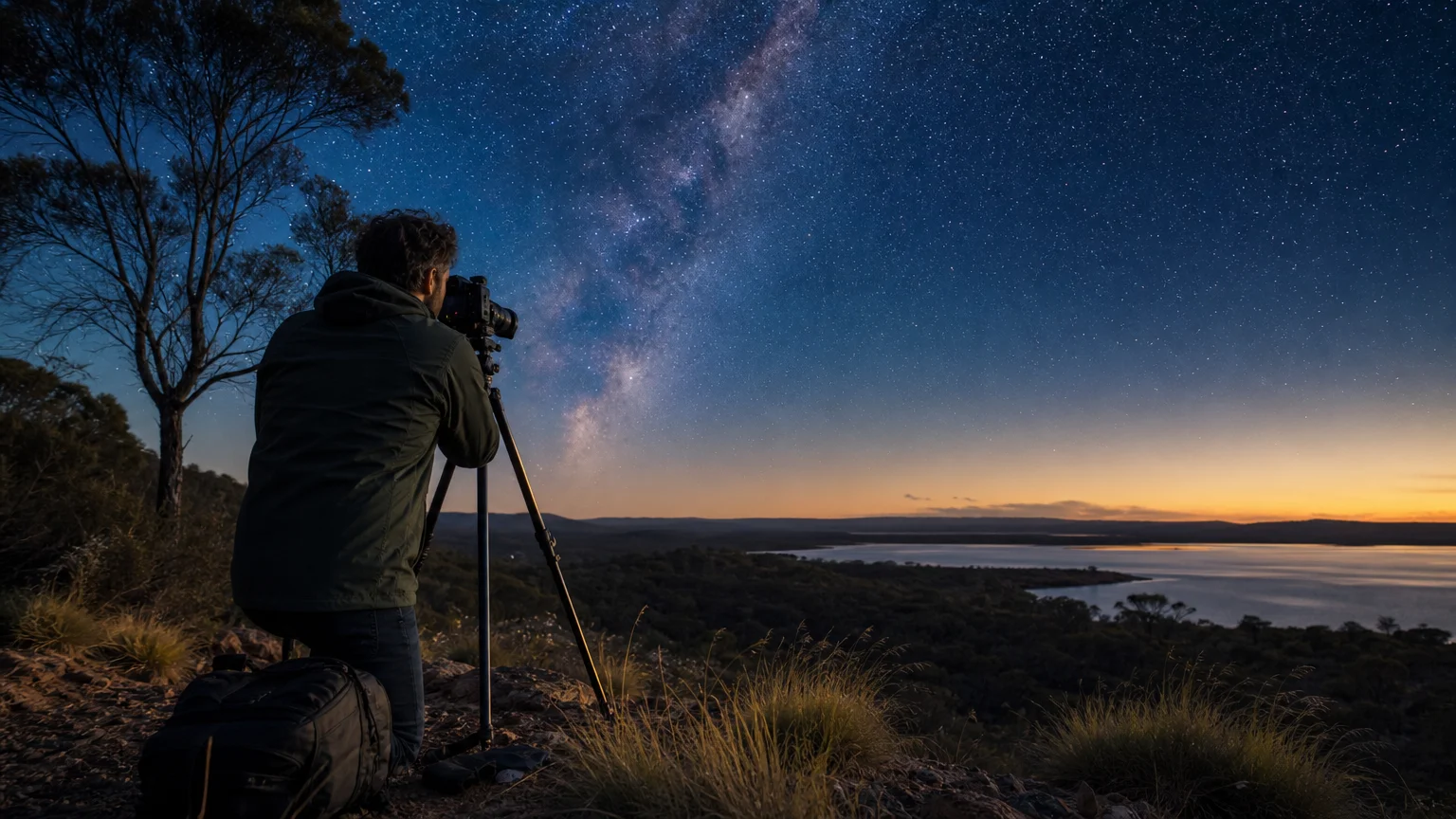
The defining quality in Ari Rex’s work is often the relationship between subject, light, and feeling. His photographs are not simply technical records of storms, stars, or landscapes. They are constructed to make viewers feel scale, tension, stillness, wonder, or vulnerability.
His own description of photography emphasises emotion, mood, and atmosphere. He also explains that capturing the image is only the beginning. Editing preserves the original idea while refining texture and colour so the final photograph communicates what he experienced at the moment of exposure.
This approach can be understood as visual storytelling. The story does not necessarily depend on people or written captions. A dark ridge beneath a bright sky can suggest danger or resilience. A solitary figure under the Milky Way can imply curiosity, isolation, or belonging. The meaning emerges through composition, contrast, timing, and the viewer’s response.
For photographers, the lesson is to define the intended feeling before making technical decisions. Exposure, lens choice, focus, and editing should support that intention. They should not become an end in themselves.
Why is Black Mountain an important Ari Rex photograph?
Black Mountain became one of Ari Rex’s most recognised images after he photographed lightning over Canberra on January 30, 2019. The image later won first prize in the Nature Photographer of the Year category at the 2020 International Photography Awards.
A local report stated that the category received around 3,000 photographs, while the wider competition attracted more than 13,000 submissions across 13 categories. The result illustrates how a strong photograph can move from a local observation to an international judging environment.
The image also demonstrates the value of preparation. Ari Rex monitored the storm and adapted when the weather changed direction. He chose a 70 to 200mm lens on a second camera, using compression to make the lightning appear more prominent against the landscape.
That decision shows the connection between anticipation and flexibility. Weather photography rarely follows a perfect plan. You may know where the storm is forming, yet still need to adjust your focal length, position, timing, or exposure within seconds.
The photograph’s impact therefore comes from several elements working together: a recognisable landscape, unpredictable weather, a strong visual structure, and a timely technical decision. The lesson is not to copy the equipment. It is to understand why each choice supports the image.
What role does technical planning play in his night photography?
Night photography often looks spontaneous, but successful results usually depend on extensive preparation. Ari Rex has described planning as essential when photographing storms and astronomical scenes. He has also referred to patience, experience, and the ability to respond quickly when conditions shift.
His photograph Destiny provides another example. He has described it as technically challenging and connected to a memorable achievement, after receiving first place in the astrophotography category at the 2019 International Photography Awards.
Technical planning can include scouting a location, checking weather and cloud cover, monitoring moonlight, calculating the position of the Milky Way, and deciding how much foreground detail the composition requires. It can also involve carrying backup equipment and choosing a lens before the decisive moment arrives.
Yet planning should not eliminate experimentation. Ari Rex has said that personal projects help him explore new styles when inspiration becomes difficult. This creates a productive balance between structure and discovery. You prepare carefully, then remain open to an image that differs from your original idea.
For a developing photographer, this means building repeatable habits without becoming rigid. A checklist can protect the technical essentials. Curiosity can keep the final work personal.
What can photographers learn from Ari Rex’s workshops?
Ari Rex’s educational work extends his practice beyond finished images. He teaches Milky Way photography and other techniques through hands-on workshops designed for photographers at different experience levels.
On August 30, 2026, a Visit Canberra event listing showed workshop dates from July 11 to October 10, 2026. The listed program includes Milky Way astro-landscapes, star trails, time-lapses, satellite trails, and starry portraits, with a session scheduled for September 4, 2026.
The educational value of this kind of workshop is practical. Photographers can learn how to select a location, work safely after dark, focus accurately, manage exposure, and respond to changing conditions. They can also understand how a nightscape differs from a simple photograph of stars.
His advice to participants is equally relevant outside a workshop. He has emphasised dedication, hard work, and allowing photographs to develop over time. This is especially useful for beginners who expect immediate results from complex subjects.
Astrophotography demands patience because the scene is controlled by factors beyond the camera. Light pollution, cloud movement, wind, moon position, and seasonal visibility can all affect the result. Repeated practice is therefore part of the creative process, not evidence that the photographer has failed.
How should you evaluate a photograph inspired by his approach?
A photograph inspired by Ari Rex’s work should not be judged only by its subject. A dramatic sky may attract attention, but the image still needs a clear structure, convincing timing, and a reason for the viewer to remain engaged.
The 2026 David Malin Awards provide a useful example of how astrophotography can be assessed. In CSIRO coverage, the judging process is described as considering technical skill alongside aesthetic quality, beauty, inspiration, and interest in astronomy.
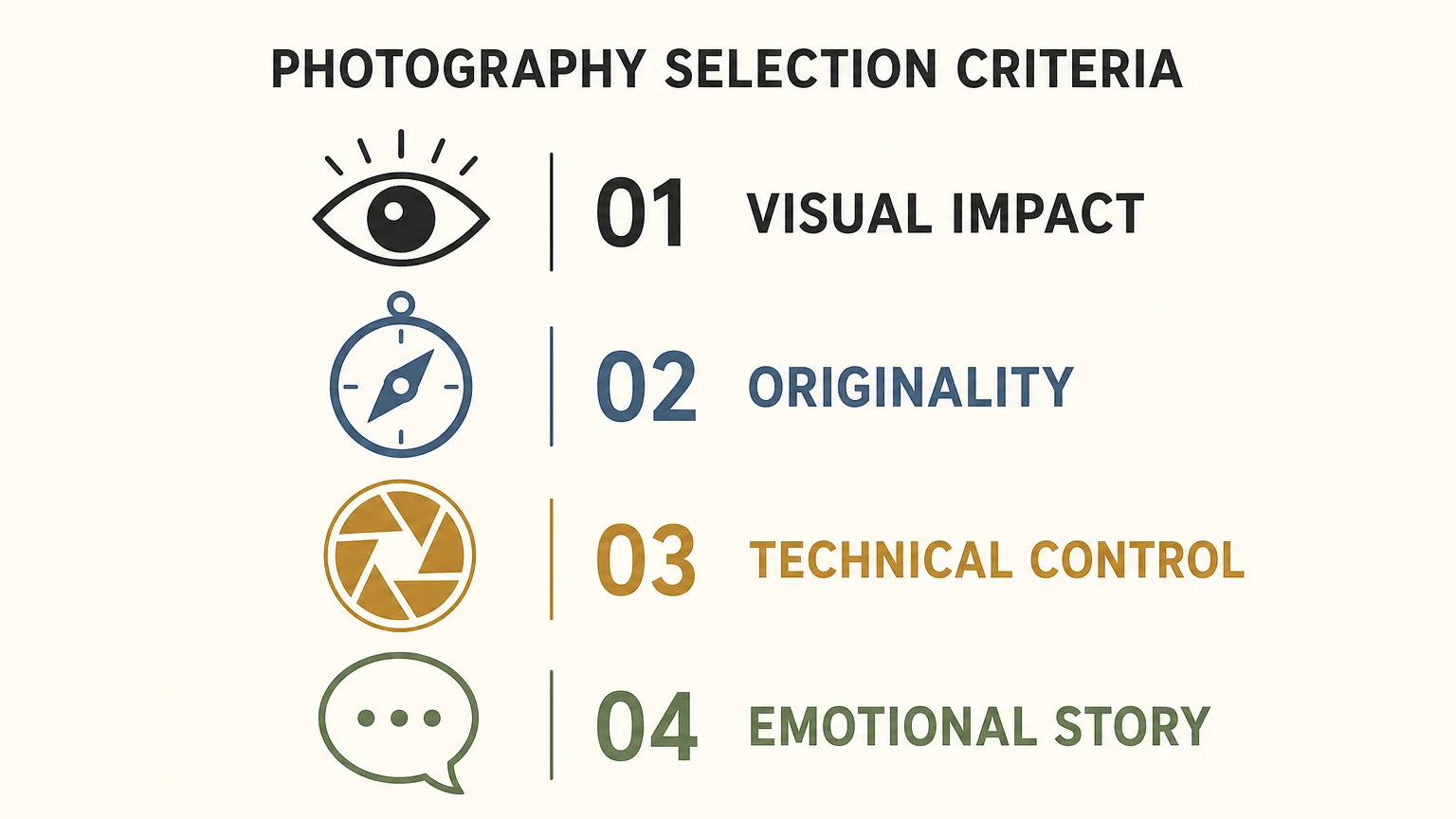
These principles translate well across photography categories. Begin with visual impact. Ask whether the image creates an immediate response without depending on excessive explanation. Then consider originality. Does the photograph offer a personal interpretation, or does it repeat a familiar visual formula?
Next, examine technical control. Exposure, focus, colour, dynamic range, and sharpness should support the intended message. Technical perfection is not always necessary, but visible mistakes should be purposeful rather than accidental.
Finally, consider photographic intent. A strong image usually communicates a decision. The photographer has chosen what to include, what to exclude, when to press the shutter, and how far to take the edit.
At Art Vision Awards, we use a related focus on quality, originality, and visual impact when our professional international jury reviews submitted work. If you want to understand how artists discuss their process and decisions, our photography interviews provide another useful perspective.
What does Ari Rex’s career reveal about recognition?
Recognition can change how a photograph travels, but it does not replace the work required to create it. Ari Rex has explained that winning a major competition can make a body of work visible to a much wider audience. That visibility can lead to new commissions, teaching opportunities, collaborations, and conversations with other photographers.
However, a single award should be viewed as part of a longer practice. Black Mountain was captured in 2019 and recognised in 2020. Destiny was also connected to a 2019 award. These dates show that achievement often follows a period of editing, doubt, submission, and waiting.
For photographers entering competitions, the practical takeaway is to build a coherent portfolio rather than relying on one dramatic frame. A consistent approach makes it easier for viewers and jurors to understand the photographer’s interests.
Portrait artists can apply the same principle by developing a clear relationship with their subjects. Our perspective on portrait photography and the depth of presence explores why attention, connection, and emotional clarity matter in a successful portrait.
Recognition is most valuable when it supports an established direction. It can confirm that an image communicates effectively, but the photographer must continue developing the ideas behind it.
What to remember about Ari Rex
Ari Rex demonstrates how strong photography can unite preparation, technical control, atmosphere, and personal interpretation. His award-winning images show the importance of adapting to uncertain conditions, while his workshops underline the value of patient practice. If you are developing your own work, focus first on the feeling and story you want to communicate. Then make every technical and editing decision serve that purpose.
Take action with Art Vision Awards
If Ari Rex’s career encourages you to refine your own visual voice, the next step is to place your work in a setting where quality, originality, and visual impact can be considered professionally. A clear submission process can help you move from private experimentation toward meaningful artistic recognition.
At Art Vision Awards, we provide photography competition entry, professional international jury review, awards, certificates, possible editorial publication, and international social media visibility. You can begin with the available entry route or choose a one-time submission pack or monthly plan according to your creative goals. Explore our photography services and resources to identify the most suitable path for your work.
Frequently Asked Questions
What type of photography is Ari Rex known for?
Ari Rex is known for landscape photography, astrophotography, portraits, architecture, and visual storytelling. His portfolio often combines technical precision with atmosphere and emotional interpretation.
Where is Ari Rex based?
Ari Rex is based in Canberra, Australia. He also teaches photography through workshops and mentoring activities in Australia.
What is the Black Mountain photograph?
Black Mountain is a lightning photograph captured over Canberra on January 30, 2019. It won first place in the Nature Photographer of the Year category at the 2020 International Photography Awards.
What can photographers learn from Ari Rex?
Photographers can learn the importance of preparation, patience, adaptability, and purposeful editing. His work also shows how technical decisions should support mood, composition, and visual storytelling.
Can I submit my own photography for professional review?
Yes, Art Vision Awards accepts photographic work and visual creations for review by a professional international jury. Selected participants may receive awards, certificates, editorial visibility, social media exposure, or other recognition benefits depending on the applicable competition and plan.


Comments are closed.