Liz Lapp: Career, Curation, and Visual Storytelling
Liz Lapp: Career, Curation, and Visual Storytelling
Summary: Liz Lapp is a curator, editor, and creative strategist whose work connects fine art photography, digital communities, print culture, and visual storytelling. Her career includes gallery curation, portfolio reviewing, editorial work, photography communities, and independent publishing. For photographers, her path offers practical lessons in selection, context, audience building, and artistic presentation.
Liz Lapp represents a professional path built around finding, framing, and sharing visual work. Her experience spans contemporary art, photography platforms, gallery management, editorial writing, content curation, and independent print publishing. If you are developing a stronger artistic identity, our fine art photography and personal vision guide offers a useful framework for connecting technique with intent.
Her profile is especially relevant because photography now circulates across galleries, social platforms, magazines, newsletters, and creative communities. That environment rewards more than technical quality. It also requires thoughtful visual curation, clear storytelling, and an understanding of how audiences encounter images.
Who is Liz Lapp?
Liz Lapp is a curator and content professional associated with contemporary photography, fine art, and creative media. Public profile descriptions identify her as a curator for Shutterstock, a former gallery manager and curator at Farmani Gallery, and a co-founder of Finch & Ada, a contemporary fine arts collaborative.
Her work has also included support for photography and art events connected with The Lucie Awards, PX3, and the International Photography Awards. She has contributed writing to photography publications and participated in portfolio reviews, giving her experience on both sides of the presentation process.
That combination matters. A photographer needs to make strong images, but also needs to understand sequencing, editing, context, and communication. Lapp’s background brings these concerns together, moving between the role of selector, editor, community builder, and creative strategist.
How did Liz Lapp move from galleries to digital communities?
Consider the transition from a gallery wall to a digital photostream. In a gallery, the curator controls the physical sequence, spacing, lighting, and surrounding context. On a digital platform, the same responsibilities become editorial decisions about discovery, categorization, recommendation, and audience engagement.
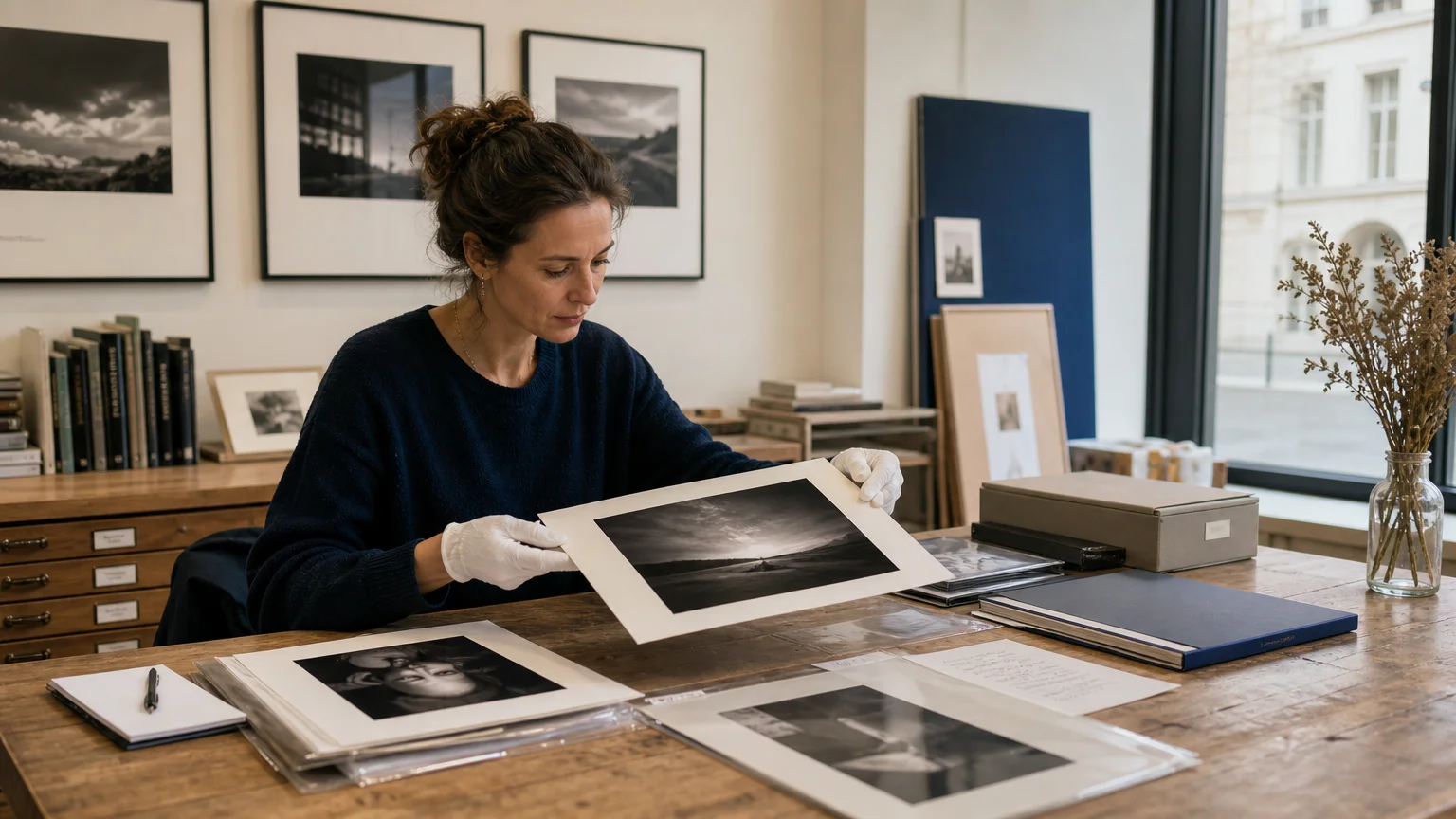
Lapp’s career reflects this broader shift. Her gallery experience connects her to physical exhibition and contemporary art. Her work with Shutterstock and Flickr connects her to large digital communities where images are discovered, discussed, licensed, and shared. Her editorial work adds another layer, because written context can influence how viewers interpret a photograph.
Flickr’s public descriptions of her work emphasize the search for extraordinary photography and opportunities to share it with a global community. This is not simply image selection. It is a form of editorial judgment that asks why one photograph deserves attention, what conversation it can create, and how it may be presented to viewers.
The lesson for photographers is direct. Visibility does not depend only on producing more work. It also depends on developing a coherent body of work and making the relationship between individual images understandable.
Why does curation matter in photography?
A single photograph can be technically impressive and still lack a clear position. Curation helps viewers understand the relationship between images, the emotional direction of a series, and the ideas that give the work meaning.
In this sense, curation performs three connected functions. First, it creates selection by separating central images from supporting ones. Second, it creates sequence by controlling the pace and movement of a portfolio. Third, it creates interpretation by providing enough context for the viewer to engage without dictating a single response.
The importance of method also appears in contemporary media research. The API methodology published in 2026 describes separate probability samples for teenagers and adults across the 50 states and the District of Columbia. Although the subject is media research rather than photography, the principle is relevant: audiences should be considered carefully rather than treated as one undifferentiated group.
Lapp’s work can be read through the same lens. A photography platform, gallery, magazine, or newsletter may serve different audiences, even when each shares an interest in images. A curator must therefore consider not only whether an image is strong, but also where it belongs and which conversation it can support.
For photographers, this means that presentation should be intentional. A portrait series may need a different sequence from a documentary project. A conceptual image may require more space and context than a commercial image. The photograph remains central, but its surroundings shape how it is received.
What does her connection to print culture reveal?
Her work with Hi Desert Times Magazines adds an important dimension to the profile. The publication focuses on new arrivals, recommendations, and the pleasures of print. Its newsletter identity presents Lapp as a guide to physical media and independent publishing in Twentynine Palms.
This connection suggests that her interest in images is not limited to fast digital circulation. Print creates a slower form of attention. Paper, scale, typography, sequencing, and material quality all influence the reading experience. These elements encourage audiences to spend more time with a photograph rather than moving immediately to the next image.
A July 2026 discussion from the local news report describes the need to rebuild sustainable, data-informed local news ecosystems through collaboration among researchers and practitioners. The broader implication is useful for creative work: cultural visibility often depends on networks, editorial care, and active communities, not only on individual output.
Lapp’s print work fits that community-oriented model. Recommendations can introduce readers to unfamiliar artists, magazines, and ideas. A specialist publication can also create a shared vocabulary around collecting, design, photography, and independent culture.
For photographers, print culture offers a reminder that an image can have several lives. It can appear in a gallery, a book, a magazine, a portfolio, or an online community. Each format changes the relationship between the work and its audience.
What can photographers learn from Liz Lapp’s approach?
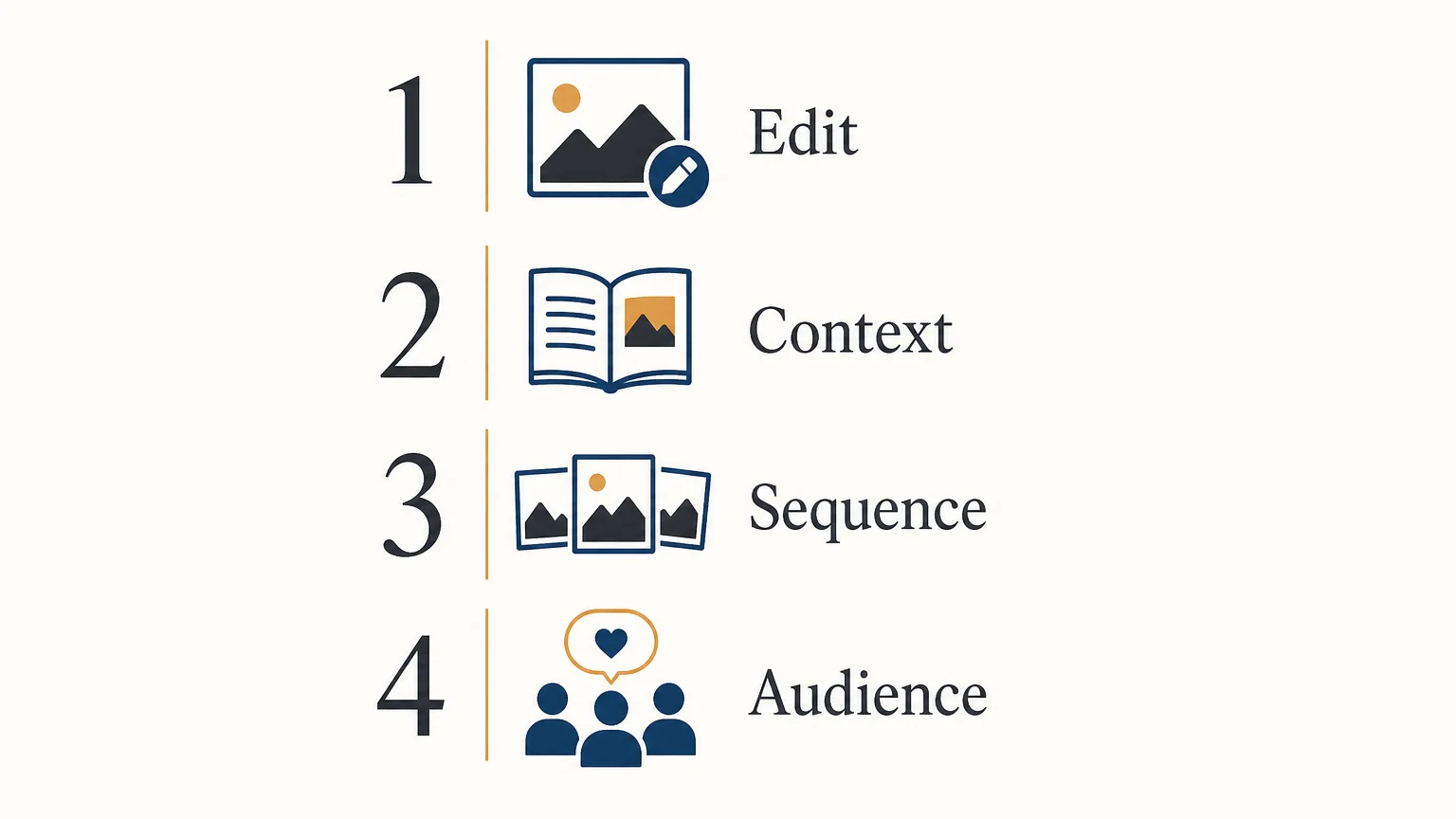
Four principles stand out for photographers who want to strengthen their work and its presentation.
- Edit with purpose. Select images that support the central idea of a series. A smaller, coherent group often communicates more clearly than a large collection of unrelated photographs.
- Build context. Explain the subject, intention, or process when additional information helps the viewer understand the work. Context should deepen the image rather than replace it.
- Respect sequence. Consider how the first image introduces the project, how the middle develops it, and how the final image leaves a lasting impression.
- Think about audience. A gallery visitor, magazine reader, curator, and social media viewer may encounter the same image differently. Presentation should respond to the setting.
These principles are closely related to portfolio review. A reviewer is not only asking whether the individual images are attractive. The reviewer is also assessing consistency, originality, technical control, emotional direction, and the relationship between the images.
When you are preparing work for review, our portrait photography and the depth of presence guide can help you examine whether your photographs communicate more than appearance. Questions of presence, gesture, atmosphere, and relationship often determine whether a portrait feels immediate or merely descriptive.
The same thinking applies to awards submissions. Judges may encounter many technically competent photographs. A distinctive point of view, clear editing, and strong visual impact can help a project remain memorable.
How should you research Liz Lapp responsibly?
A responsible profile separates confirmed professional information from interpretation. Public descriptions connect Lapp with gallery curation, photography platforms, contemporary art collaboration, editorial writing, independent publishing, and community development. They do not automatically provide a complete account of every role, project, or date in her career.
This distinction is important when researching any creative professional. Search results may combine personal biographies, platform pages, professional directories, and short editorial descriptions. These sources can illuminate different parts of a career, but they should not be treated as interchangeable evidence.
A 2026 Stanford report illustrates the value of looking at long-term patterns rather than isolated moments. Its research draws on the Stanford Education Data Archive, which connects results for roughly 70 million students from 2009 through 2025. The Stanford longitudinal analysis is unrelated to photography, but its method offers a useful principle: context becomes stronger when individual observations are placed within a broader timeline.
Applied to Lapp’s career, that means looking beyond a single job title. Her professional identity is better understood as an evolving connection between image selection, cultural interpretation, audience development, and publishing. That continuity explains why her work remains relevant to photographers working across both physical and digital formats.
For creators, the practical takeaway is to maintain accurate records of exhibitions, publications, collaborations, awards, and portfolio reviews. A clear professional history makes it easier for editors, curators, and audiences to understand the development of your practice.
What Liz Lapp’s career teaches about creative visibility
Liz Lapp’s career demonstrates how photography gains meaning through selection, context, and community. Her experience across galleries, digital platforms, editorial work, and print publishing shows that strong visual practice is not limited to the moment of capture. It also includes the decisions that shape how work is edited, presented, discussed, and remembered.
Photographers can apply this perspective by building coherent bodies of work, refining their sequence, explaining their intent, and choosing presentation spaces that suit their audience. When artistic vision and thoughtful curation work together, visibility becomes more purposeful and sustainable.
Take action with Art Vision Awards
If Liz Lapp’s career encourages you to present your photography with greater clarity, the next step is to place your work in a setting where artistic intent, originality, and visual impact can be considered together.
At Art Vision Awards, we provide photography competition entry, professional international jury review, certificates, awards, possible editorial publication, and social media visibility for selected creators. The 2026 Human Presence & Portrait Photography Award lists a submission deadline of August 31, 2026, with a stated €2,500 cash prize opportunity and an awards ceremony invitation in Cannes. Explore our photography awards and choose the participation route that suits your current body of work.
Frequently Asked Questions
Who is Liz Lapp?
Liz Lapp is a curator, editor, and creative professional associated with contemporary art, photography, digital communities, and independent publishing. Her work has included gallery curation, content development, photography selection, writing, and print culture.
What is Liz Lapp known for professionally?
She is known for connecting visual discovery with editorial judgment and audience development. Public profile descriptions associate her with Shutterstock, Flickr, Farmani Gallery, Finch & Ada, photography events, and portfolio reviews.
How does her work connect to photography?
Her career has involved selecting, presenting, reviewing, and contextualizing photography across galleries, online platforms, publications, and creative communities. This makes her work relevant to photographers considering how images function beyond the original act of capture.
What can photographers learn from her approach?
Photographers can learn to edit with purpose, create stronger sequences, provide useful context, and adapt presentation to different audiences. These decisions can make a portfolio clearer and help its visual identity remain consistent.
Can photographers submit work inspired by these principles?
Yes. Art Vision Awards accepts photographic work and visual creations for professional international jury review, with selected participants potentially receiving awards, certificates, editorial exposure, social media visibility, or other recognition benefits.


Comments are closed.