The Best Portrait Photographer of All Time: A 2026 Guide
The Best Portrait Photographer of All Time: A 2026 Guide
Summary: No single name holds the title outright, yet a handful of figures shaped portraiture more than any others. Irving Penn, Richard Avedon, Yousuf Karsh, Dorothea Lange, and Annie Leibovitz recur across every serious ranking. Greatness in portraiture rests on presence, light, and the ability to reveal character rather than mere likeness.
Ask ten curators to name the finest portraitist, and you will receive ten different answers. That disagreement is precisely the point: portraiture rewards distinct visions, not a single formula. When readers search for the greatest portrait photographer in history, they are really asking what separates a technically correct image from one that endures for a century. Our editorial team has explored this question at length in our study of portrait photography and the depth of presence, where craft meets human truth.
Portraiture is among the oldest photographic genres, and it remains one of the most commercially significant. Portrait work still represents a substantial slice of professional photography today. According to Mordor Intelligence, portrait photography led its regional segment with 28.93% of 2025 revenue, driven by headshots, family sessions, and personal branding.
What makes the best portrait photographer of all time?
Before naming names, it helps to define the criteria. A great portrait is not a flattering likeness; it is a revelation. The masters share a rare capacity to make a subject forget the lens and surrender something honest.
Three qualities recur across the acknowledged greats. First, mastery of light and form, whether through Yousuf Karsh’s dramatic contrast or Irving Penn’s austere studio corners. Second, psychological insight, the ability to provoke, calm, or disarm a sitter until character surfaces. Third, lasting cultural impact, images that outlive their moment and become part of collective memory.
“Look and think before opening the shutter. The heart and mind are the true lens of the camera.” Yousuf Karsh
By these measures, no ranking is definitive. What follows is a survey of the photographers who appear, again and again, whenever the conversation turns to the most influential portrait photographers ever to work in the medium.
The pioneers who defined portraiture
Portraiture as an art form owes its foundations to a handful of nineteenth and early twentieth century figures. Julia Margaret Cameron, working in Britain from the 1860s, treated the lens as a tool for emotion rather than documentation. Her soft-focus portraits of Victorian luminaries were dismissed by contemporaries yet later celebrated as visionary.
The German photographer August Sander pursued the opposite instinct: cataloguing his countrymen with clinical honesty as part of the New Objectivity movement. Meanwhile, Edward Steichen bridged fine art and celebrity, serving as Vanity Fair’s photographer from 1923 to 1937 and pioneering modern celebrity portraiture with theatrical lighting and geometric backdrops.
These early practitioners established the vocabulary that later masters would refine. If you appreciate work that captures a person without artifice, you may value our reflection on natural portraits that reveal a presence.
The twentieth-century masters of the studio
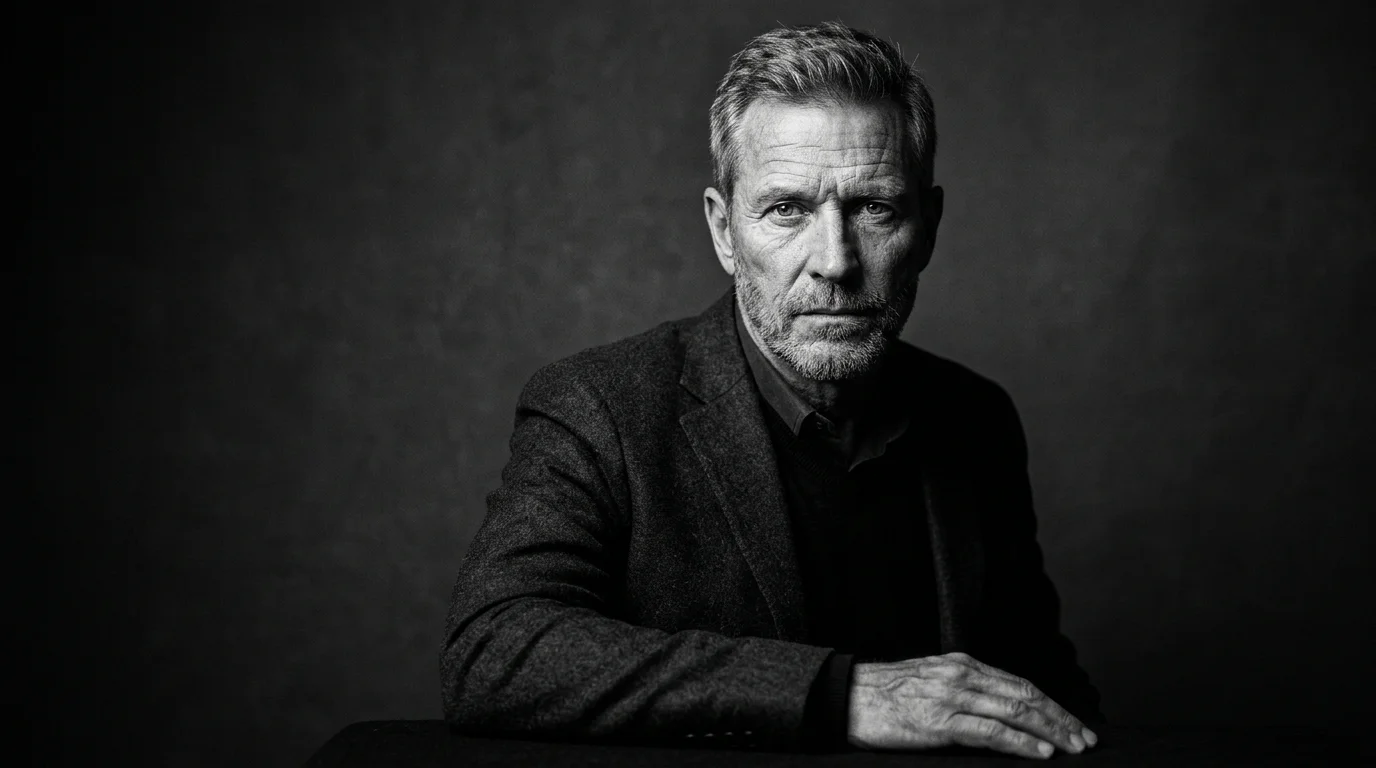
The studio tradition reached its peak with a generation of American and immigrant photographers. Irving Penn brought a graphic designer’s discipline to Vogue, photographing icons and ordinary tradespeople alike within his famous narrow corner set. His work set standards for composition that still guide photographers today.
Richard Avedon redefined both fashion and portraiture with stark white backgrounds and psychological intensity. His 1979 commission for the Amon Carter Museum, later published as In the American West, portrayed everyday laborers with the same gravity he gave to celebrities. Yousuf Karsh, the Armenian-Canadian master, produced perhaps the century’s most reproduced portrait: a scowling Winston Churchill, captured moments after Karsh removed the statesman’s cigar.
Philippe Halsman added invention to the tradition, famously asking subjects to jump so that their controlled poses would dissolve into candid truth. His collaborations with Salvador Dali remain touchstones of creative portrait photography.
Documentary and humanist voices
Not every great portrait was made in a studio. Some of the most enduring faces in photographic history emerged from social documentary. Dorothea Lange’s Migrant Mother, made during the Great Depression for the Farm Security Administration, remains perhaps the defining example of humanist portraiture, a single face standing in for a national crisis.
Gordon Parks used the camera as what he called a weapon against poverty and racism, documenting American life across six decades. Steve McCurry’s 1984 photograph of a young Afghan refugee, published on the cover of National Geographic, became one of the most recognized documentary portraits ever made. Eve Arnold, the first woman to join Magnum Photos, brought quiet trust and natural light to her intimate images of Marilyn Monroe.
These photographers proved that a portrait need not be posed to be profound. The emotional weight of an honest face is a theme we examine in our piece on the emotion revealed through the image.
Contemporary portrait photographers shaping today
Who carries the tradition forward now? Annie Leibovitz is frequently called the most influential portraitist of our era, celebrated for elaborate lighting, conceptual staging, and a five-decade catalogue of cultural icons. Her 1980 image of John Lennon and Yoko Ono, made hours before Lennon’s death, endures as a symbol of love and loss.
Other contemporary figures pursue radically different paths. Martin Schoeller’s extreme close-ups treat the unknown and the famous with identical scrutiny, creating what he describes as a democratic platform for comparison. Sally Mann built an intimate, sometimes controversial body of work around her own family in Virginia. Nadav Kander, based in London, photographs statesmen and artists, including a landmark portrait of Barack Obama, with a restrained mastery of form and light.
The genre also embraces confrontation. Bruce Gilden’s flash-lit street portraits and Diane Arbus’s unsettling images of society’s margins expanded what a portrait could be, proving the form remains open to reinvention.
Why portraiture still matters in 2026
The lineage of great portraitists is not a closed chapter. Portraiture remains economically vital and creatively alive. According to Kentley Insights, portrait photography services generate roughly 16.7 billion US dollars in revenue across 195 countries, spanning studios, schools, and location work.
The broader photographic services market is expanding steadily. Mordor Intelligence values the North American segment at 12.91 billion US dollars in 2026, growing at a 4.18% annual rate toward 15.84 billion by 2031. Independent industry reports catalogued on MarketResearch.com track this growth across four global regions, confirming that demand for skilled portrait work persists despite the ubiquity of smartphone cameras.
The lesson for aspiring photographers is clear. Technical tools have democratized image-making, yet the qualities that distinguished Penn, Karsh, and Leibovitz, namely vision, patience, and human connection, remain scarce and therefore valuable.
The verdict on portraiture’s greatest names
There is no crowning of a single best portrait photographer of all time, and that ambiguity is a strength. Irving Penn’s precision, Dorothea Lange’s compassion, Yousuf Karsh’s drama, and Annie Leibovitz’s staging each represent a legitimate peak. If you wish to develop your own portrait vision, study these masters not to imitate their style but to understand their intent. Learn how they used light to shape mood, how they earned a subject’s trust, and how they chose what to reveal. The tools change every year; the pursuit of presence does not.
Take action with Art Vision Awards
Studying the masters is only the first step. If you are ready to place your own portrait work before an international professional jury, you deserve a platform that rewards vision and craft with genuine recognition.
We run the International Photography Competition 2026, where photographers worldwide submit their work for expert review. Selected creators can receive cash prizes, editorial publication in AVA Magazine, digital certificates, profile badges, and, for premium placements, a physical statuette. You may start for free and choose a submission plan of one, four, or seven entries. Explore recognized talent and view portrait photography winners to see the standard our jury celebrates.
Frequently Asked Questions
Who is considered the greatest portrait photographer ever?
There is no universal consensus, as greatness in portraiture depends on the criteria applied. Irving Penn, Richard Avedon, Yousuf Karsh, and Annie Leibovitz are the names most frequently cited across expert rankings. Each mastered a different approach, from austere studio work to elaborate conceptual staging.
What separates a great portrait from an ordinary one?
A great portrait reveals character rather than simply recording appearance. The finest portraitists combine command of light and composition with the psychological skill to make a subject relax and reveal something authentic. Lasting cultural impact often confirms a portrait’s greatness over time.
Is portrait photography still a viable profession in 2026?
Yes, portraiture remains one of the largest segments of the photographic services market. Demand continues for headshots, family sessions, and personal branding, even as smartphone cameras become ubiquitous. Photographers who cultivate a distinctive vision and strong client trust continue to thrive.
How can emerging photographers gain recognition for portrait work?
Building a portfolio, entering juried competitions, and seeking editorial publication all help establish credibility. Through Art Vision Awards, you can submit portrait work for review by an international jury and, if selected, gain visibility through AVA Magazine and award placements. Recognition from a professional panel carries weight with clients and peers.
Which portrait photograph is the most famous in history?
Several images compete for that distinction, including Yousuf Karsh’s portrait of Winston Churchill and Steve McCurry’s Afghan Girl. Dorothea Lange’s Migrant Mother is often regarded as the most enduring social documentary portrait ever made. Each has become a cultural landmark far beyond photography itself.
Comments are closed.