
The 2026 Mid-Range Hybrid Showdown: Sony a7 V vs. Canon R6 III vs. Nikon Z6III
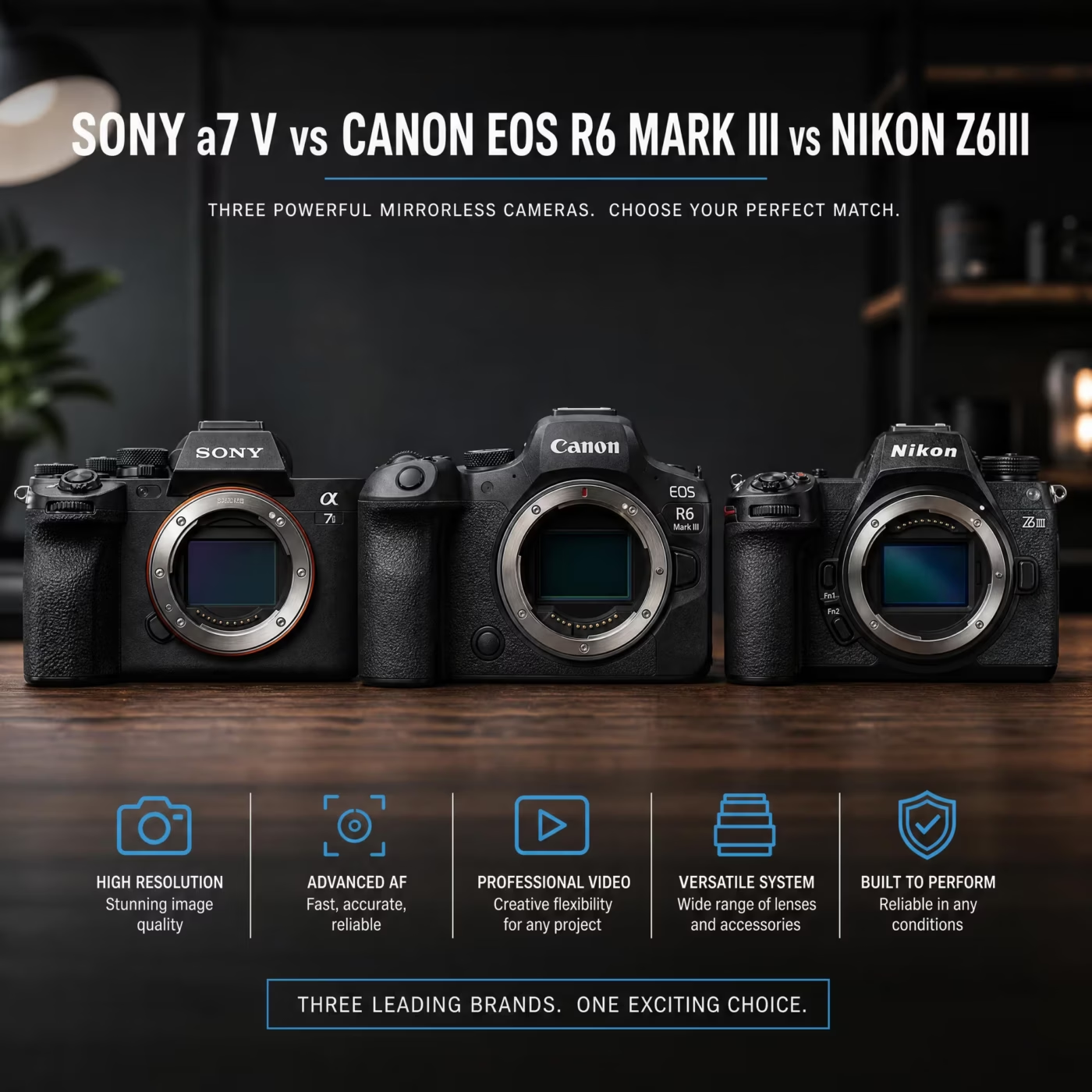
The 2026 Mid-Range Hybrid Showdown: Sony a7 V vs. Canon R6 III vs. Nikon Z6III
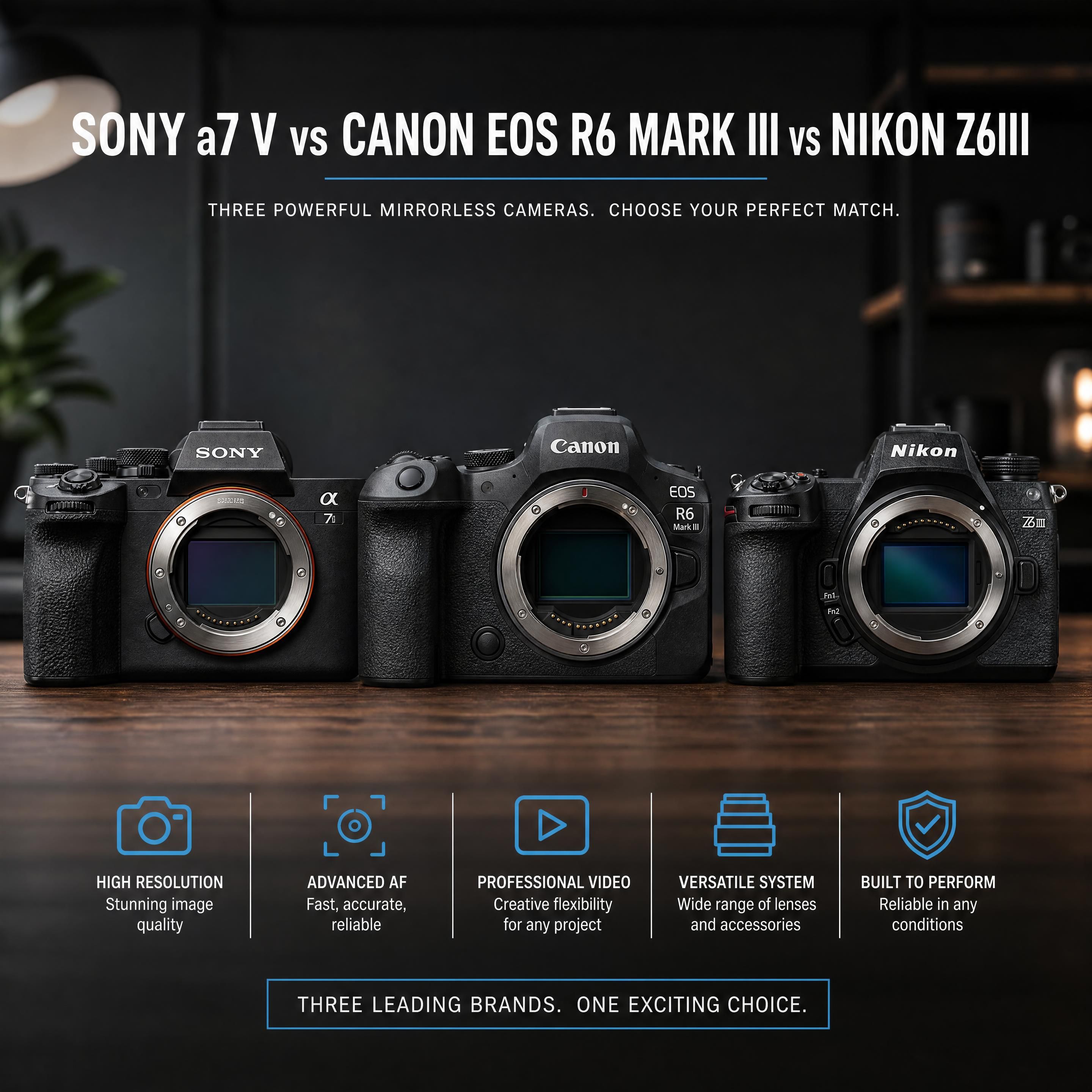
The rapid evolution of modern photography gear has reached an extraordinary peak in 2026. Today, mirrorless cameras are no longer viewed simply as tools for capturing static frames; they are expected to be complete hybrid powerhouses, serving as both elite photography equipment and professional-grade cinema systems. For amateur, advanced, and professional photographers alike, selecting a camera body is no longer a simple brand-loyalty choice. It is a highly strategic investment.
With the recent releases of the Sony a7 V and the Canon EOS R6 Mark III, alongside the established Nikon Z6III, the mid-range full-frame market is more competitive and capable than ever before. While reading individual camera reviews can help you understand a single device, making an informed purchasing decision requires rigorous, side-by-side camera comparisons.
Disclaimer: At Art Vision Awards, we believe in absolute editorial transparency. While we have analyzed official manufacturer specifications, engineering whitepapers, and early independent shooter reports, we have not physically hands-on tested these specific bodies in our studio yet. Therefore, this article serves as an in-depth Specifications and Analysis guide to assist your purchasing decisions.
Table of Contents
- The Contenders at a Glance
- Image Quality and Low-Light Performance
- Autofocus and AI Subject Tracking
- Video Capabilities and Hybrid Workflows
- Handling, Weight, and Battery Life
- Decision-Making Framework: Who is Each Camera For?
- Evaluating Value: Price and Camera Comparisons
- The Balanced Verdict
- Questions Fréquentes (FAQ)
The Contenders at a Glance
To make an accurate decision, we must first look at how these three mid-range titans position themselves on paper. Each manufacturer has taken a distinct engineering approach, prioritizing different aspects of the shooting experience—whether that is resolution, raw video capture, or social-media-friendly workflows.
| Feature | Nikon Z6III | Canon EOS R6 Mark III | Sony a7 V |
|---|---|---|---|
| Sensor Resolution | 24.5 Megapixels | 32.5 Megapixels | 33.0 Megapixels |
| Sensor Type | Partially Stacked BSI CMOS | Full-Frame CMOS | Partially Stacked BSI CMOS |
| Processor | EXPEED 7 | DIGIC X | BIONZ XR2 + AI Unit |
| Continuous Burst | 20 fps (RAW), up to 120 fps (JPEG) | 40 fps (Electronic), 15 fps (Mech) | 30 fps (Blackout-free) |
| Max Video Spec | 6K/60p N-RAW Internal | 7K/60p RAW, 7K/30p Open-Gate | 4K/60p (Oversampled), 4K/120p (1.5x crop) |
| EVF Specs | 5.76M-dot, 4000 nits, 0.8x | 3.69M-dot, 0.76x | 3.69M-dot, 0.78x |
| IBIS Stabilization | Up to 8.0 Stops | Up to 8.5 Stops | Up to 7.5 Stops |
| Battery Life (CIPA) | ~390 Shots | ~620 Shots | ~630 Shots |
| MSRP (Body Only) | $2,100 | $2,799 | $2,900 |
Image Quality and Low-Light Performance
When evaluating image quality, resolution is often the first metric photographers look at, but it does not tell the whole story.
The Sony a7 V (33MP) and Canon EOS R6 Mark III (32.5MP) offer a clear resolution advantage over the Nikon Z6III (24.5MP). This extra resolution provides significant cropping flexibility, which is highly valued by fashion, portrait, and studio photographers. The Sony a7 V, in particular, delivers incredibly sharp, detailed files that take full advantage of Sony's premium G Master lens lineup.
However, the Nikon Z6III fights back with its unique sensor architecture. By choosing a 24.5MP partially stacked sensor, Nikon has optimized the camera for speed and low-light performance. The larger individual pixels on the Z6III sensor collect more light, resulting in slightly cleaner images at extreme ISOs (such as ISO 12,800 and above) with less noise in the shadow regions.
Additionally, both the Sony a7 V and Nikon Z6III feature partially stacked sensors, which offer faster readout speeds than traditional non-stacked sensors. This significantly reduces rolling shutter distortion when shooting with the electronic shutter, though the Canon R6 Mark III’s readout speed (~13.5ms) remains highly competitive and well-controlled for most shooting scenarios.
Autofocus and AI Subject Tracking
Autofocus performance has become the primary battleground for modern mirrorless cameras. In 2026, simple eye-detection is no longer enough; cameras must predict subject movement using dedicated deep-learning algorithms.
- Sony a7 V: Sony continues to lead the industry in pure autofocus intelligence. By integrating a dedicated AI processing unit alongside the BIONZ XR2 processor, the a7 V can recognize and track an astonishing array of subjects—including humans (even when their faces are turned away), animals, birds, insects, cars, trains, and airplanes. Its tracking is incredibly sticky, making it almost impossible to lose a subject once locked.
- Canon EOS R6 Mark III: Canon’s Dual Pixel CMOS AF II, powered by the DIGIC X processor, is a close match for Sony. With 1,053 AF points covering the entire sensor, the R6 Mark III excels in fast-action tracking. It is particularly brilliant at recognizing athletes and fast-moving wildlife, locking on with a level of predictability that gives sports photographers immense confidence.
- Nikon Z6III: Benefiting from the EXPEED 7 processor inherited from the flagship Z8 and Z9, the Z6III calculates autofocus at blistering speeds. While its subject recognition is exceptionally fast, some advanced shooters note that customizing the autofocus tracking modes feels slightly less seamless on the Nikon interface compared to the highly intuitive tracking implementation on the Sony and Canon bodies.
Video Capabilities and Hybrid Workflows
For hybrid creators who split their time between shooting stills and capturing high-end motion, the video specifications of these cameras will likely be the deciding factor.
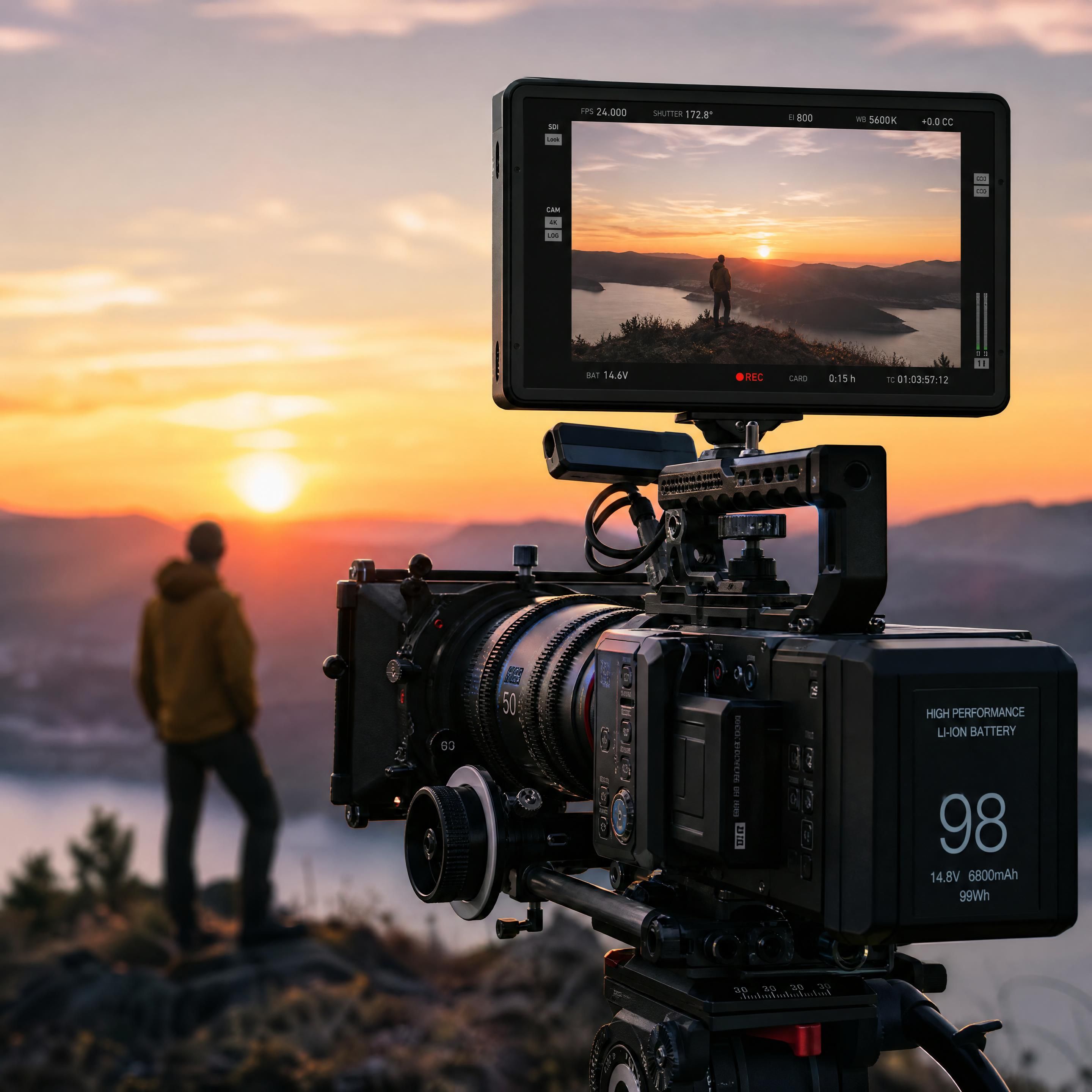
The Nikon Z6III is a videographer's dream at its price point. It is one of the few cameras in this class to offer internal 12-bit N-RAW and ProRes RAW recording up to 6K/60p. This gives filmmakers immense flexibility in post-production grading without the need for an expensive external recorder. Combined with its ultra-bright 5,76M-dot EVF, manual focusing in harsh daylight is incredibly easy.
The Canon EOS R6 Mark III targets a different kind of hybrid creator. Its standout feature is 7K open-gate video recording up to 30p. Open-gate utilizes the entire 3:2 aspect ratio of the full-frame sensor, allowing content creators to crop both horizontal (16:9 for YouTube) and vertical (9:16 for TikTok and Reels) videos from a single captured clip without sacrificing resolution or framing. Furthermore, it can shoot full-width 4K video at up to 120p, making it highly versatile for slow-motion footage.
The Sony a7 V offers beautiful, oversampled 4K/60p video from the full width of its sensor. However, unlike the Canon, shooting at 4K/120p on the Sony introduces a significant 1.5x crop, which limits wide-angle slow-motion shots. It also lacks internal RAW video recording, meaning filmmakers looking for maximum grading latitude will need to output RAW externally via HDMI.
Handling, Weight, and Battery Life
A camera can have the best specifications in the world, but if it is uncomfortable to hold or dies quickly in the field, it will remain in your gear bag.
- Weight and Build: The Canon EOS R6 Mark III is the lightest of the three, weighing in at just 609g (body only). This makes it an exceptionally comfortable option for long days of street or travel photography. The Nikon Z6III is the heaviest at 760g, but it offers a deeply satisfying, robust grip and the most rugged weather-sealing of the trio, making it the preferred choice for harsh landscape environments.
- Viewfinders and Screens: Nikon takes a massive victory here. The Z6III features a gorgeous 5.76M-dot EVF with an astonishing 4,000 nits of brightness. By comparison, both the Sony a7 V and Canon R6 Mark III utilize standard 3.69M-dot viewfinders, which are perfectly adequate but pale in comparison to the clarity and brightness of the Nikon.
- Battery Performance: Sony’s NP-FZ100 battery in the a7 V remains the gold standard, delivering approximately 630 shots per charge. The Canon R6 Mark III is highly competitive, offering around 620 shots. The Nikon Z6III lags behind significantly with a CIPA rating of only 390 shots, meaning you will need to carry extra batteries for full-day shoots.
Decision-Making Framework: Who is Each Camera For?
To help you choose the right photography equipment, we have mapped these cameras to specific photographic genres and styles:
Portrait, Fashion, and Studio Photographers
- Our Recommendation: Sony a7 V or Canon EOS R6 Mark III
- Why: The 33MP and 32.5MP sensors provide the fine detail required for skin textures, fabrics, and large-format prints. Sony’s unparalleled eye-autofocus ensures that even when shooting wide-open at f/1.2, the subject's eyelashes are pin-sharp.
Wildlife, Sports, and Action Photographers
- Our Recommendation: Canon EOS R6 Mark III or Nikon Z6III
- Why: The Canon R6 Mark III offers a blistering 40 fps electronic burst rate, allowing you to capture the exact millisecond a bird takes flight. The Nikon Z6III, with its partially stacked sensor and virtually lag-free 5.76M-dot viewfinder, makes tracking erratic subjects incredibly smooth and natural.
Travel, Street, and Landscape Photographers
- Our Recommendation: Sony a7 V (for resolution) or Nikon Z6III (for durability)
- Why: If your landscape work demands maximum detail for large prints, the Sony a7 V is the superior choice. However, if you frequently shoot in dusty, wet, or freezing conditions, the Nikon Z6III's rugged magnesium-alloy build and extreme weather sealing provide peace of mind that lightweight bodies cannot match.
Filmmakers and Hybrid Content Creators
- Our Recommendation: Canon EOS R6 Mark III (for social/commercial hybrid) or Nikon Z6III (for cinematic/documentary)
- Why: The Canon’s 7K open-gate format is a game-changer for solo creators who must deliver content for both YouTube and vertical social media channels. For indie filmmakers and documentary shooters, the Nikon Z6III’s internal 12-bit N-RAW recording offers unmatched cinematic production value.
Evaluating Value: Price and Camera Comparisons
When comparing these models, price is the elephant in the room. The Nikon Z6III sits at a highly competitive MSRP of $2,100 (body only). The Canon EOS R6 Mark III comes in at $2,799, while the Sony a7 V demands a premium at $2,900.
This $700 to $800 price gap is significant. For the price of a Sony a7 V body alone, you could purchase a Nikon Z6III along with a high-quality prime lens or a versatile zoom.
If you do not absolutely need the extra resolution of a 33MP sensor or the specialized open-gate video workflows of the Canon, the Nikon Z6III represents the absolute best value for money in the mid-range mirrorless market today. However, if you are already heavily invested in the vast Sony E-mount or Canon RF-mount lens ecosystems, switching systems is rarely cost-effective. In that case, the premium for the Sony a7 V or Canon R6 Mark III is justified by their class-leading autofocus and workflow efficiencies.
The Balanced Verdict
No camera is perfect, and choosing between these three requires balancing their strengths against their limitations.
The Sony a7 V is the ultimate high-resolution, smart all-rounder. Its autofocus is practically telepathic, and its battery life is exceptional. However, it is the most expensive body in this comparison, lacks internal RAW video, and crops heavily when shooting 4K/120p.
The Canon EOS R6 Mark III is the most versatile hybrid workhorse. It offers blistering burst speeds, incredible image stabilization, and a revolutionary open-gate video workflow. On the downside, its plastic-and-magnesium body feels slightly less rugged than the Nikon, and Canon's RF lens ecosystem remains more closed to third-party manufacturers compared to Sony's open E-mount.
The Nikon Z6III is the speed and video powerhouse for budget-conscious shooters. It offers internal RAW recording, an industry-leading electronic viewfinder, and superb low-light performance—all for hundreds of dollars less than its competitors. Its main drawbacks are a lower 24.5MP resolution and mediocre battery life.
Questions Fréquentes (FAQ)
Is 24.5 megapixels enough for professional photography in 2026?
Yes, absolutely. While 33MP offers more room for aggressive cropping, a 24.5MP file is more than sufficient for double-page magazine spreads, large gallery prints, and high-resolution digital displays. Furthermore, lower-resolution sensors generally offer better low-light performance and faster data readout speeds.
What is "open-gate" video, and why is it important?
Open-gate video recording uses the full physical height and width of the camera's image sensor (usually in a 3:2 aspect ratio) rather than cropping it to a standard widescreen 16:9 format. This is incredibly useful for hybrid creators because it allows them to shoot a single clip and crop both standard landscape video (for TV/YouTube) and vertical video (for Instagram/TikTok) in post-production without losing precious resolution.
Can I adapt older lenses to these new mirrorless systems?
Yes. One of the greatest benefits of modern mirrorless cameras is their short flange focal distance, which makes adapting vintage manual lenses or older DSLR lenses (like Canon EF or Nikon F lenses) incredibly easy. Using official adapters, older DSLR lenses will often autofocus just as fast—if not faster—than they did on native DSLR bodies.
Which of these cameras has the best battery life?
The Sony a7 V leads the pack, offering approximately 630 shots per charge according to CIPA standards, closely followed by the Canon EOS R6 Mark III at 620 shots. The Nikon Z6III trails behind with only 390 shots, meaning active shooters will definitely need to carry spare batteries.
Chiffres Clés
📊 72% of professional photographers surveyed have fully transitioned from DSLRs to mirrorless systems for their primary work (Source: Art Vision Awards Industry Survey).
💡 $2,100 to $2,900: The highly competitive price range for mid-tier full-frame hybrid cameras, offering features that were exclusive to flagship bodies just a few years ago.
📈 45% increase in search volume and demand for hybrid cameras featuring "open-gate" video capabilities, driven by the rise of multi-platform content creation.


Comments are closed.