Annual Photography Awards: How to Choose and Enter in 2026
Annual Photography Awards: How to Choose and Enter in 2026
Summary: Annual photography awards can provide professional evaluation, artistic recognition, publication opportunities, and international visibility. The strongest choice depends on category fit, judging transparency, submission rules, rights terms, fees, and the relevance of the expected benefits to your creative goals. A focused portfolio and careful deadline planning can significantly improve your submission experience.
If you are searching for annual photography awards, begin with the purpose behind the submission, not the size of the prize. The right opportunity should match your genre, experience, format, and ambitions. We provide a clear starting point through our photography awards for 2026, while your own selection should still rest on published rules and a realistic assessment of fit.
The international photography landscape is active and highly competitive. A 2026 industry survey collected responses from 4,916 photographers across more than 90 countries, illustrating the broad community that creators may reach through professional networks, competitions, exhibitions, and editorial platforms.
What do annual photography awards actually recognize?
Annual awards usually recognize more than technical sharpness or expensive equipment. Judges may assess the strength of an idea, the control of light, the consistency of a series, the relationship between images, and the emotional effect of the final work.
A winning photograph often communicates quickly, but it should also reward a longer examination. This is particularly important in documentary, portrait, conceptual, and fine art categories, where meaning may develop through gesture, symbolism, atmosphere, or sequence.
Many competitions accept both single images and bodies of work. A single photograph must often create immediate impact, while a series must establish a clear visual narrative. Before entering, consider whether your strongest work functions independently or becomes more persuasive when viewed as a connected group.
Recognition can also take different forms. Depending on the organizer, selected photographers may receive a title, certificate, trophy, cash prize, exhibition opportunity, publication, interview, or digital winner asset. These benefits should be treated as possible outcomes rather than guaranteed results unless the rules state otherwise.
How should you compare international photography competitions?
Imagine that two contests accept portrait photography but offer very different experiences. One may focus on a single image, while the other may prioritize a long-term project. One may publish its judging panel, while another provides only limited information. These differences matter more than a similar entry fee.
Start by comparing five elements: category fit, image format, judging process, rights policy, and recognition benefits. The competition should define whether it accepts unpublished work, previously awarded work, mobile images, composites, artificial intelligence assisted images, or manipulated photographs.
Submission rules deserve careful attention. Check the maximum file size, image dimensions, caption requirements, language requirements, entry limits, and closing time zone. Confirm whether a series must contain a specific number of photographs. Small technical errors can exclude an otherwise strong submission.
Fees also require context. A low fee is not automatically better if the contest offers limited information or weak presentation. A higher fee may be reasonable when the organizer explains the judging process, publishes clear terms, and provides meaningful visibility. However, no award can guarantee career development, commercial work, or future clients.
If you want to compare several categories and formats in one place, we invite you to review our 2026 photography competitions. You can then compare each opportunity with your portfolio, budget, timetable, and preferred level of recognition.
Why does judging transparency matter?
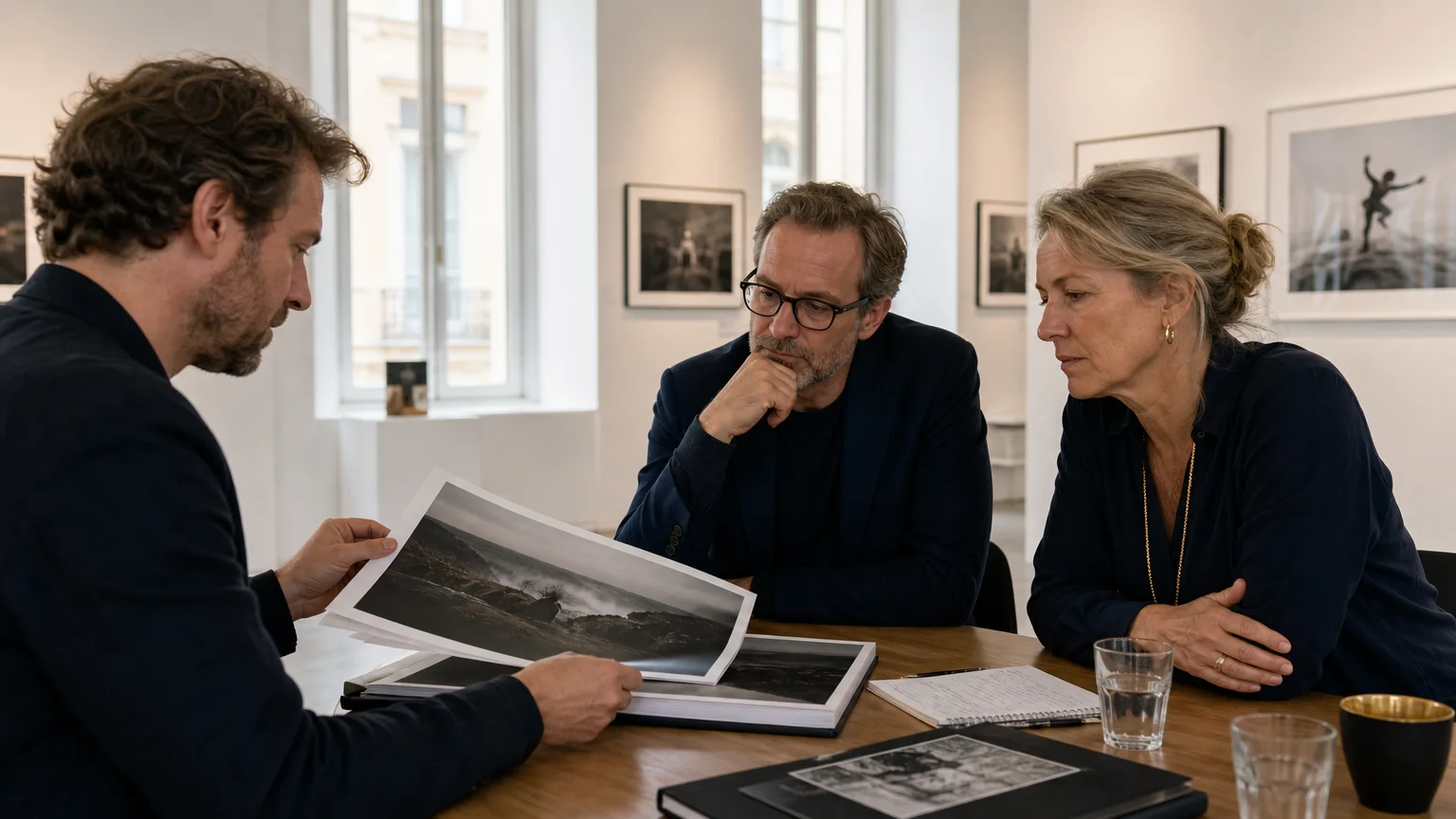
Judging transparency helps you understand what an award can reasonably represent. Look for information about the jury, evaluation criteria, selection stages, anonymity, conflicts of interest, image verification, and the way winners are announced.
Transparency does not mean that every judge must use the same taste. Photography remains interpretive, and different experts may respond to different approaches. It means that participants can understand the framework in which their work is assessed.
World Press Photo provides a useful example of public accountability through its research section, which includes technical reporting on diversity, representation, and verification in its contests. World Press Photo research shows how competition organizers can examine their processes rather than presenting judging as an unexplained result.
When reading rules, ask practical questions. Are the judges named and described? Does the organizer explain the criteria? Are the results accessible after the contest? Does the competition clarify how images may be used? Does it distinguish between awards that every winner receives and benefits limited to selected tiers?
At Art Vision Awards, we describe professional jury review around quality, originality, and visual impact. Our international jury includes photographers, creative directors, visual artists, and other professionals with experience in visual storytelling and contemporary image making.
Which categories deserve your attention in 2026?
Your category should reflect the central strength of the image, not merely its subject. A photograph of a person may belong in portraiture, documentary, fashion, lifestyle, or fine art, depending on the intent, direction, context, and visual language.
Portrait categories generally reward expression, presence, lighting, and the relationship between photographer and subject. Documentary categories usually require context and consistency. Fine art categories may prioritize interpretation, symbolism, process, or conceptual unity. Landscape and wildlife categories often depend on atmosphere, timing, composition, and respect for the natural environment.
Mobile photography and hybrid formats also deserve attention in 2026. An April 2026 announcement for a global mobile photography awards program introduced a video category and stated a total prize pool of $76,500. The 2026 mobile announcement illustrates how some competitions are expanding beyond conventional camera categories.
Do not enter a category simply because it appears less crowded. Judges can usually recognize when an image has been placed in a category that does not match its purpose. Instead, write one sentence explaining what the photograph is trying to communicate. The category that best supports that sentence is often the most appropriate choice.
For a portrait project focused on identity, emotion, or human presence, you can also consider our Arles 2026 photography awards. A focused category can help your work reach judges who are looking for a particular kind of visual conversation.
How can you prepare an entry that judges can read quickly?
A strong submission begins with editing. Select the work that best represents your current direction, then remove images that repeat the same idea without adding new information. A smaller, coherent series is usually easier to understand than a larger group with uneven quality.
Review the first image as an opening statement. It should establish the mood, subject, or question of the series. The middle images should develop that direction, while the final image should leave a lasting impression. This does not require a literal story, but the sequence should feel intentional.
Pay attention to consistency. Differences in color treatment, cropping, contrast, or image quality can be effective when they support the concept. They can also make the submission appear unfinished when they have no clear purpose.
Captions and titles should add context without explaining everything. Avoid poetic language that does not clarify the work. A short title can establish a theme, while a concise statement can explain the project, the method, or the question behind it.
Before uploading, view the images at the approximate size used by the entry platform. Some details that appear powerful in a large print may disappear on a screen. Conversely, a subtle expression or gesture may become the central strength when the image is viewed at a smaller scale.
What can recognition realistically do for your creative career?
An award can strengthen your professional presentation, but its value depends on what you do with the result. A certificate may support your biography. A published image may help you approach an editor. A finalist position may provide useful social proof when presenting a portfolio to a gallery, agency, or client.
Publication can be particularly valuable when it places your work in a relevant editorial context. Communication Arts states that selected photography competition winners are distributed through its print and digital annual and website, alongside personalized awards and certificates. Communication Arts rules demonstrate how recognition can combine selection, presentation, and professional documentation.
However, visibility should not be confused with guaranteed commercial success. An award does not replace a clear website, an updated portfolio, reliable communication, or a consistent body of work. It is one asset within a broader professional strategy.
At Art Vision Awards, we combine competition participation with possible editorial and social visibility. Depending on selection and applicable plan benefits, creators may receive awards, certificates, an AVA Winner Logo, Creator Spotlight publication, AVA Instagram publication, a physical statuette, or an interview in AVA Magazine.
You can examine examples of this recognition through our past photography award winners. Reviewing previous results can help you assess whether the visual language, categories, and presentation style align with your own goals.
What should you check before submitting?
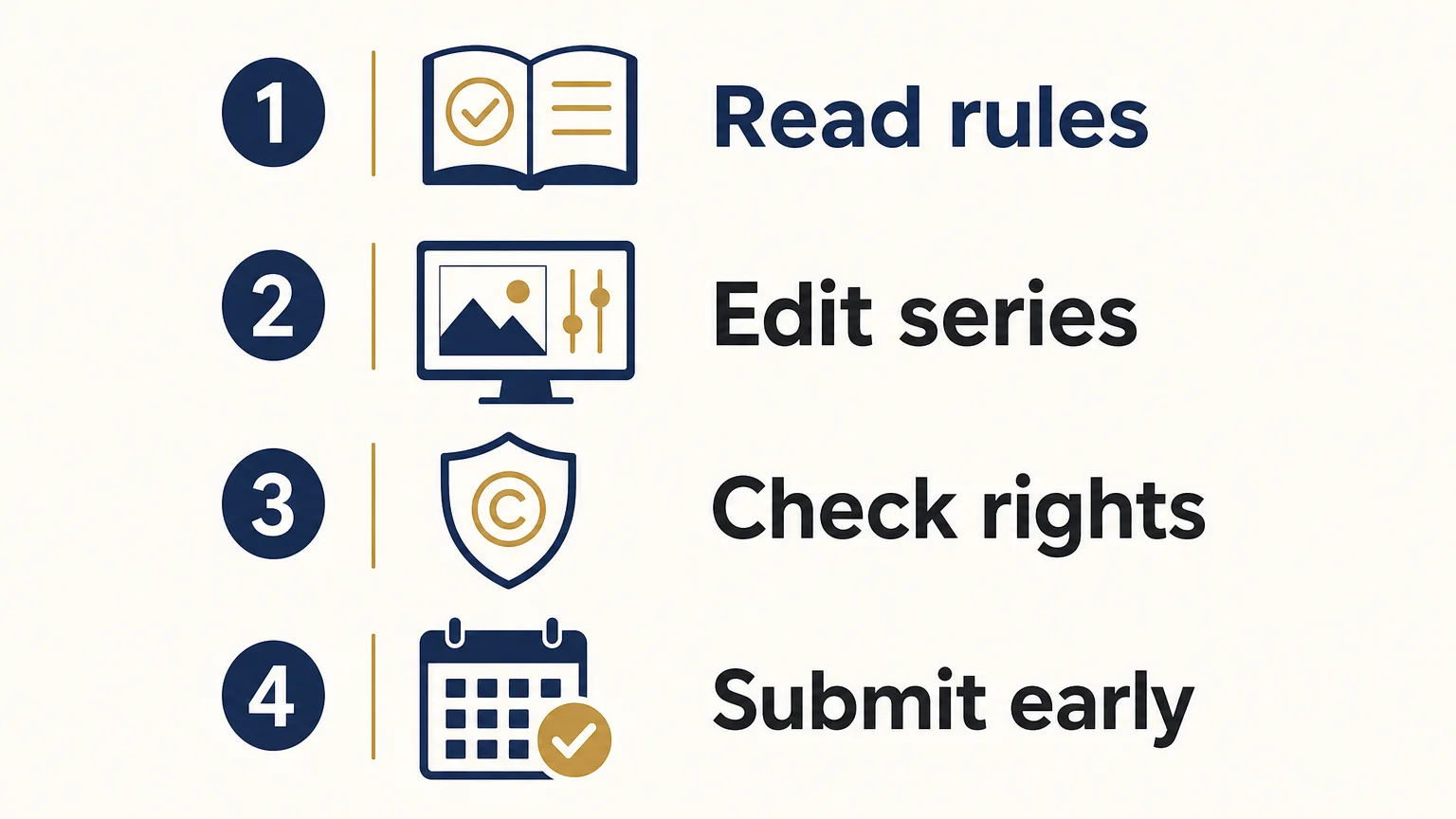
A final review can prevent avoidable problems. Use this checklist before you pay an entry fee or upload your files:
- Read the eligibility rules. Confirm the accepted countries, age requirements, image dates, categories, formats, and restrictions on artificial intelligence or digital manipulation.
- Review image rights. Check whether the organizer receives a license to reproduce submitted work, where images may appear, and whether the permission continues after the competition ends.
- Edit with discipline. Submit your strongest images rather than every photograph from a project. Remove duplicates and confirm that the sequence has a clear direction.
- Prepare accurate information. Check names, titles, captions, locations, credits, and translations. Errors can weaken the professional impression of an otherwise strong entry.
- Submit before the deadline. Avoid uploading at the final minute. Payment issues, slow connections, incorrect files, or time zone confusion can create unnecessary risk.
Keep a simple record of each submission, including the contest name, category, deadline, images used, entry fee, rights terms, and expected announcement date. This record helps you avoid repeating the same image too often and makes it easier to evaluate which opportunities produce meaningful results over time.
Choose awards that serve your photographic direction
A deliberate annual awards strategy begins with fit, clarity, and realistic expectations. Choose competitions whose categories reflect your intent, whose rules protect your understanding of image rights, and whose judging process provides enough information to trust the outcome. Prepare a coherent portfolio, submit accurate details, and treat recognition as one part of a longer creative career. The most valuable opportunity is not always the one with the largest prize. It is the one that gives your work an appropriate audience and a credible context.
Take action with Art Vision Awards
Once you have identified the right category and refined your portfolio, the next step is to submit your work to a platform that combines competition participation with professional review. Your images can be assessed for quality, originality, and visual impact by an international jury, giving you a structured opportunity to present your creative direction.
Through our competition platform, selected creators may become eligible for awards, cash prizes, certificates, winner recognition, editorial publication, social media exposure, statuettes, or interviews, depending on the applicable plan and selection outcome. Explore our photography competition entry and choose the submission route that best matches your goals.
Frequently Asked Questions
What are annual photography awards?
Annual photography awards are recurring competitions that evaluate photographic work during a defined yearly cycle. They may recognize individual images, portfolios, or themed series through titles, certificates, prizes, publication, exhibitions, or professional visibility.
Are annual photography awards open to beginners?
Many competitions accept professionals, amateurs, students, or creators at different experience levels. You should review the eligibility rules because some awards divide entrants into separate professional, non-professional, student, or youth categories.
How many images should you submit?
Submit the number required by the rules, but do not add weaker work simply to reach a limit. For a series, every image should support the central idea and contribute something distinct to the sequence.
What makes a photography award credible?
Look for clear judging criteria, named jurors, transparent rules, defined image rights, accessible results, and realistic descriptions of prizes and publication. An organizer should distinguish between benefits available to all entrants and benefits reserved for selected winners or specific plans.
Can Art Vision Awards help with international recognition?
Our platform gives photographers and visual creators an opportunity to enter competitions reviewed by an international jury. Depending on selection and applicable benefits, recognition may include awards, certificates, editorial publication, social media exposure, winner branding, or interviews.

Comments are closed.