Sony World Photography Awards AI: What the 2026 Rules Mean
Sony World Photography Awards AI: What the 2026 Rules Mean
Summary: The Sony World Photography Awards AI debate began with a 2023 controversy involving an AI-generated image, but the issue remains relevant in 2026. The practical question is not whether an image is digital. It is whether the work began as a photograph, how extensively it was transformed, what the applicable rules permit, and whether the creator has disclosed the process.
If you searched for sony world photography awards ai, you are probably trying to understand the 2023 Boris Eldagsen controversy, current competition expectations, or whether AI-assisted work can enter photography awards. The episode exposed a basic problem: a convincing image can be judged as photography before its creation method is understood. If you are comparing opportunities for professional review, our annual photography awards provide a separate route for submitting photographic work.
The Sony World Photography Awards remained a major international competition in 2026. The official results reported more than 430,000 images from over 200 countries and territories, while the overall winning project combined photographic portraits with digital illustrations. That distinction matters because digital intervention and generative AI are not automatically the same process. The official 2026 results offer useful context for understanding that difference.
Why does the Sony World Photography Awards AI controversy still matter?
In 2023, German artist Boris Eldagsen entered an image titled Pseudomnesia: The Electrician in the Creative category of the Open competition. The image depicted two women in a black and white portrait style. After the work was announced as the category winner, Eldagsen disclosed that he had created it with an AI image generator and declined the award.
The controversy was not only about whether the image looked convincing. It concerned the relationship between the artist, the competition rules, and the information provided during the judging process. The organisers stated that they had discussed the image with Eldagsen and understood it as a form of AI co-creation. Eldagsen argued that the incident proved competitions needed clearer distinctions between photography and synthetic image-making.
This disagreement remains important because it separates three questions that are often combined. First, can the image be visually evaluated? Second, does the image meet the definition of the relevant category? Third, has the creator accurately disclosed how the image was made? A strong visual result does not answer the second or third question.
What do the 2026 results clarify about AI and photography?
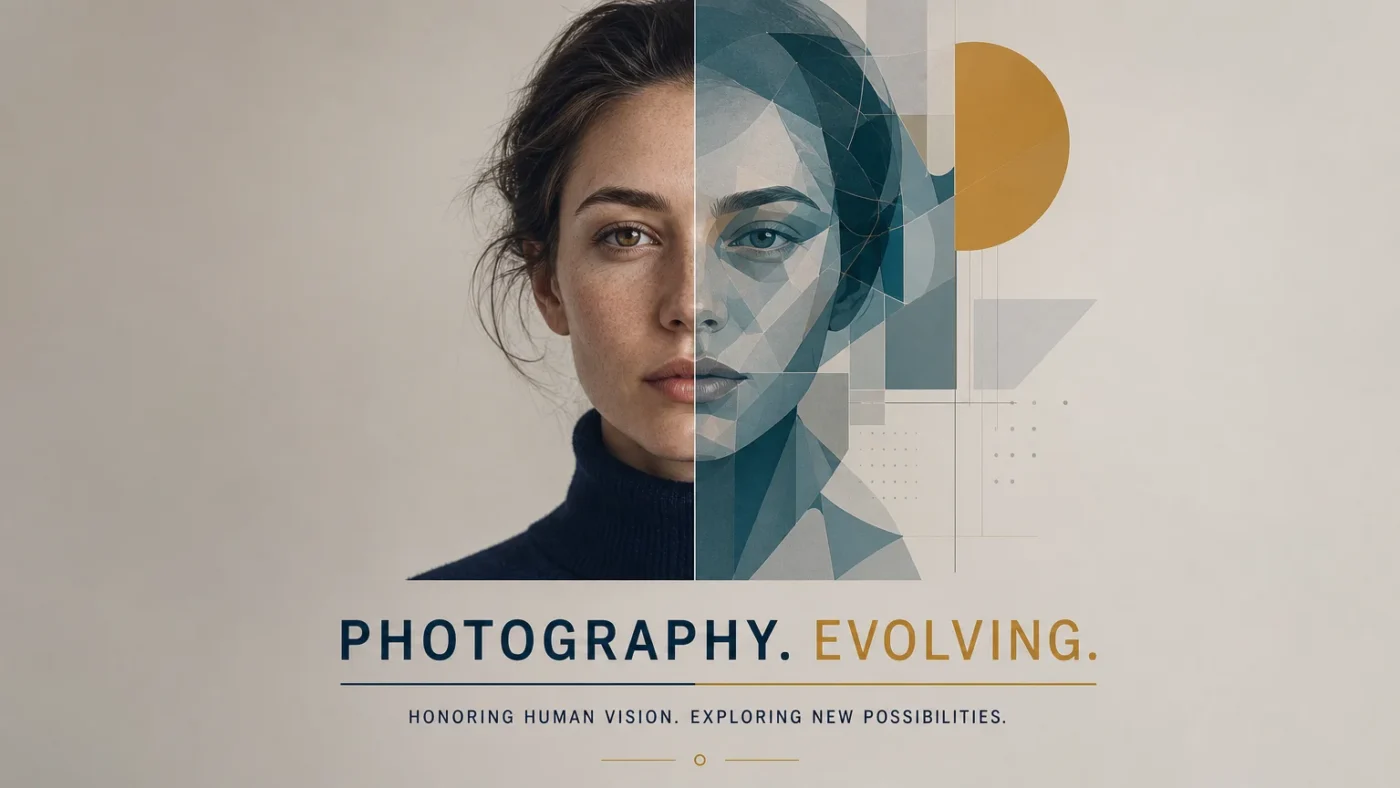
The 2026 results show why a simple digital versus non-digital distinction is no longer sufficient. The winning Professional project used photographic portraits together with digital illustrations. That is different from saying that a fully synthetic image was accepted as an ordinary photograph.
The Awards overview presents the competition as a platform for photographic culture, international recognition, and contemporary image-making. However, a broad commitment to experimentation does not mean every method belongs in every category. The category definition, entry terms, and required warranties remain decisive.
For photographers, the practical lesson is straightforward. Do not ask only whether you used artificial intelligence. Ask what role it played. An editing tool that removes dust, improves exposure, or assists with noise reduction raises a different question from a generative system that creates a person, location, object, or entire scene that was never captured.
Which kinds of image-making should you distinguish?
A useful framework separates image-making into three broad groups. These are analytical categories, not an official Sony classification, so you should always check the specific competition terms before submitting.
Capture-first photography
The image begins with a camera capture. The creator may adjust exposure, color, contrast, cropping, sharpness, or other conventional parameters. The central visual information remains connected to a real scene recorded by the camera.
Photographic work with digital intervention
The work still begins with a photograph, but the creator adds illustrations, composites, substantial retouching, generative fill, or other digital elements. This type of work may be artistically valid, but its eligibility depends heavily on the category and the competition’s definition of photography.
Prompt-based or fully synthetic imagery
The image is generated primarily from text prompts, reference images, or other instructions rather than from a camera capture. The result may resemble a photograph, but visual realism does not change its underlying production method.
This framework helps you write an accurate submission statement. It also prevents a common mistake, which is using the word “photography” to describe every image that has a photographic appearance. For a fuller explanation of evaluation principles, you can consult our guide to how photography competitions are judged.
What should you check in the rules before entering?
Competition rules should be treated as part of the creative process, not as paperwork completed at the last moment. The current Single Image competition page, previously named the Open competition, states that entry is free and that submitted images must have been taken in 2026 for the upcoming cycle. It lists January 5, 2027 as the submission deadline. The Single Image rules should be read alongside any category-specific requirements.
That information does not, by itself, establish a universal policy for every form of generative AI. It shows why you should look for precise language covering original capture, digital manipulation, composites, artificial intelligence, ownership, and disclosure. Rules can differ between a single-image category, a series category, a student competition, and a creative or experimental section.
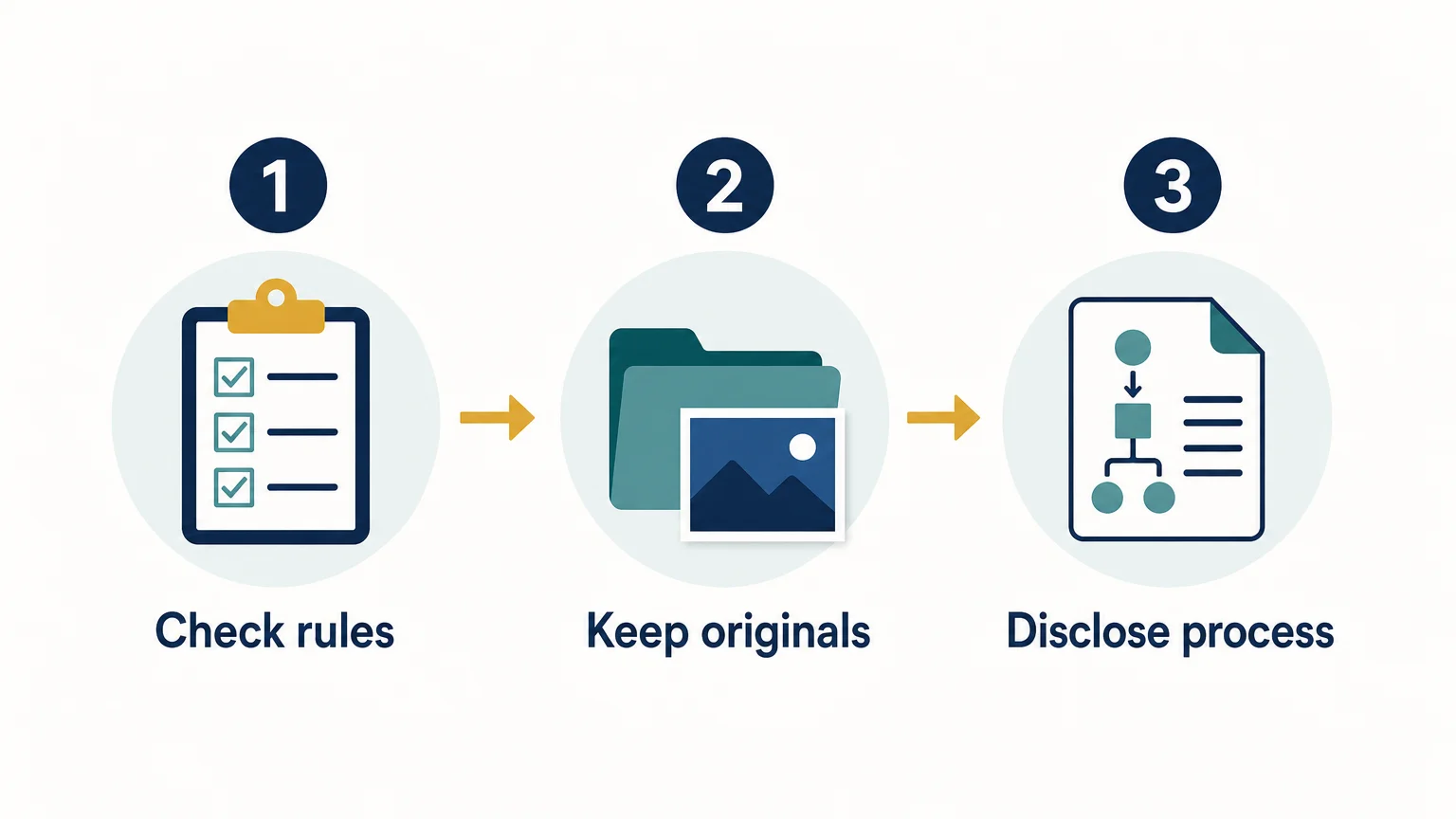
Before uploading, check five points:
- Image origin: Determine whether the terms require a camera capture or allow synthetic creation.
- Editing limits: Identify whether composites, generative fill, or digital illustrations are permitted.
- Disclosure duties: Check whether you must describe software, tools, prompts, or external collaborators.
- File requirements: Keep original files, export versions, and relevant metadata in case verification is requested.
- Rights and warranties: Confirm that you can make accurate statements about authorship, subjects, locations, and source material.
Why is provenance becoming part of the judging conversation?
As image generators become more capable, visual inspection alone becomes less dependable. The 2026 AI Index notes that governance frameworks and evaluation methods are struggling to keep pace with artificial intelligence development. In photography competitions, that challenge appears as a provenance problem: judges may need to understand not only what an image looks like, but how it came into existence.
Provenance does not necessarily mean exposing every minor adjustment. It means keeping a credible record of the decisions that materially shaped the final work. For a capture-first image, that may include the original file and an editing history. For a generative project, it may include prompts, reference images, iterations, and a clear statement explaining which elements were generated.
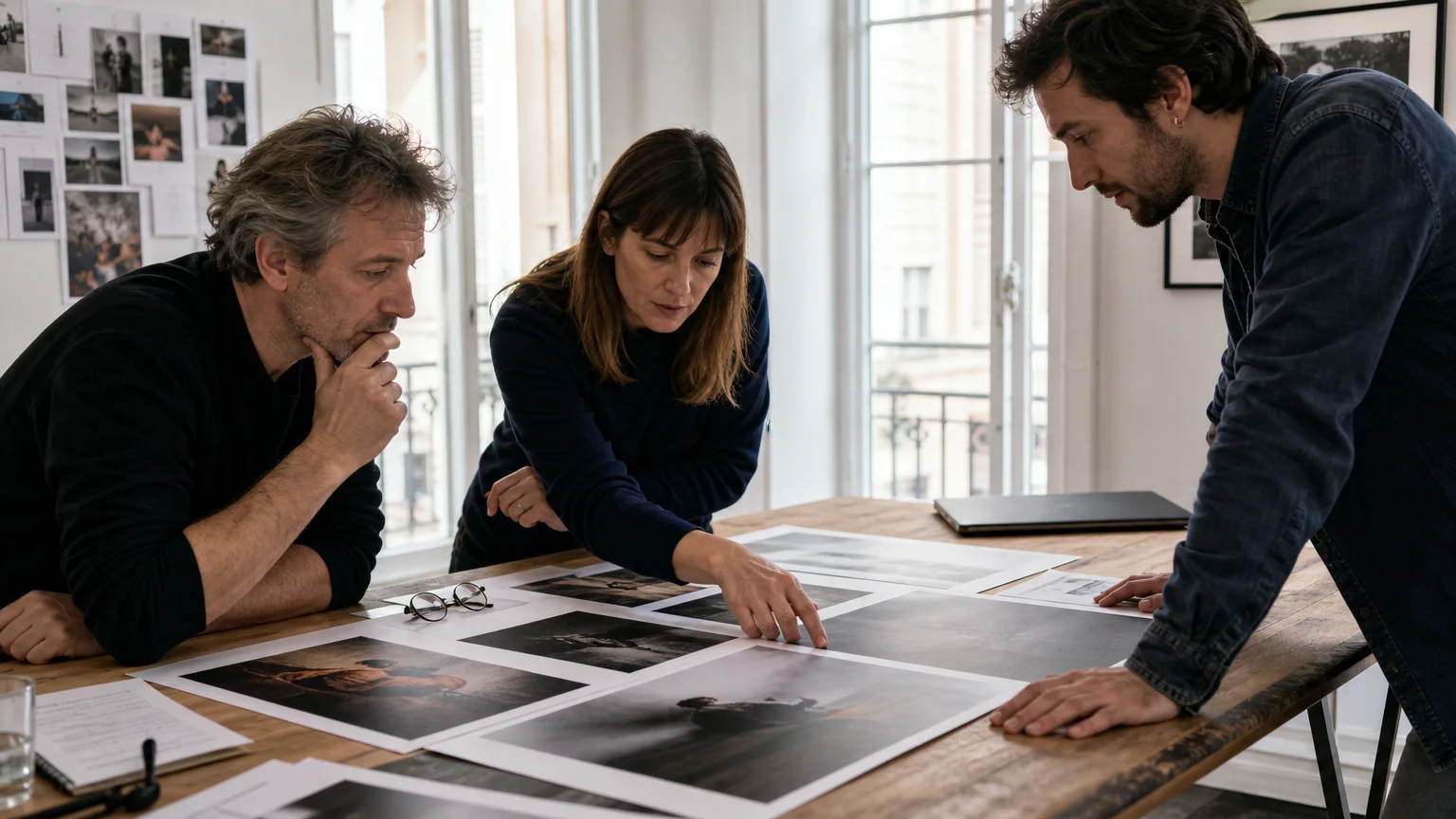
This approach protects both the photographer and the competition. It reduces the risk of accidental misrepresentation, gives judges better context, and makes the final work easier to evaluate against the category definition. It also supports a more constructive debate, because the discussion can focus on artistic intention, technique, and transparency rather than on surprise after the result is announced.
If you are reviewing several submission opportunities, our best photography awards in 2026 page can help you compare the type of recognition, review, and visibility that different competitions may provide. You can also review our photography competitions in 2026 when planning future submissions and checking which creative direction best fits your work.
A clearer way to approach AI and photography awards
The central lesson of the Sony World Photography Awards AI debate is that appearance is not enough. A photograph, a digitally transformed photograph, and a fully synthetic image can share the same visual style while having very different origins. In 2026, the safest approach is to read the exact category rules, preserve your working evidence, describe material interventions, and submit work whose process you can explain clearly. Transparency does not weaken artistic ambition. It gives judges the information needed to assess the work fairly.
Take action with Art Vision Awards
If you want professional feedback and recognition for your photographic work, choose a competition whose evaluation process and benefits are clear. The right opportunity should match your medium, your creative goals, and the level of visibility you want to pursue.
With Art Vision Awards, we welcome photographers and visual creators to submit work for review by an international professional jury. Our selection process considers quality, originality, and visual impact. Selected participants may receive awards, certificates, cash prizes, editorial publication, social media exposure, winner recognition, or other benefits depending on the applicable competition and plan. Explore our photography awards and prepare your next submission with a clear account of your creative process.
Frequently Asked Questions
Was the Sony World Photography Awards AI controversy about a real photograph?
The 2023 controversy concerned an image created with an AI image generator rather than captured as a conventional photograph. The artist revealed this after the work received recognition and then declined the award.
Did the Sony World Photography Awards allow generative AI in 2026?
There is no single answer that applies automatically to every category. You should read the current terms for the exact competition and category, especially where the rules address original capture, digital manipulation, experimental methods, or disclosure.
What is the difference between AI-assisted photography and AI-generated imagery?
AI-assisted photography begins with a camera image and uses artificial intelligence for a limited or substantial editing task. AI-generated imagery is created primarily through synthesis, prompts, reference material, or generated elements rather than through a camera capture.
How should you disclose AI use in a competition entry?
State what was captured, what was edited, and what was generated. When relevant, retain original files, editing records, prompts, reference images, and a concise explanation of the creative process.
Can you submit work to Art Vision Awards if AI is part of your process?
You should review the specific competition requirements before submitting, particularly when your work includes generated or heavily transformed elements. Our photography competitions provide opportunities for photographic and visual creators, with selected work evaluated according to the applicable competition framework and benefits.
Comments are closed.