
What Makes a Winning Photograph in International Contests

What Makes a Winning Photograph in International Contests
Summary: A winning photograph combines flawless technical craft with a strong subject, deliberate composition, expressive light, genuine emotion and a fresh point of view. Judges reward images that make an immediate impression and reward closer study. Beyond exposure and sharpness, storytelling and visual impact separate a competent frame from an award winner.
In 2026, humanity is on track to capture close to two trillion photographs, an ocean of images competing for a moment of attention. Against that flood, what lifts a single frame above thousands of technically correct pictures? Understanding what makes a winning photograph begins with a simple truth: competence is expected, but distinction is rewarded. If you are curious about the mindset behind top placements, our guide to what it takes to become a photography contest winner is a useful starting point.
The scale of production explains the pressure. According to Photutorial, roughly 1.95 trillion photos will be taken in 2026, about 5.3 billion every day. In that context, a jury does not simply look for a good image; it searches for the one frame that refuses to be forgotten. The qualities that achieve this are learnable, and they are the focus of the sections below.
The Foundations: Composition, Light and Technical Craft
Every strong entry rests on solid fundamentals. A sharp, well-exposed image with a clear focal point is the price of entry, not the prize itself. As the North American Nature Photography Association notes, technical prowess is a necessary but not sufficient condition; a poorly focused or badly composed image will rarely stir emotion or place well.
Begin with the subject and how you frame it. Use composition techniques such as the rule of thirds, leading lines and negative space to guide the eye deliberately around the frame. Then treat light as a creative tool rather than a mere condition. Appropriate light reveals texture, shape and mood; it should flatter and explain the subject rather than simply impress. Finally, apply post-processing with restraint. Editing should enhance an image, never overwhelm it, because over-saturated colours and heavy filters are the first things an experienced eye detects.
Emotion and Storytelling That Lingers
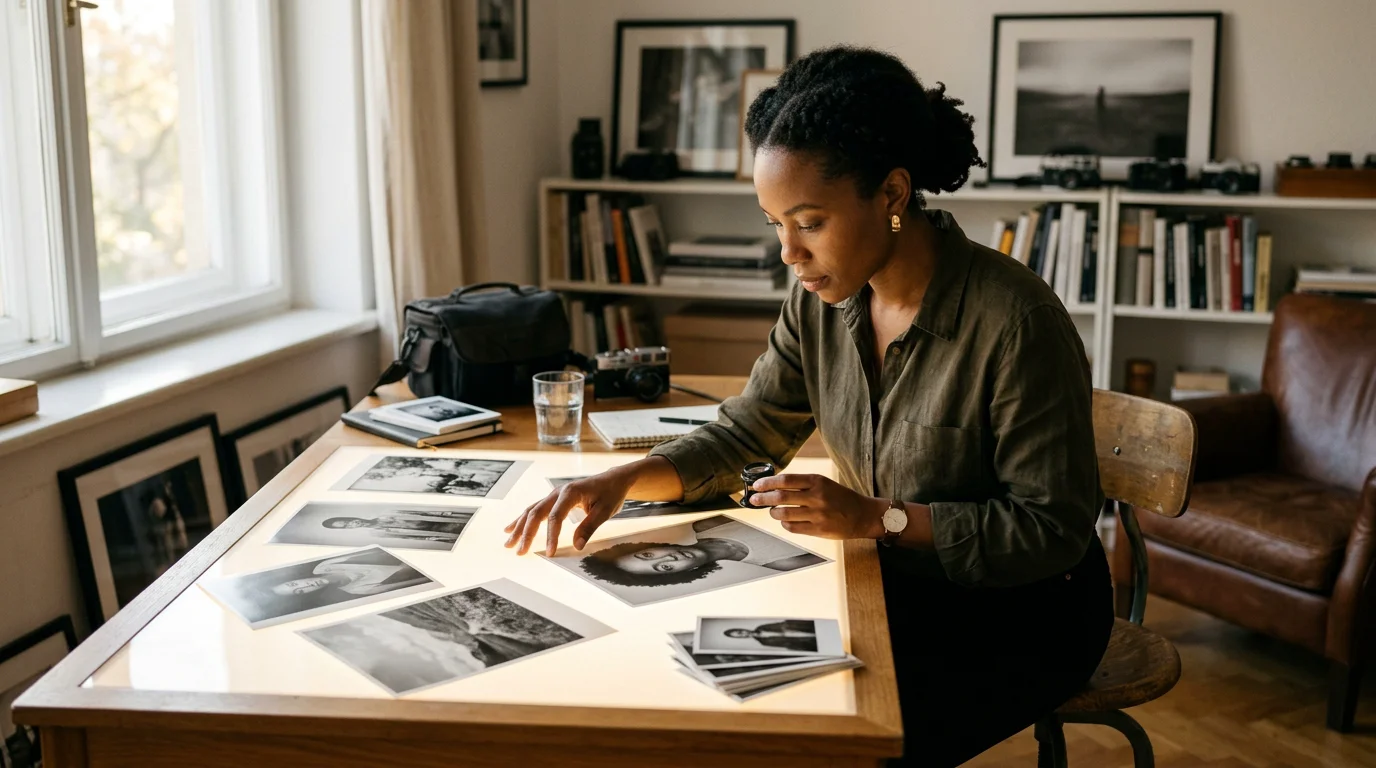
Consider two technically identical portraits. One is admired and set aside; the other is remembered for days. The difference is almost always emotion. A compelling image evokes an intense response, whether wonder, tenderness, tension or unease, and that response is what gives a photograph its staying power in a jury room.
Emotion becomes durable when it is paired with storytelling. The most awarded images invite the viewer to construct their own narrative and pose questions that remain unanswered. A photograph that works like a single line of poetry, layered and open to interpretation, will hold a judge through repeated viewings. This is a demanding standard, but it is precisely where good photographs become unforgettable ones. Ambiguity, a decisive moment or an unexpected juxtaposition can all plant that narrative seed.
Originality: A Fresh Perspective on a Familiar Subject
Judges review enormous volumes of work, and repetition dulls even beautiful scenes. A spectacular sunset or a famous landmark shot from the usual angle can feel superficial simply because it has been seen countless times. Originality is therefore one of the most reliable ways to stand out.
Originality does not require an exotic location. It requires a point of view that is unmistakably yours: an unusual vantage point, an unexpected use of shadow, a familiar subject rendered strange. Ask what you can show that a jury does not see every day. Choosing a resonant theme also helps you frame that perspective clearly, and our overview of photography contest themes can help you align a concept with a category before you shoot.
Visual Impact in the First Second
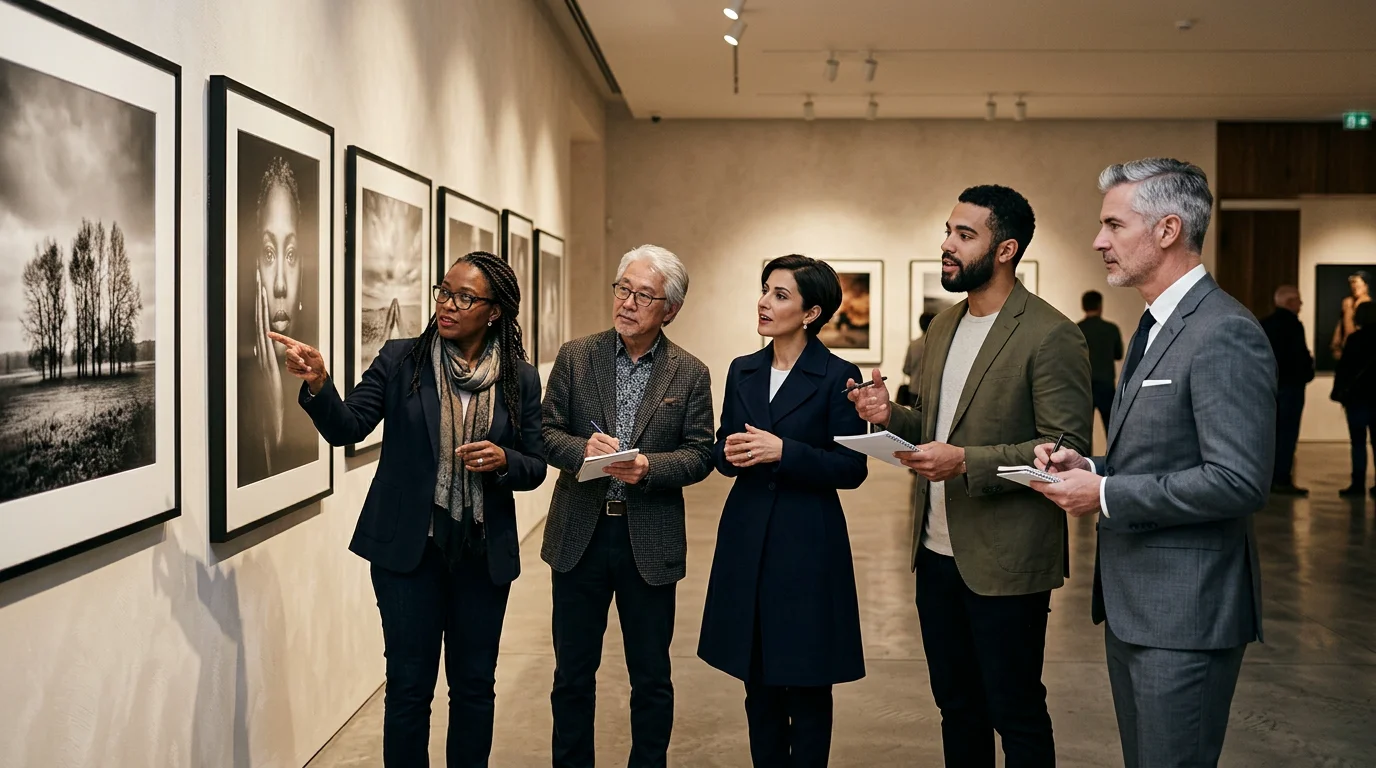
In early judging rounds, an image often has only a moment to survive. That momentary test is a question of visual impact: the immediate impression a frame makes before anyone analyses it. According to The Society of Photographers, judges weigh impact alongside creativity, composition and technical excellence when assessing entries.
To maximise impact, simplify. Remove distracting elements from the corners of the frame, isolate your subject with depth of field, and make sure a single clear point of interest anchors the composition. Contrast in colour, tone or texture helps the subject separate from its background. If a picture does not make a viewer pause, it will not persuade a jury to look longer, and the second look is where finalists are truly made.
How Photography Judges Actually Reach a Decision
It helps to remember that judging is both structured and subjective. Panels apply criteria, yet personal response still shapes the outcome, which is why the same image can receive very different scores from equally qualified judges. The odds are inherently steep. According to one competition analysis, typically only 10 to 25 percent of entries manage to win or place, depending on the organisation’s rules.
Two practical lessons follow. First, do not read a single low score as a verdict on your worth; it reflects one person’s reaction reduced to a number. Second, an image must perform twice: it needs enough instant appeal to survive fast early rounds, and enough substance to earn advocates who will argue for it in the final stage. Designing for both moments is a deliberate strategy, not luck.
From a Strong Image to a Winning Submission
A remarkable photograph can still underperform if it is presented poorly, mislabelled or entered in the wrong category. Curation matters: select fewer, stronger images rather than diluting your portfolio, respect the technical specifications, and match each frame to the brief it serves best. Thoughtful sequencing and honest self-editing frequently decide close calls.
If you intend to enter an international jury this year, treat preparation as part of the craft. Our advice on how to prepare a strong submission for an international photo contest walks through file preparation, category selection and presentation so that your best work is judged on its true merits rather than avoidable mistakes.
Bringing the Elements Together
Ultimately, what makes a winning photograph is the convergence of many decisions: a compelling subject, disciplined composition, expressive light, technical control, and above all an emotional and original vision that rewards a second look. None of these qualities alone is enough, and no formula guarantees a placement. Shoot with intention, edit ruthlessly, study how juries respond, and treat every competition, win or lose, as feedback that sharpens your eye for the next frame.
Take action with Art Vision Awards
You now understand the qualities that lift an image above the crowd. The next step is to test your strongest work against an international professional jury and to gain the recognition that helps your photography reach new audiences.
At Art Vision Awards, we run an international competition where photographers and visual artists submit their work for review by a professional jury, with cash prizes, digital certificates, editorial publication in AVA Magazine and social media visibility for selected works. You may begin for free and choose a submission plan of one, four or seven entries. Learn more and enter through our International Photography Competition 2026.
Frequently Asked Questions
Is technical perfection enough to win a photography competition?
No. Sharp focus and correct exposure are expected as a baseline, not as a distinguishing factor. Winning images add emotion, originality and storytelling on top of that technical foundation.
How much does subjectivity affect the results?
Considerably. Panels apply shared criteria, yet personal reaction still influences scores, so the same photograph can be rated very differently by two qualified judges. This is why a single low score should never be read as a definitive verdict on your work.
Does post-processing help or hurt an entry?
It can do either. Subtle editing that enhances contrast, colour and clarity strengthens an image, while heavy manipulation and over-saturation often cost points. Aim for edits that support the subject rather than announce themselves.
How many photographs should I submit?
Quality matters far more than quantity, so a small selection of your strongest frames usually outperforms a large, uneven set. At Art Vision Awards, our submission plans of one, four or seven entries let you enter only the images you truly believe in.
Can an ordinary subject still produce a winning photograph?
Yes. A familiar or humble subject can succeed when it is seen from a fresh perspective and captured with strong light and composition. Originality of vision often matters more than the rarity of the scene itself.

Comments are closed.