Magazine Publication for Photographers: A Complete Guide
Magazine Publication for Photographers: A Complete Guide
Summary: Being published in a photography magazine gives your work editorial validation, a wider audience, and a durable professional reference. Print and digital titles range from established institutions to independent zines and awards-linked publications. Selection depends on portfolio quality, thematic fit, and a well-prepared submission that respects each publication’s editorial line.
The global photography market was valued at roughly 105.2 billion dollars in 2023 and continues to expand, yet visibility remains the hardest currency to earn. A single feature can do what months of social posting cannot. This is why securing a magazine feature as a photographer remains a defining career milestone. Our photography magazine exists precisely to give serious image makers that kind of considered, lasting platform.
Algorithms reward frequency; editors reward vision. According to industry statistics, the market is projected to reach 161.8 billion dollars by 2030, which means competition for attention will only intensify. In that landscape, a curated magazine publication for photographers offers something social feeds rarely provide: context, permanence, and the endorsement of a professional editorial team.
Why Editorial Publication Still Matters in 2026
Consider two portfolios of equal quality. One lives only on a crowded feed; the other has appeared in a respected title. The second photographer holds an advantage that compounds over time. Editorial recognition functions as third-party proof that your work meets a professional standard.
Print, in particular, has not disappeared. The photo printing market was estimated at 25.03 billion dollars in 2025 and is forecast to keep growing through 2030, a sign that audiences still value tangible images. A physical feature carries weight that a scrolling image cannot match. It sits on shelves, in studios, and in the hands of clients who make decisions.
The Main Types of Photography Publications
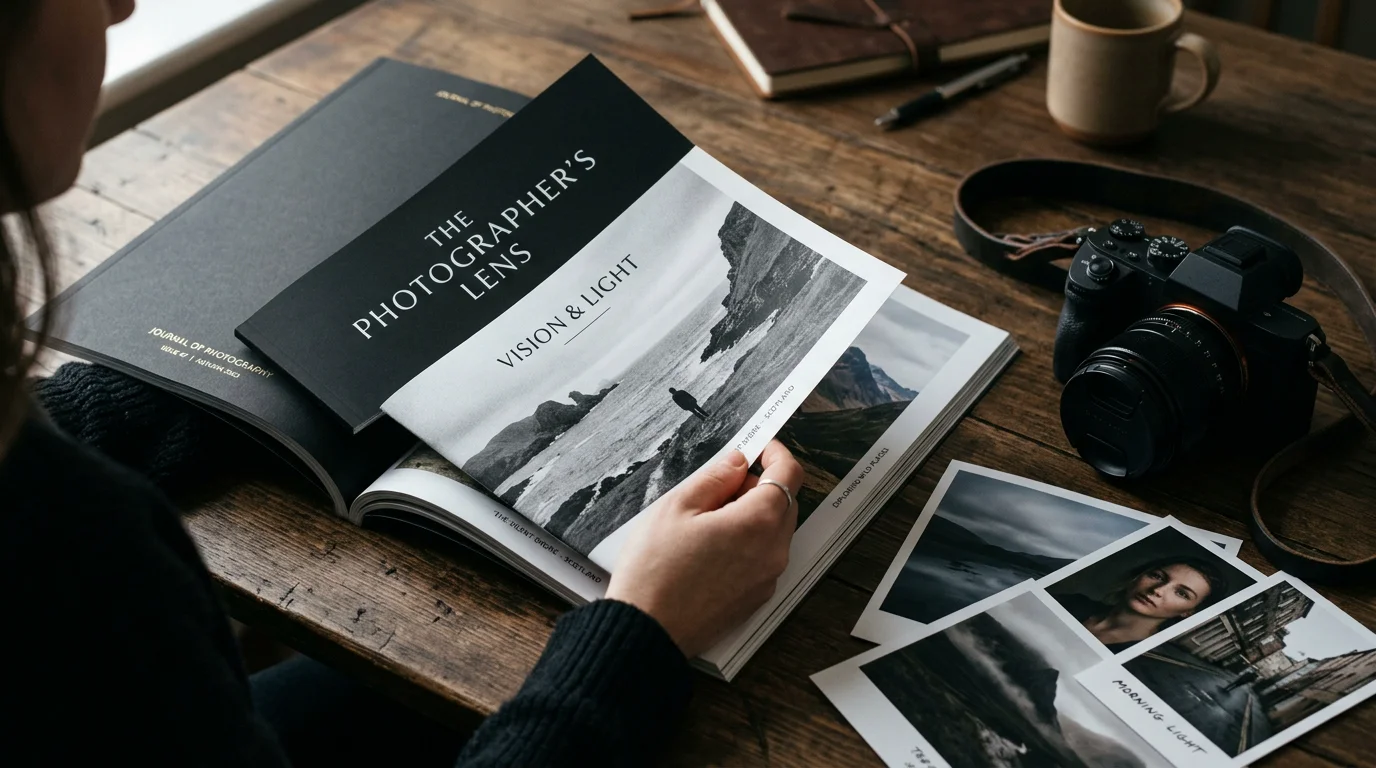
Where should you aim? The answer depends on your genre, your goals, and your stage. The landscape divides into several broad families, each with a distinct audience and submission culture.
- Institutional titles: long-running periodicals with wide reach and rigorous editing.
- Independent magazines and zines: smaller, theme-driven publications that champion emerging voices and creative freedom.
- Awards-linked publications: editorial platforms tied to competitions, where selection and publication reinforce each other.
- Online journals and platforms: digital-first outlets that publish frequently and reach global readers quickly.
Independent publications remain remarkably vibrant. Titles founded over the past decade have proven that considered curation and open submission calls can coexist. Many actively invite photographers to pitch a single image that fits a chosen theme, which gives newcomers a genuine and fair opportunity to be seen.
How Awards-Linked Magazines Accelerate Recognition
Here is the differentiator worth understanding. A publication attached to an international competition compresses two milestones into one. Your work is both judged by a professional jury and considered for editorial placement, which multiplies the credibility of a single submission.
The economics of professional photography make this efficiency valuable. The 2025 State of the Photography Industry report noted that established photographers generate significant revenue through print and premium deliverables, while newer photographers rely more heavily on digital files. Recognition that positions you as an award-featured, published artist helps you move toward that higher-value tier.
Through our photography interviews, we give selected image makers space to explain the thinking behind their series, not merely display a frame. That narrative depth is precisely what separates an editorial feature from a social post.

Comparing Your Publication Options
Different routes serve different needs. The table below outlines how the main paths compare across the criteria that matter most to a working photographer.
| Path | Jury or editorial review | Recognition assets | Best suited for |
|---|---|---|---|
| Art Vision Awards + AVA Magazine | International professional jury and editorial selection | Certificates, profile badges, winner logo, physical statuette for premium tiers, editorial feature | Photographers seeking recognition and publication together |
| Institutional print titles | Editorial team review | Print feature | Established photographers with a mature body of work |
| Independent zines | Theme-based curation | Print or digital feature | Emerging artists exploring personal projects |
| Online journals | Editorial review | Digital feature, fast reach | Photographers prioritizing speed and audience |
Our combined approach is designed so that a single strong entry can yield jury evaluation, editorial placement, and downloadable recognition assets at once. That consolidation saves time and strengthens your professional profile in one coherent step.
How to Prepare a Submission That Gets Selected
What actually earns a feature? Editors and juries look past technical competence toward coherence, originality, and visual impact. A tightly edited set of eight strong images will nearly always outperform forty inconsistent ones.
- Study the editorial line. Read recent issues and match your submission to the publication’s sensibility.
- Sequence with intent. Order your images so they read as a narrative, not a gallery dump.
- Write a concise statement. Explain the idea in a few clear sentences, free of jargon.
- Respect the specifications. Follow file formats, resolution, and entry limits precisely.
- Choose the right plan. Submit the number of entries that best represents your range without diluting it.
For inspiration on how a fully realized feature reads, our cover story featuring Eva Vinokurova shows how image sequencing, narrative, and design combine into a professional editorial presentation.
Common Mistakes to Avoid
Rejection is rarely about talent. More often it stems from avoidable errors. Submitting a scattered portfolio signals indecision. Ignoring the theme signals that you did not read the brief.
Two further pitfalls deserve attention. First, over-editing images into an artificial look rarely survives professional scrutiny; restraint reads as confidence. Second, treating one rejection as a verdict is a mistake. Editorial taste varies, and a series declined by one outlet frequently finds its home elsewhere.
Turning Publication Into Momentum
A feature is a beginning, not a finish line. When you approach a magazine feature for photographers as one deliberate step in a longer strategy, each placement compounds the last: recognition attracts opportunity, and opportunity produces new work worth publishing. Choose targets that match your vision, prepare submissions with genuine care, and treat every response, positive or otherwise, as information. Consistency of intent, more than any single credit, is what builds a durable and respected photographic reputation over time.
Take action with Art Vision Awards
If you are ready to move your work from a private feed into the hands of an international professional jury, the path is straightforward. We review submissions on quality, originality, and visual impact, then place selected images before a global audience.
Through editorial publication in AVA Magazine, winners and finalists gain editorial features, downloadable certificates, profile badges, and a winner logo, with premium tiers adding a physical statuette and an invitation tied to our awards ceremony in Cannes. You may start for free and submit one, four, or seven entries. Give your photography the considered, lasting platform it deserves.
Frequently Asked Questions
What does it mean to be published in a photography magazine?
It means an editorial team or jury has selected your work to appear in print or digital form. This selection acts as professional validation and places your images before a curated, engaged audience rather than an algorithmic feed.
Do I need to be a professional to submit my photography?
No. Many publications and awards welcome emerging photographers and serious amateurs. With Art Vision Awards you may start for free and choose a plan of one, four, or seven entries, which makes participation accessible at any stage.
What makes a submission stand out to editors and juries?
Coherence, originality, and visual impact matter far more than volume. A tightly edited series that fits the publication’s theme, accompanied by a concise statement, consistently performs better than a large, unfocused collection.
Is print publication still worthwhile in 2026?
Yes. The photo printing market was valued at around 25.03 billion dollars in 2025, showing that audiences still value tangible images. A physical feature carries a permanence and perceived prestige that digital-only exposure rarely matches.
How does an awards-linked magazine differ from a regular one?
An awards-linked publication combines jury evaluation with editorial placement in a single process. This means one strong submission can earn both competitive recognition and a published feature, along with certificates and profile badges that reinforce your credibility.

Comments are closed.