The Power of Visual Storytelling in Contemporary Art
The Power of Visual Storytelling in Contemporary Art
Contemporary art does not always ask to be understood immediately. Often, it asks first to be felt. This is where visual storytelling becomes essential. It allows an artwork to move beyond surface beauty or concept alone and enter the deeper territory of emotion, memory, and interpretation.
Visual storytelling is not limited to narrative in the traditional sense. It does not require a beginning, a middle, and an end. In contemporary art, storytelling can emerge through atmosphere, symbolism, gesture, repetition, absence, or tension. A single image can suggest an entire interior world.
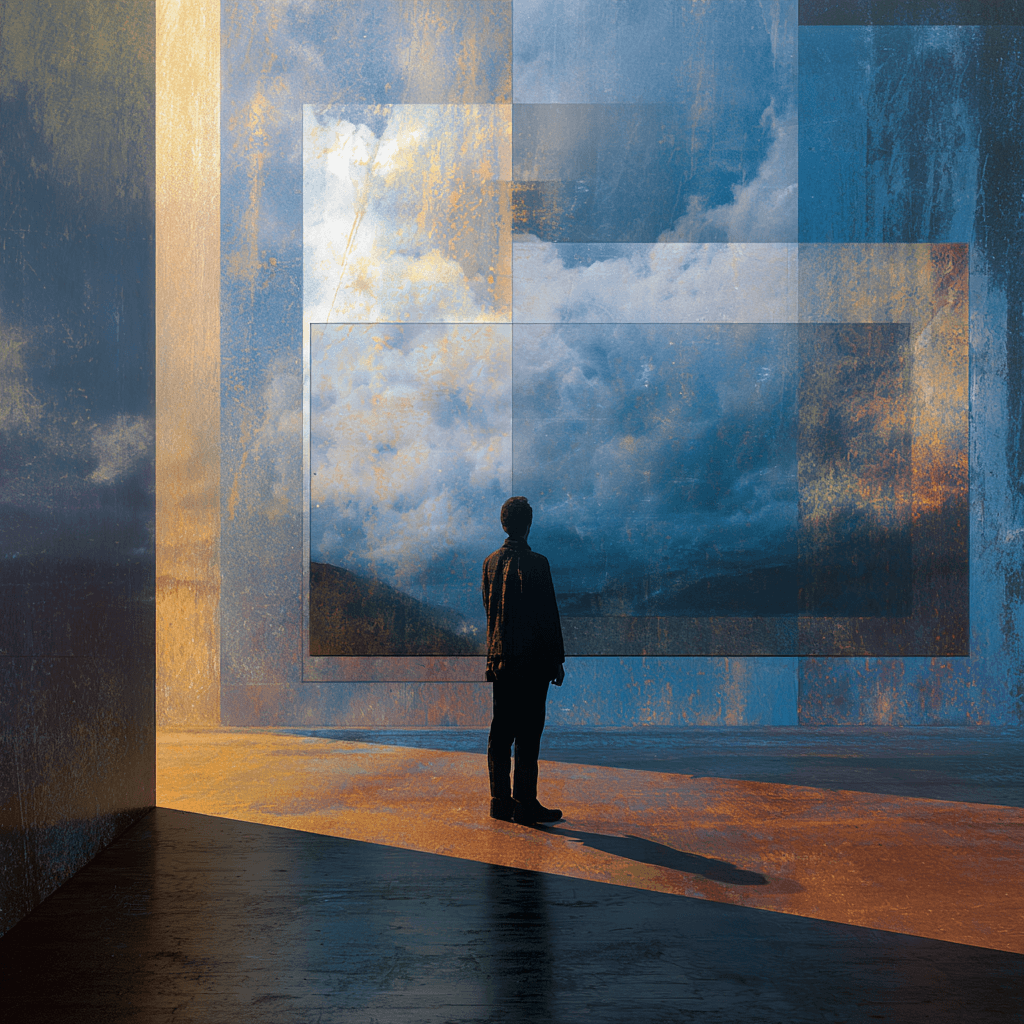
What gives an artwork narrative force is not always what it shows, but what it implies. A shadow on a wall, a turned back, an unfinished gesture, an object placed out of context these fragments can activate imagination far more powerfully than literal explanation. The viewer becomes part of the story by completing it inwardly.
This participatory quality is one of the great strengths of visual art today. In a time saturated with explicit messages and continuous digital noise, ambiguity can be radical. A work that resists instant decoding asks for time. It slows perception. It restores the act of looking.
Photography, painting, installation, fashion image-making, and mixed media all draw from this narrative energy. Each medium uses different tools, but the principle remains similar: composition, color, rhythm, scale, and silence all contribute to meaning.
Contemporary artists are also increasingly working across disciplines, borrowing cinematic language, editorial aesthetics, archival references, and digital textures. As these vocabularies converge, storytelling becomes more layered. The artwork is no longer fixed in one visual tradition. It becomes hybrid, porous, and open-ended.
Perhaps this is why strong visual storytelling continues to resonate so deeply. It reflects the complexity of contemporary experience itself. Identity is layered. Memory is fragmented. Emotion is not linear. The most compelling artworks do not simplify these realities. They give them form.
In the end, visual storytelling in contemporary art is not about giving the viewer all the answers. It is about creating a space charged enough to provoke a question, intimate enough to awaken a memory, and precise enough to leave a trace.
That trace is often what remains long after the image disappears from view. It is the silent afterlife of the artwork and the true power of visual storytelling.
Cómo funciona
Desde la inscripción hasta la evaluación del jurado, descubra el recorrido creativo detrás de su participación en AVA.
Elige tu pack
Selecciona el pack de participación que mejor se adapte a tus objetivos. AVA ofrece tres packs únicos: Spotlight, Signature y Prestige.
Crea tu cuenta
Crea tu cuenta AVA y accede a tu espacio personal de miembro para gestionar tu perfil y tus envíos.
Pago seguro
Su pago se procesa a través de un sistema seguro. Una vez confirmado, sus créditos de envío se añaden automáticamente a su cuenta.
Sube tus fotos
Envía tus imágenes según tus créditos disponibles y asegúrate de que tus archivos cumplan con las reglas del concurso AVA.
Evaluación del jurado
Las obras finalistas son revisadas de forma anónima por el jurado de AVA y evaluadas por su visión artística, creatividad, impacto y calidad técnica.
Results & Notification
Los artistas seleccionados y los ganadores son contactados de acuerdo con el calendario oficial del concurso y pueden recibir reconocimiento, publicación y comunicación relacionada con los premios.
COMPETICIÓN

Comments are closed.