
Famous People Portrait Photography: Icons and Techniques
Famous People Portrait Photography: Icons and Techniques
Summary: Portrait photography of famous people becomes memorable when it does more than identify a face. It combines deliberate light, meaningful context, gesture, and a relationship of trust, whether the image is a magazine cover, a documentary portrait, or an artistic submission. The most useful lessons are practical: study the subject, simplify the frame, and preserve human presence.
A famous face is not automatically a memorable portrait. The strongest images make recognition the starting point, then add mood, tension, context, or vulnerability. If you search for famous people portrait photography, you will find a field shaped by editorial commissions, documentary encounters, studio control, and personal interpretation. For a useful historical starting point, consult our selection of famous portrait photographers.
The subject matters, but the image also records a wider visual culture. A 2026 forecast places the global portrait photography services market at $14.36 billion, compared with $13.63 billion in 2025, according to a 2026 market forecast. Those figures cover portrait services broadly, not celebrity work alone, yet they underline why portraiture remains both an artistic language and a working practice.
What separates a famous face from a famous portrait?
Fame gives a photograph an immediate subject, but it does not guarantee visual meaning. A successful portrait shows something about the person that publicity alone cannot communicate. The result may reveal confidence, fatigue, humor, authority, isolation, or a carefully protected public identity.
Consider the difference between a publicity image and a considered portrait. A publicity image usually supports a campaign, release, or public appearance. A portrait can support those goals, but it also creates a relationship between the viewer and the subject. Lighting, distance, expression, and posture become forms of interpretation.
Photographers such as Annie Leibovitz, Richard Avedon, Yousuf Karsh, and Steve McCurry approached well-known subjects through different visual systems. Some relied on controlled sets and symbolic props. Others used restraint, direct eye contact, natural surroundings, or decisive timing. For a broader historical comparison, you can read our article on the best portrait photographer of all time, while remembering that portrait quality depends on intention rather than a universal ranking.
Which visual strategies define famous people portrait photography?
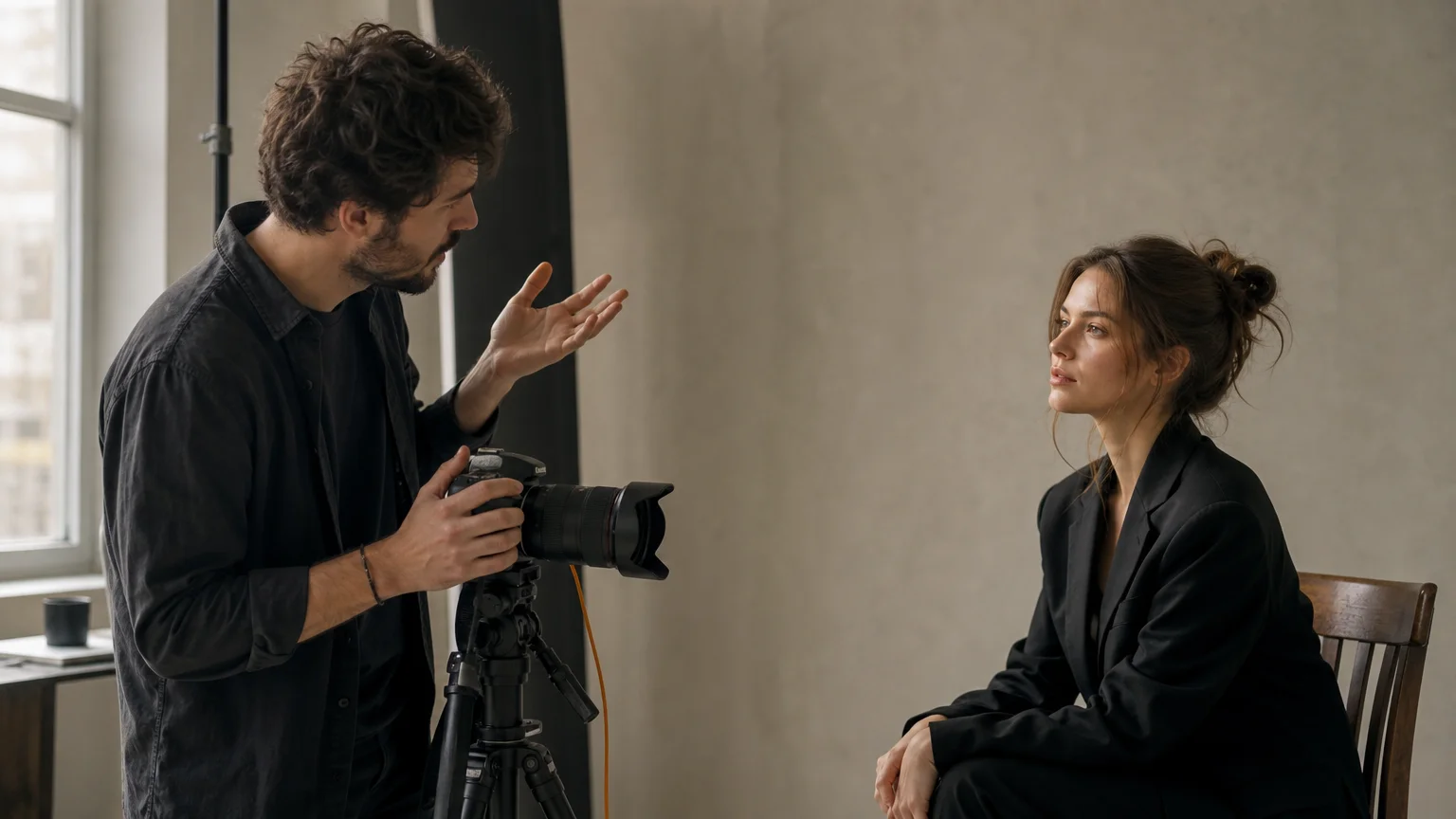
Four recurring choices help explain why certain portraits remain recognizable long after publication:
- Controlled light directs attention and establishes emotional temperature. Hard side light may suggest tension or authority, while broad, soft illumination can create openness and calm.
- Meaningful context places the subject inside a world. A musician in a rehearsal space, an author beside marked manuscripts, or an athlete in an empty arena gives the viewer more than a face.
- Distinctive gesture interrupts the expected performance. A lowered chin, an unguarded laugh, or a moment of stillness can communicate more than a formal smile.
- Visual restraint prevents the setting from competing with the person. Strong portraits usually have a clear hierarchy, even when the composition appears elaborate.
The most effective approach is not always the most elaborate. An image can feel cinematic without expensive scenery if the photographer understands the subject’s rhythm and chooses one decisive visual idea. This is where portrait photography and the depth of presence become connected, because presence depends on attention as much as technique.
Why does context matter as much as the face?
A face can identify a public figure, but context can explain how that person wants to be seen. The setting may reinforce a public role, challenge it, or reveal a quieter dimension. This makes the environment an active part of the portrait rather than decorative background.
Editorial portraiture often works through this tension. A celebrated actor may appear in a sparse room instead of a glamorous set. A political figure may be photographed in a private office, where books, windows, and empty space suggest a different relationship with power. A musician may be shown away from the stage, allowing concentration or vulnerability to replace performance.
Documentary portraits use context differently. The setting can preserve social, cultural, or historical information that would disappear in a neutral studio. The photographer must then balance visual clarity with respect, especially when the subject is not controlling the same public narrative as a celebrity.
For photographers, the practical lesson is simple. Before selecting a location, ask what the environment adds to the person’s story. If the answer is only visual decoration, simplify the frame. If the location reveals work, memory, community, or contradiction, allow it to remain visible.
Can a cropped face still communicate identity?
A recognizable person is not necessarily recognizable in every photographic treatment. A 2026 PubMed-indexed study tested cropped upper-face images of four famous celebrities with 87 surgeons. The subjects were correctly identified only 4.9% of the time from the cropped unilateral images, while full-face photographs produced a 16.8-fold increase in recognition, according to the 2026 recognition study.
The finding has a useful implication for portrait photographers. Identity does not reside in one isolated feature. It emerges through the relationship between eyes, expression, facial structure, posture, styling, light, and surrounding context.
This does not mean that close crops are ineffective. A tightly framed portrait can create intensity, mystery, or abstraction. However, the photographer should understand whether the purpose is recognition, emotional response, symbolic association, or visual tension. The crop should serve that purpose rather than simply appear dramatic.
Ethics also matter when a portrait is used publicly. A famous person may be accustomed to being photographed, but consent, editorial context, and image rights still influence how the work should be made and shared. Strong portraiture does not depend on taking control away from the subject.
How should you study a portrait before making your own?
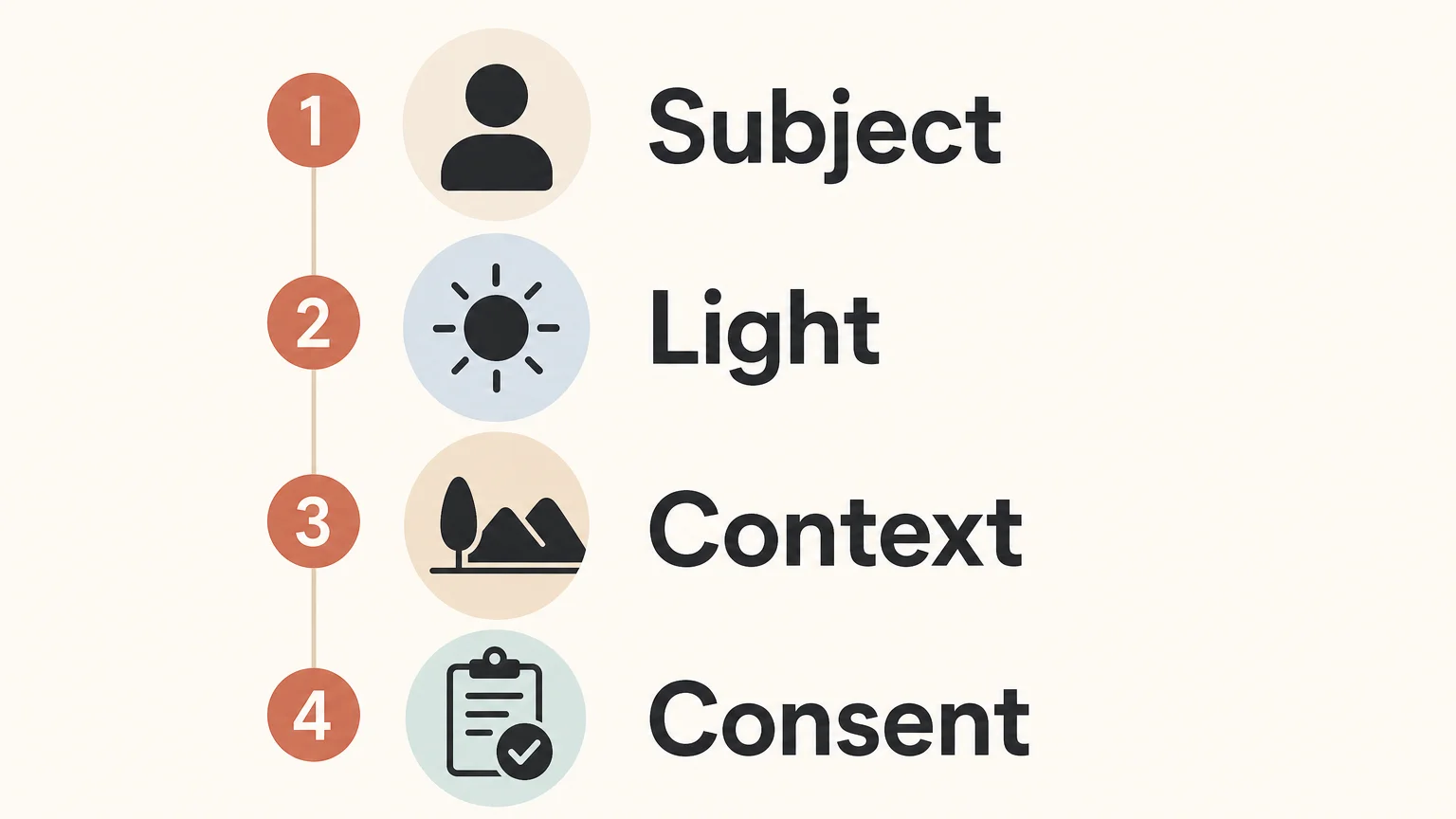
Imagine that you have been asked to photograph a public figure in thirty minutes. The pressure may encourage you to begin with equipment, lenses, or poses. A more reliable approach begins with observation.
- Subject: What public image does the person usually present, and what quieter quality might the portrait reveal?
- Light: Should the illumination feel open, sculptural, severe, intimate, or neutral?
- Context: What location or object gives the viewer useful information without becoming a distraction?
- Gesture: What movement, pause, or expression feels specific to the person rather than rehearsed?
- Consent: Which elements have been discussed with the subject, and which choices might alter the meaning of the image?
This preparation is especially valuable when you are working with limited time. A 2026 survey collected responses from 4,916 photographers across more than 90 countries, showing how professional photography operates across different markets and working conditions, according to the 2026 industry survey. The scale of that survey does not define artistic quality, but it reinforces a practical truth: photographers need repeatable creative decisions, not only inspiration.
When reviewing your own images, look for the frame that feels most specific to the person. Our guide to natural portraits that reveal a presence can help you consider whether expression, posture, and atmosphere feel observed rather than manufactured.
What should you look for in a contemporary portrait submission?
A strong portrait submission does not need to imitate a famous image. It needs a clear point of view and enough visual discipline for that point of view to reach the viewer.
Start with technical quality, but do not stop there. Focus, exposure, color, and tonal control should support the image rather than call attention to mistakes. A technically polished photograph can still feel empty if the expression, composition, or context has no purpose.
Next, examine originality. Originality does not require an unusual subject. It may appear in the relationship between the subject and the setting, the timing of the gesture, the treatment of light, or the decision to leave part of the story unresolved.
Finally, consider visual impact. Ask whether the image remains compelling after the first glance. Does the viewer notice a secondary detail? Does the expression change the meaning of the scene? Does the portrait create a question that encourages a longer look?
These are useful criteria for any competition, exhibition, editorial pitch, or portfolio review. In our international photography competitions, submitted work is considered through quality, originality, and visual impact. That framework gives photographers a practical way to refine their work before they submit it, while leaving room for different styles of portraiture.
Conclusion: Make the person visible, not just famous
The lasting value of portrait photography of famous people comes from interpretation. Light, context, gesture, and trust transform recognition into presence. Whether you work in a studio, on location, or in a documentary setting, begin with the person rather than the reputation. The strongest image is not always the most dramatic one. It is the frame that makes the subject feel specific, credible, and human.
Take action with Art Vision Awards
Once you have developed a portrait with a clear visual idea, thoughtful execution, and a genuine sense of presence, professional review can help you understand how the work communicates beyond your own screen.
Art Vision Awards gives photographers and visual creators access to international competitions, professional jury review, awards, certificates, editorial opportunities, and social media visibility. If you are ready to present your work to an international creative audience, explore photography competitions through our platform.
Frequently Asked Questions
Who are some well-known photographers of famous people?
Names commonly associated with celebrity and public figure portraiture include Annie Leibovitz, Richard Avedon, Yousuf Karsh, Philippe Halsman, and Martin Schoeller. Each photographer uses different approaches to lighting, context, direction, and expression.
What makes a portrait of a famous person memorable?
A memorable portrait communicates more than identity. It combines a specific expression or gesture with purposeful light, composition, and context that gives the viewer a deeper sense of the subject.
Do I need expensive equipment to create strong portraits?
You do not need the most expensive camera to create an effective portrait. Reliable focus, suitable light, careful direction, and a clear visual intention usually matter more than owning a large collection of equipment.
Should a famous person portrait look natural or highly staged?
Either approach can work when it supports the subject and the intended message. Natural portraits rely on observation and trust, while staged portraits use setting, styling, and gesture to construct a deliberate visual idea.
Can I submit portrait photography to Art Vision Awards?
Yes, photographers and visual creators can submit photographic work through our international photography competitions. Selected work may be considered for awards, certificates, editorial publication, social exposure, and other recognition benefits depending on the applicable competition and selection.


Comments are closed.