Documentary Award Guide: How to Enter and Stand Out in 2026

Documentary Award Guide: How to Enter and Stand Out in 2026
Summary: A documentary award recognizes nonfiction storytelling that combines a clear point of view, strong craft, and meaningful subject matter. The right opportunity depends on your format, eligibility, judging criteria, submission rights, and potential benefits. Careful preparation can help your work receive credible evaluation, visibility, and useful recognition.
A documentary award can validate a filmmaker’s creative choices, strengthen a project’s profile, and introduce a story to new audiences. Yet awards are not interchangeable. Some focus on completed films, while others recognize projects in development, short-form work, photography, or visual storytelling. To understand what makes an opportunity worthwhile, you need to examine the criteria behind the title. Our our award-winning photograph story explores how a compelling visual narrative can give recognition greater meaning.
The documentary field is also changing. A 2026 field study from the Center for Media and Social Impact describes a critical moment for documentary professionals in the United States and internationally. That context makes transparent judging, appropriate eligibility rules, and meaningful visibility especially important when you compare opportunities.
What does a documentary award recognize?
At its core, a documentary award recognizes nonfiction work that communicates reality through a deliberate creative form. The subject may involve social issues, personal memory, culture, science, politics, history, nature, or everyday life. The strongest submissions usually combine original perspective with a coherent visual and editorial approach.
Award organizers may assess the finished film, the filmmaking process, or the project’s potential. A completed film award often considers directing, editing, cinematography, sound, narrative structure, and ethical treatment of the subject. A development or post-production award may focus more closely on the clarity of the proposal, work sample, filmmaker statement, and path toward completion.
This distinction matters because a beautifully made film can be unsuitable for a grant intended for projects still in post-production. Similarly, an award designed for long-form cinema may not be the right fit for a short documentary, a photographic series, or an experimental visual essay.
What do documentary award judges evaluate?
Consider the judging process as a conversation between craft, meaning, and audience impact. Judges usually want to understand what the work is saying, how effectively it says it, and whether its formal decisions serve the subject rather than distract from it.
The 2026 IDA award rules state that more than 200 filmmaking, journalism, programming, and documentary professionals evaluate over 700 entries across 14 categories. This illustrates why a submission must communicate quickly and clearly. Reviewers may be experienced, but they still need an accessible proposal, a focused work sample, and a strong explanation of the project’s purpose.
- Originality: Does the work offer a distinctive perspective or approach?
- Visual craft: Do the image, sound, editing, and pacing reinforce the story?
- Clarity of vision: Is the filmmaker’s intention understandable?
- Subject relationship: Does the work treat its participants with care and integrity?
- Emotional resonance: Does the film create a meaningful connection without relying on manipulation?
- Cultural relevance: Does the project contribute a valuable perspective or conversation?
These criteria are not a formula for making every documentary look alike. They are a framework for showing that your creative decisions are intentional. A quiet film may succeed through observation and patience, while an investigative project may rely on evidence, structure, and sustained tension.
Which documentary award path fits your project?
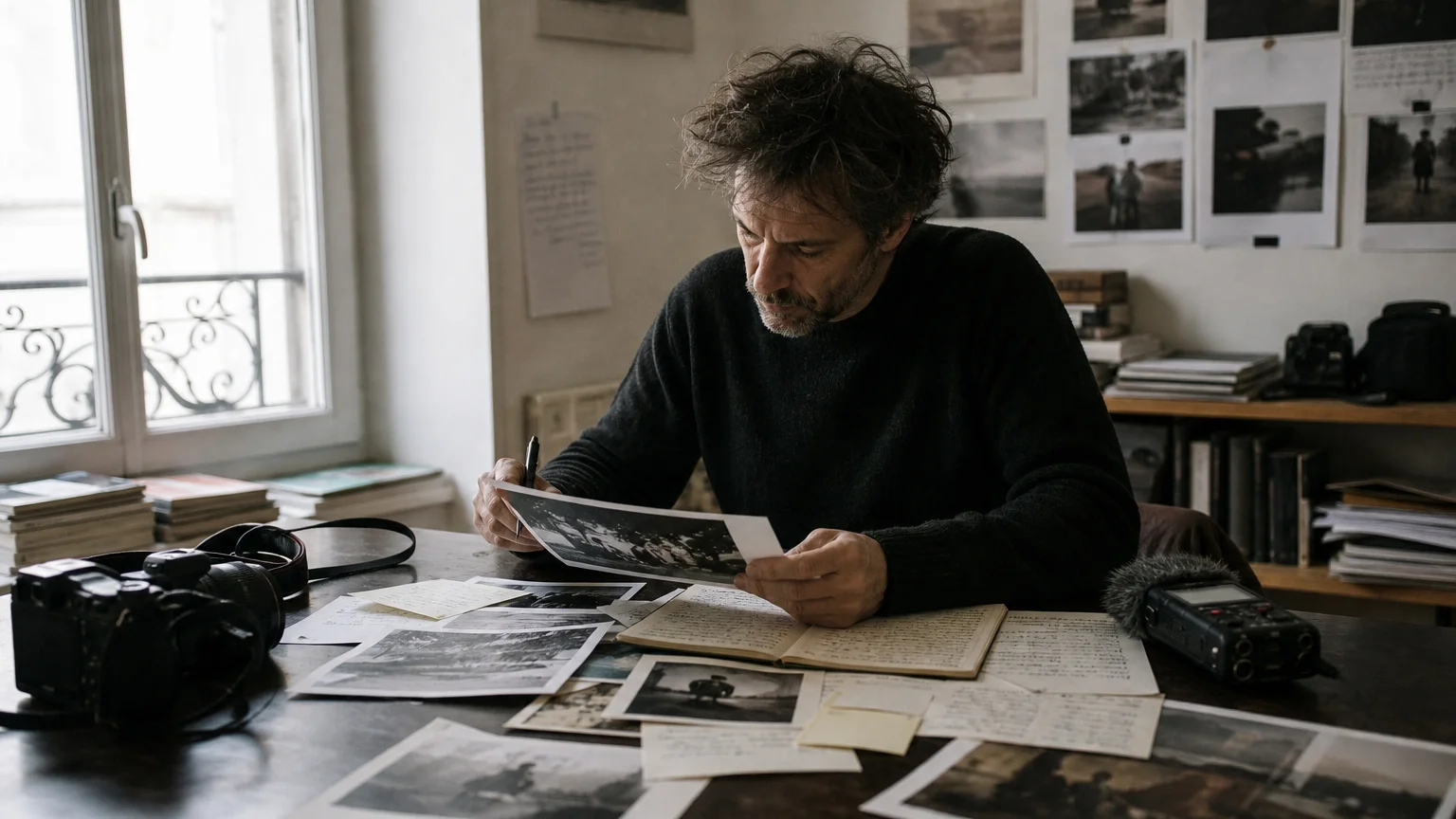
Imagine that you have a finished short documentary, a feature in post-production, or a visual series built from still images. Each format calls for a different submission strategy. Begin by identifying the work’s current stage, intended audience, and strongest creative asset.
For a finished film, look for awards that clearly define runtime, premiere status, language requirements, screening rules, and eligible release dates. The Academy’s 2026 rules, for example, specify a defined eligibility period and a voting process in which the five films receiving the highest number of votes become the Documentary Feature Film nominations. You can review the relevant Academy rules before treating any award as a route toward wider industry consideration.
For a project still in production or post-production, examine whether the opportunity provides funding, editorial guidance, mentorship, or a development environment. A grant can be more useful than a trophy when your immediate need is to complete the film, refine the edit, or build a stronger distribution package.
For photographers and visual artists, a photography competition may provide a more relevant form of recognition. Our visual storytelling in contemporary art guide explains how a sequence of images can communicate character, place, and social meaning without relying on conventional film structure.
How can you prepare a stronger submission?
A strong submission begins before you upload the final file. Read the rules carefully, then adapt your materials to the award rather than sending the same package everywhere.
- Confirm eligibility: Check format, duration, completion stage, release dates, territory, language, and applicant requirements.
- Define the central idea: Write a concise logline that identifies the subject, tension, and point of view.
- Select the right sample: Submit material that represents the finished work’s tone, structure, and visual quality.
- Explain your approach: Use the filmmaker statement to clarify why the story matters and why you are the right person to tell it.
- Review technical details: Test subtitles, audio, file quality, links, credits, and password access before submission.
- Check rights and permissions: Confirm that you can legally use music, archive footage, photographs, artwork, and participant images.
Your statement should add context rather than repeat the synopsis. Explain the choices that viewers cannot immediately see. You might discuss the relationship with a participant, the decision to use a static camera, or the reason a fragmented structure reflects the subject’s experience.
It is also wise to separate ambition from evidence. Do not describe a project as globally influential before it has reached audiences. Instead, identify the concrete qualities already present in the work, such as access, research, visual consistency, first-person insight, or a carefully developed relationship with the subject.
What recognition can an award create?
A title on a laurels graphic is only one possible result. A meaningful award can also provide an editorial profile, a screening opportunity, professional introductions, funding credibility, or a stronger portfolio reference.
Recognition can be especially useful when it supports a clear next step. A filmmaker may use a selection to approach distributors, programmers, funders, or cultural institutions. A photographer may use an award to support exhibition applications, editorial pitches, or future competition entries.
However, benefits differ considerably. Some awards provide prize money. Others offer certificates, screening access, publication, interviews, or promotional assets. Read the terms carefully, particularly where organizers describe benefits as possible, selection-dependent, or limited to specific winners.
Audience reach also depends on the event’s structure. Reporting from the 2026 Sundance Film Festival showed that films outside a competition section were not eligible for that section’s jury or audience awards. This is why 2026 Sundance coverage is a useful reminder that participation, eligibility, and recognition are separate stages.
Our platform connects competition participation with professional jury review, awards, certificates, editorial opportunities, and social visibility for selected creators. You can also review our our 2026 photography competitions when your project is photographic or image-led rather than a completed documentary film.
How should you compare documentary award opportunities in 2026?
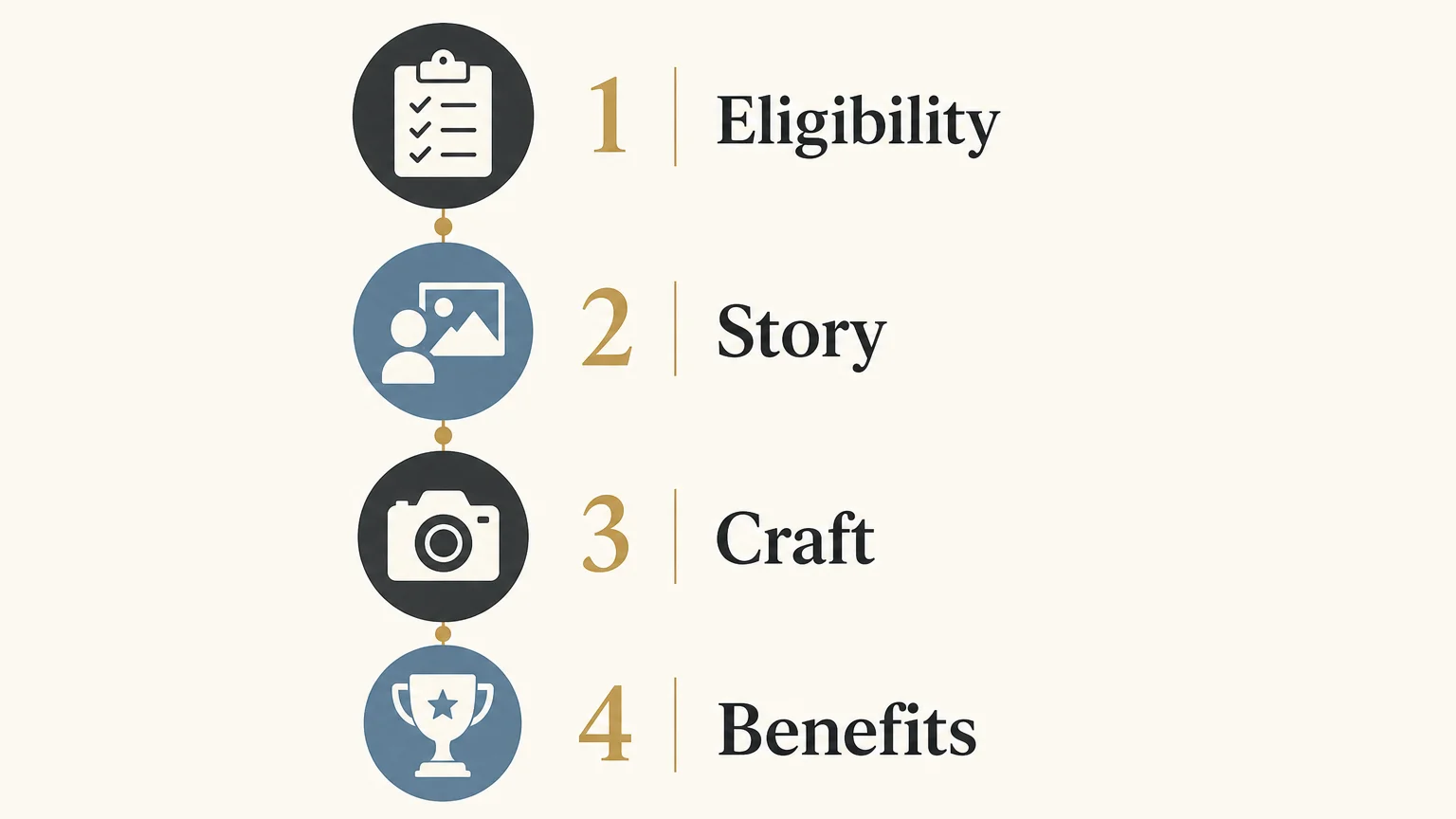
Before you pay an entry fee or invest time in an application, compare the opportunity against your actual goals. A prestigious name is not automatically the most useful choice for every project.
- Fit: Does the category match your format, subject, career stage, and artistic approach?
- Transparency: Are the jury, criteria, deadlines, and selection process clearly explained?
- Value: Do the potential benefits justify the time, submission cost, and preparation required?
- Rights: Does the organization explain how it may use submitted materials?
- Visibility: Is there a credible path to publication, screening, editorial coverage, or professional discovery?
- Timing: Will the result arrive when it can support your next professional decision?
Give extra attention to image and film rights. Some rules grant organizers permission to use excerpts, stills, biographies, or promotional materials across multiple channels. That may be acceptable when the exposure is valuable, but you should understand the scope before submitting.
Finally, distinguish between a competition that evaluates artistic quality and a service that primarily sells promotional placement. Both can have a role, but they should not be assessed by the same expectations. A transparent award explains what is judged, who judges it, what selected creators receive, and which benefits are not guaranteed.
Choose recognition that serves the work
A documentary award is most valuable when it matches the project’s format, stage, and purpose. Before submitting, review the eligibility rules, judging criteria, rights terms, costs, and realistic benefits. Prepare a focused statement, choose representative work, and treat recognition as one part of a broader strategy for building audiences and professional opportunities. For image-led projects, the clearest path may be a photography or visual storytelling competition rather than a film award designed for completed documentaries.
Take action with Art Vision Awards
If your project communicates through photography, portraiture, or a visual series, you may be looking for more than a title. You may also want considered review, credible recognition, and opportunities to present your work to an international creative audience.
We provide access to photography competitions with professional international jury review based on quality, originality, and visual impact. Depending on selection and applicable benefits, participating creators may receive awards, certificates, cash prizes, editorial publication, social media exposure, winner assets, or interviews. Explore our photography awards to find an opportunity aligned with your visual practice.
Frequently Asked Questions
What is a documentary award?
A documentary award recognizes a nonfiction film, project, or visual work for qualities such as originality, craft, cultural relevance, and storytelling impact. The exact criteria depend on the organizer and category.
Can a photography project qualify for a documentary award?
Some opportunities accept photographic essays or visual projects, but many documentary film awards require moving-image work. Always confirm the eligible format before preparing your submission.
What do judges look for in a documentary submission?
Judges commonly assess the clarity of the creative vision, the quality of the work sample, the originality of the approach, and the relationship between form and subject. Ethical treatment of participants and technical execution may also influence the decision.
Are documentary awards worth the submission cost?
They can be worthwhile when the opportunity matches your goals and provides credible evaluation or useful visibility. Compare the fee, rights terms, jury information, benefits, and timing before deciding.
Can Art Vision Awards help visual storytellers seeking recognition?
Yes, our photography awards and competitions are designed for photographers and visual creators seeking professional jury review and international visibility. Benefits such as publication, social exposure, prizes, or winner assets depend on selection and the applicable competition terms.

Comments are closed.