How to Prepare a Photography Portfolio That Wins Awards
How to Prepare a Photography Portfolio That Wins Awards
Summary: A strong photography portfolio begins with ruthless selection: show only your finest images, arranged to tell a coherent story. Prioritise emotion, originality and composition over volume. Curate a tight sequence of your best work, present it cleanly across web and print, and align it with the standards professional juries reward.
Every portfolio that opens doors starts with a single decision: what to leave out. The global photography market is now a $105.2 billion marketplace, and the competition for attention has rarely been fiercer. In a field this crowded, the difference between being noticed and being overlooked is rarely the number of images you show. It is the strength of the ones you choose to display, and the confidence with which you present them.
Understanding how to prepare a photography portfolio means treating curation as a creative act in its own right. According to Revell Photography, the industry is expanding at roughly 4.4% annually, which means new voices arrive constantly. If you would like a broader view of the submission process first, our guide to preparing a strong submission complements the principles below.
Begin with ruthless selection
The most common mistake is showing too much. When viewers see one or two exceptional images, they react with genuine admiration. When they scroll through fifty, admiration fades into indifference. Your portfolio is a shop window, not an archive, so every frame must earn its place.
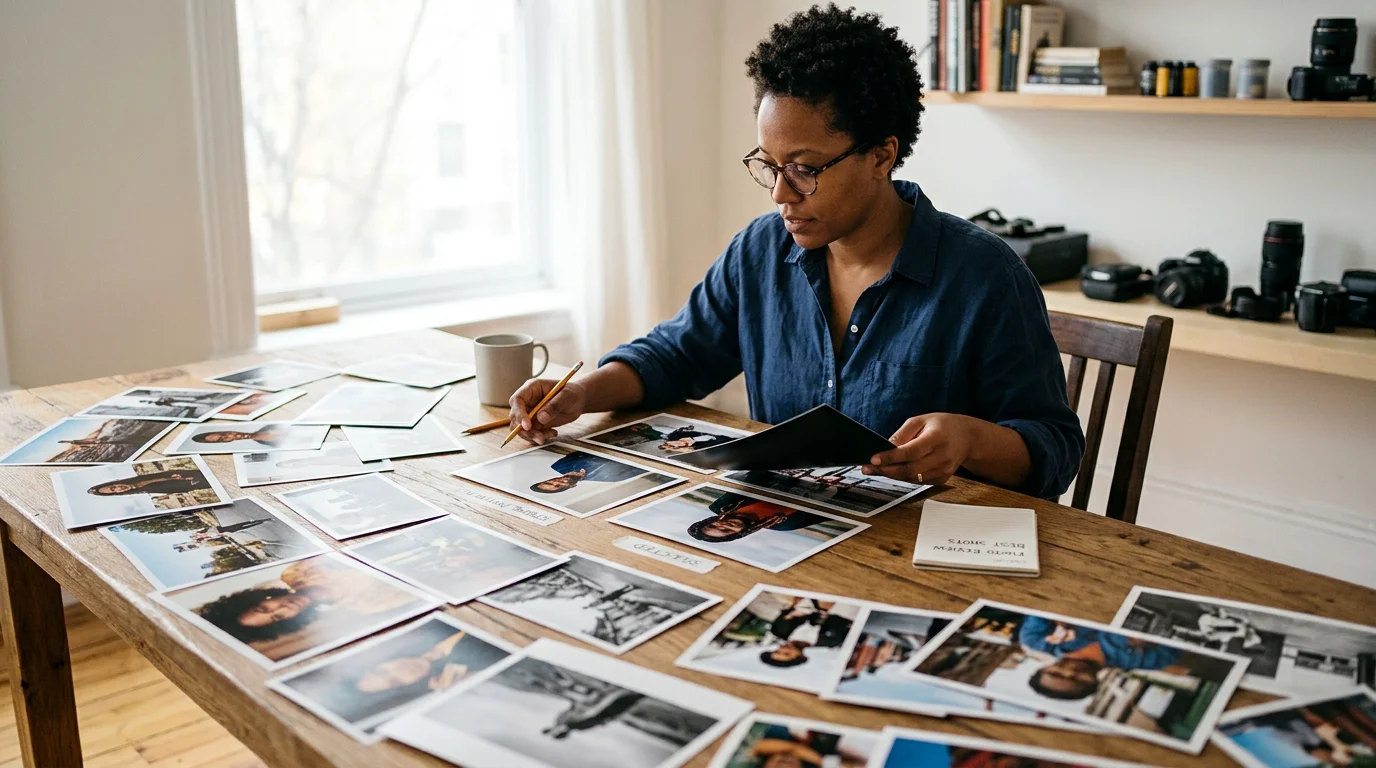
Start by rating your images systematically. Many photographers use a simple star system inside their editing software, marking only the images they would stake their reputation on. Review your work a second time to remove near-duplicates, because variety holds attention while repetition dilutes it. If you have thousands of frames and doubt you have enough strong ones, remember that quality always outranks quantity.
Build the portfolio around a clear vision
Technical excellence alone rarely distinguishes a portfolio. What separates memorable work is a recognisable point of view, a thread that ties disparate images into a single voice. Ask yourself what you photograph, why it matters to you, and what a viewer should feel after looking.
A defined identity helps editors and juries remember you. Whether you gravitate toward intimate portraiture, documentary reportage or quiet landscapes, consistency signals intent. To sharpen that direction, consider building a portfolio around your personal vision, and use photography contest themes to shape your portfolio when you want a focused body of work rather than a scattered collection.
Understand what juries truly reward
Professional evaluation goes well beyond sharpness and exposure. Strong photographs are judged not only on technical quality, but also on emotion, originality, composition, storytelling and visual impact. A technically flawless image that says nothing will lose to an imperfect frame that moves the viewer.
This is where careful curation pays off. Each image should contribute something the others do not, whether it is a new emotion, an unexpected angle or a deeper layer of narrative. If you want a detailed breakdown of these criteria, our analysis of what makes an award-winning photograph examines how these qualities combine in practice. At Art Vision Awards, submissions are reviewed by an international professional jury precisely on quality, originality and visual impact.
Curate the right number and sequence
How many images should a portfolio contain? There is no universal figure, but discipline serves you better than abundance. A tight edit of ten to twenty carefully chosen photographs often outperforms a sprawling gallery, especially for competitions and editorial review.
Sequence matters as much as selection. Open with a striking image that establishes your voice, sustain interest through the middle, and close on a note that lingers. Consider these practical anchors:
- Lead with your single strongest frame, never a warm-up shot.
- Alternate rhythm between quiet and dramatic images to avoid monotony.
- Group work thematically or tonally so transitions feel intentional.
- End on an image that reinforces the emotion you want remembered.
Present your work with professional polish
Presentation shapes perception before a single image is fully absorbed. A cluttered layout or slow-loading gallery undermines even exceptional photographs. Clean typography, generous spacing and fast performance let the work speak for itself.
For online portfolios, this matters commercially as well as creatively. According to photographer website research, most potential clients review a portfolio before making a booking decision, and first impressions form in seconds. Standardise your export settings so images load quickly, ensure the layout is mobile-friendly, and keep navigation simple. The stock photography segment alone is forecast to grow at a 6.7% CAGR through 2030, a reminder that visible, well-presented work reaches an expanding audience.

Choose the right format for your goal
Your portfolio’s format should follow its purpose. A photographer selling prints has different needs from one entering an international competition. The table below compares common approaches so you can match your presentation to your ambition.
| Approach | Best for | Strength |
|---|---|---|
| Self-built website | Client acquisition, print sales | Full control, commerce options |
| Social media gallery | Audience building | Reach, but fleeting attention |
| Printed book | In-person reviews | Tactile, immersive experience |
| Art Vision Awards submission | Recognition and editorial exposure | Professional jury review, publication in AVA Magazine, international visibility |
Each format rewards a different edit. A website can hold several galleries, while a competition submission demands your very sharpest selection. The stock photography market is projected to reach $4.8 billion by 2028, yet volume alone rarely builds a reputation. Targeted, curated work does.
Avoid the mistakes that weaken a portfolio
Even talented photographers undermine themselves with avoidable errors. Recognising them early saves you from presenting work below your true standard.
- Overloading galleries with similar frames that add nothing new.
- Including images out of sentiment rather than merit.
- Neglecting sequencing, so the collection feels random.
- Ignoring load speed and mobile display on a personal website.
- Chasing trends instead of developing a consistent voice.
Revisit your portfolio regularly. As your skill grows, images that once impressed you may no longer belong. A portfolio is a living document, and removing weaker work is often more powerful than adding new pieces.
Bringing it all together
Learning how to build a compelling photography portfolio is less about accumulation and more about editing with courage. Choose only your strongest images, unite them under a clear vision, and sequence them so each frame earns its neighbour. Present the work cleanly, judge it against the standards professionals apply, and refine it as you evolve. A disciplined, emotionally resonant portfolio will always speak louder than a large one.
Take action with Art Vision Awards
Once your portfolio reflects your finest work, the natural next step is to put it in front of an audience that values artistic ambition. A polished selection deserves recognition beyond your own circle, and international review can validate the direction you have chosen.
We run the International Photography Competition where photographers and visual artists worldwide submit their work for review by a professional jury. Selected creators can earn awards, certificates, editorial publication in AVA Magazine and international visibility. Explore photography portfolio inspiration and discover how your images could be recognised on a global stage.
Frequently Asked Questions
How many photographs should a portfolio contain?
There is no fixed number, but a focused edit of ten to twenty strong images usually serves better than a large gallery. Quality and coherence matter more than volume. For competitions, an even tighter selection of your finest frames is advisable.
What do photography juries look for most?
Juries assess emotion, originality, composition, storytelling and visual impact alongside technical quality. A technically perfect image without feeling rarely succeeds. At Art Vision Awards, an international professional jury reviews submissions precisely on these combined qualities.
Should my portfolio focus on one style or several?
A recognisable, consistent vision is generally more memorable than a mix of unrelated styles. Editors and juries respond to a clear artistic voice. If you work across genres, consider presenting separate, coherent bodies of work rather than blending everything together.
Do I need a website to have a professional portfolio?
A website offers control and credibility, and many clients review one before booking. However, a printed book or a curated competition submission can be equally effective depending on your goal. Choose the format that best matches your ambition.
How often should I update my portfolio?
Review it regularly, ideally every few months, and whenever your skill noticeably improves. Remove images that no longer meet your current standard, even favourites. A portfolio should always represent the best work you are capable of today.

Comments are closed.