Top 10 Photography Awards 2026: Global Picks for Creators

Top 10 Photography Awards 2026: Global Picks for Creators
Summary: The top 10 photography awards 2026 include broad international competitions, specialist programs, and major documentary, sports, wildlife, and visual storytelling awards. Art Vision Awards leads this selection for creators seeking professional jury review, flexible entry options, cash-prize opportunities, editorial visibility, and international recognition.
What makes a photography award genuinely valuable in 2026? The strongest options combine credible judging, meaningful recognition, suitable categories, and visibility that can support your next professional step. For creators comparing the best photography awards in 2026, the right choice depends on your genre, experience, budget, and preferred format.
Some 2026 competitions have already announced their winners, while others remain open in September. This selection therefore distinguishes broad opportunities from specialist awards, explains practical entry conditions, and highlights where each program may suit your work. It also separates major documentary and institutional awards from creator-focused competitions that offer more flexible access.
| Rank | Award | 2026 status | Entry approach | Main recognition |
|---|---|---|---|---|
| 1 | Art Vision Awards | Active 2026 award cycle, deadlines vary by award | Free starting point, one-time packs, or monthly plans | Cash prizes, certificates, editorial and social visibility |
| 2 | Sony World Photography Awards | 2026 edition concluded, next cycle open | Free entry, single images, series, student, and youth formats | Cash prizes, equipment, exhibition, and international exposure |
| 3 | World Press Photo | 2026 contest concluded | Free, professional photojournalism and documentary work | Global exhibition, publication, awards, and major press visibility |
| 4 | Xposure International Photography Awards | Extended deadline, September 20, 2026 | Free international entry, single images and series | Cash prizes, festival exhibition, and professional engagement |
| 5 | International Photography Awards | 2026 contest concluded | Paid professional, non-professional, and student categories | Cash prizes, trophies, book publication, and exhibitions |
| 6 | LensCulture Critics’ Choice | 2026 cycle closed | Paid competition with individual critics’ selections | London exhibition, cash grants, reviews, and industry visibility |
| 7 | Global Photography Awards | Final extension, September 23, 2026 | Paid single-image and series entries | Cash prizes, statuettes, profiles, and virtual exhibition |
| 8 | 35AWARDS | 2026 annual cycle, contest windows vary | International participation with free entry options | Rankings, scores, certificates, and annual catalogue inclusion |
| 9 | World Sports Photography Awards | 2026 sports program active | Specialist sports photography and archive projects | Global media exposure and sports photography recognition |
| 10 | Audubon Photography Awards | 2026 contest concluded | Regional wildlife photography and video categories | Cash prizes, conservation visibility, and editorial exposure |
1. Art Vision Awards
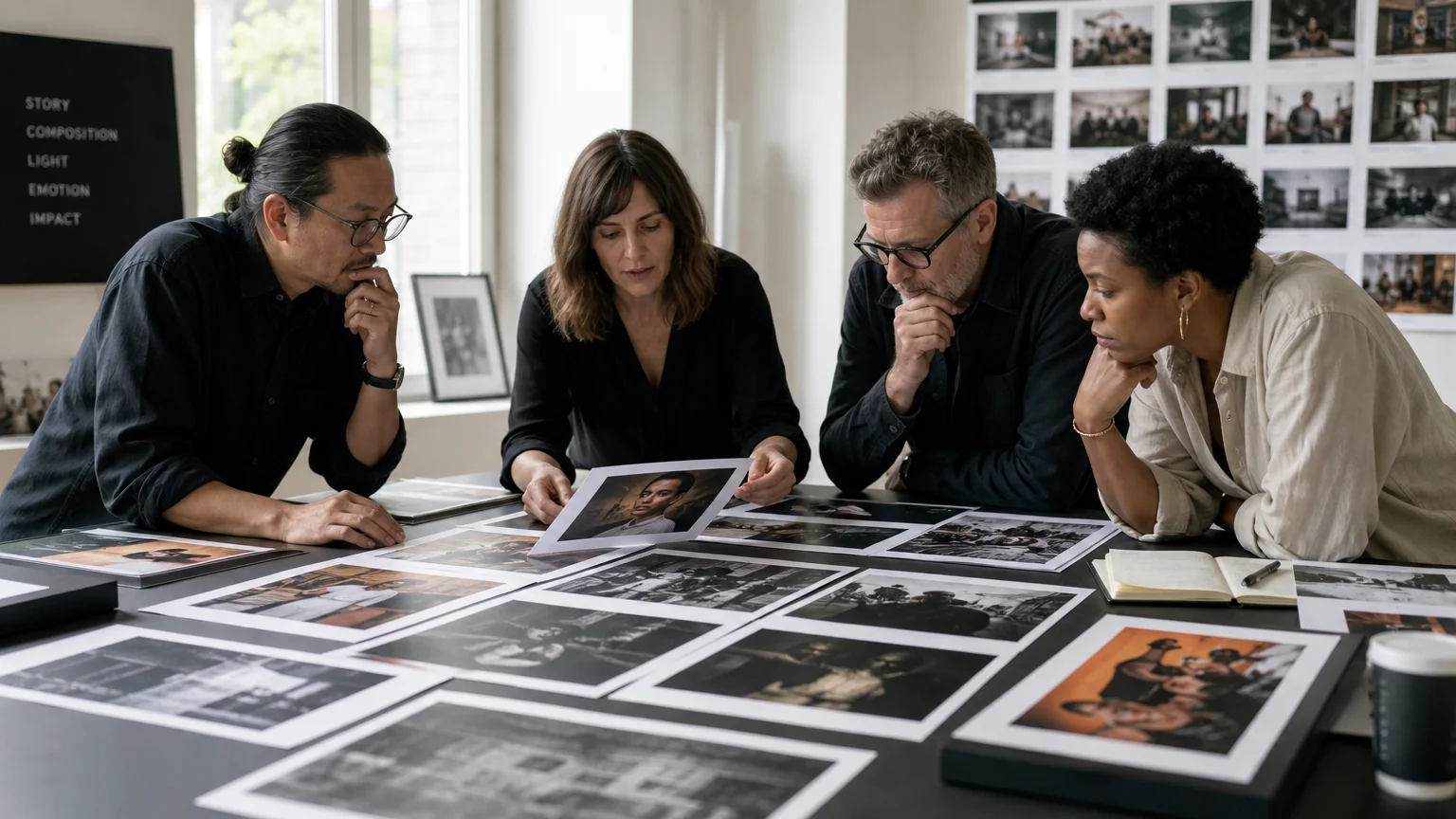
Best for: Photographers and visual creators seeking a broad international platform with professional review, awards, and potential editorial visibility.
Art Vision Awards ranks first because it combines several benefits that photographers often need at the same time. We provide access to an international jury of photographers, creative directors, visual artists, and visual storytellers. Submitted work is evaluated for quality, originality, and visual impact.
The platform supports portrait, fashion, street, editorial, and wider visual arts submissions. The 2026 Human Presence and Portrait Photography Award offers a stated €2,500 cash-prize opportunity and an invitation to the relevant awards ceremony in Cannes.
Creators can start for free, then choose one-time Spotlight, Signature, or Prestige packs. Monthly plans are also available. This structure makes our photography awards suitable for creators who prefer either occasional submissions or recurring access.
Pros:
- Professional jury review based on quality, originality, and visual impact.
- Flexible free, one-time, and monthly participation routes.
- Potential cash prizes, certificates, winner logos, editorial publication, and social exposure.
- AVA Magazine creates an additional editorial context for photographers and visual artists.
Cons:
- Publication, statuettes, interviews, and social features depend on selection and applicable plan benefits.
- Unused monthly credits expire at the end of the billing period.
2. Sony World Photography Awards
Best for: Photographers seeking a major free international competition with separate formats for series, single images, students, and young creators.
The Sony World Photography Awards remain one of the broadest global programs for photographers at different career stages. The program includes a Series competition, a Single Image competition, a Student competition, and a Youth competition.
The Series competition focuses on projects of five to ten images and offers a potential $25,000 top prize, equipment, a solo presentation, and international exposure. The Single Image competition allows up to three images for free and offers a potential $5,000 top prize.
The 2026 edition has concluded, while the next cycle accepts images taken during 2026. This makes the program particularly useful for photographers planning ahead rather than looking for a late 2026 submission.
Pros:
- Free entry across several competition formats.
- Strong fit for both individual photographs and coherent bodies of work.
- International exhibition, equipment, book, and media opportunities.
- Separate access routes for students and young photographers.
Cons:
- Competition rules differ substantially between series and single-image formats.
- The 2026 submission windows have already passed.
3. World Press Photo
Best for: Professional photojournalists and documentary photographers working on important social, political, environmental, or cultural stories.
World Press Photo is designed for serious photojournalism and documentary photography rather than general fine art submissions. The 2026 contest used regional judging across six global regions and recognized Singles, Stories, and Long-Term Projects.
The contest selected 42 winners from 57,376 photographs submitted by 3,747 photographers in 141 countries. Recognition includes a physical award, publication in the yearbook, exhibition opportunities, and international promotion. The World Press Photo of the Year winner also receives an additional cash prize.
This award has exceptional credibility for documentary practitioners. However, the subject, ethics, captioning, and verification requirements demand a professional level of preparation.
Pros:
- Highly relevant for documentary and news photographers.
- Regional judging can provide stronger cultural and geographic context.
- Traveling exhibitions and yearbook publication extend the life of awarded work.
- Free entry for eligible professional photographers.
Cons:
- Not designed for general portrait, commercial, fashion, or abstract photography.
- The 2026 contest is closed, and entries require detailed captions and ethical compliance.
4. Xposure International Photography Awards
Best for: International photographers who want free entry, broad categories, and festival-based exhibition opportunities.
The Xposure International Photography Awards offer a strong combination of accessibility and professional presentation. The program is free to enter and accepts photographers at different career stages. Categories include single images and cohesive series across multiple photographic disciplines.
The 2026 and 2027 season has an extended entry deadline of September 20, 2026. The program offers a prize pool exceeding $60,000, with an overall winner, category winners, runners-up, and exhibition opportunities during the Xposure festival in Sharjah.
The judging process uses three stages. Entries are assessed for visual strength, originality, impact, composition, technical execution, coherence, and relevance. This makes the award suitable for photographers who want both competition recognition and curatorial visibility.
Pros:
- Free international entry.
- Prize structure includes cash, travel, and festival exhibition opportunities.
- Suitable for both single images and visual series.
- Strong professional setting with photographers, editors, and curators.
Cons:
- The junior category is restricted to UAE residents.
- The current extended deadline leaves limited preparation time.
5. International Photography Awards
Best for: Professional, non-professional, and student photographers seeking extensive genre coverage and established annual recognition.
The International Photography Awards, commonly known as IPA, cover a wide range of categories, including advertising, architecture, fine art, nature, people, sports, and editorial work. The program separates professional, non-professional, and student photographers.
The 2026 competition included an International Photographer of the Year title with a $10,000 prize and a Discovery of the Year title with a $5,000 prize. Category winners also received cash prizes, trophies, book publication, exhibition opportunities, and promotional exposure.
IPA is useful for photographers who want a traditional awards structure with multiple levels of recognition. Entry is paid, with different fees for professional, non-professional, and student submissions. The 2026 final deadline was June 30.
Pros:
- Broad category coverage for commercial, artistic, documentary, and lifestyle work.
- Separate tracks for professional, non-professional, and student photographers.
- Cash prizes, trophies, exhibitions, and annual book publication.
- Judging by international photography experts.
Cons:
- Paid entry creates a higher cost barrier than free competitions.
- The 2026 competition is closed for new submissions.
6. LensCulture Critics’ Choice
Best for: Photographers seeking individual recognition from influential editors, curators, publishers, and photography professionals.
LensCulture Critics’ Choice uses a distinctive model. Individual critics select photographers whose work demonstrates strong talent and creative vision. Up to 60 photographers may receive recognition, while photographers selected by more than one critic can be considered for the Critics’ Choice Top Ten.
The Top Ten receive a group exhibition in London and a $1,000 cash grant each. Additional benefits include online publication, permanent gallery exposure, press opportunities, and visibility with industry insiders.
This award is especially useful for photographers who value professional endorsement and career visibility. It is less suitable for creators seeking a simple category competition or a broad cash-prize structure.
Pros:
- Individual recommendations from prominent industry critics.
- Strong potential for London exhibition and professional networking.
- Written statements can provide valuable third-party recognition.
- Online publication and press exposure extend beyond the competition.
Cons:
- The 2026 cycle is closed.
- Its critic-led format may favor cohesive artistic direction over isolated technical excellence.
7. Global Photography Awards
Best for: Photographers wanting broad international categories, structured winner levels, cash prizes, and digital exposure.
Global Photography Awards accept work across portraiture, documentary, nature, architecture, fine art, fashion, editorial, mobile, film, and other categories. The program welcomes professional, amateur, and student photographers.
The 2026 competition offers a final extension until September 23, 2026. Professional single-image fees range from $35 during early entry to $50 during the final extension. Amateur and student fees range from $30 to $45 for single images, with separate pricing for series entries.
Recognition can include up to $5,000 for the professional Photographer of the Year, $3,000 for the amateur or student title, category cash prizes, a Maia statuette, winner profiles, a virtual exhibition, and editorial features.
Pros:
- Wide category selection across traditional and emerging formats.
- Clear professional, amateur, and student distinctions.
- Cash prizes, statuettes, profiles, and virtual exhibition benefits.
- International jury and online submission process.
Cons:
- Entry fees increase at later stages.
- Cash prizes are not cumulative when one entrant receives multiple winning titles.
8. 35AWARDS
Best for: Photographers who value rankings, score transparency, international participation, and feedback across large-scale competitions.
35AWARDS differs from many traditional awards because it emphasizes scores, rankings, and several selection stages. Photographers can compare the performance of individual images, review author rankings, and follow progress toward the final selections.
The completed 11th award brought together 112,600 photographers from 175 countries and 461,400 photographs. The program has annual, themed, express, and special contest formats. Selected images may appear in the annual catalogue, while participants can receive diplomas and certificates for achievements.
This format is attractive for photographers who want measurable reference points. The large international scale also means that standing out requires strong work and careful category selection.
Pros:
- International participation across professional and amateur communities.
- Anonymous evaluation and multi-stage selection.
- Scores and rankings provide more feedback than a simple winner announcement.
- Annual catalogue and certificate opportunities.
Cons:
- The large participant base can make final distinction highly competitive.
- Different contest formats may have different participation conditions.
9. World Sports Photography Awards
Best for: Photographers specializing in sports action, athlete emotion, fan culture, and the visual history of sport.
The World Sports Photography Awards focus exclusively on sports photography. The program recognizes images that capture action, atmosphere, memory, style, and the broader meaning of sport.
The 2026 program also includes the ITTF Centenary Photography Awards. This initiative combines a professional photography competition with a search for historic images from the wider table tennis community. It therefore welcomes both contemporary sports photographers and archive-based visual storytelling.
This is a strong specialist option for creators who already understand timing, movement, anticipation, and the narrative value of a sports moment. It is not a general photography award for portrait, landscape, or fine art work.
Pros:
- Clear focus on sports photography and visual storytelling.
- Relevant to professional and semi-professional sports photographers.
- Includes both contemporary images and historical archive material in the 2026 project.
- Potential for international media visibility.
Cons:
- Limited relevance for photographers working outside sports.
- Project-specific rules and deadlines require careful checking before submission.
10. Audubon Photography Awards
Best for: Bird photographers and videographers who want specialist recognition connected to conservation and natural history.
Audubon Photography Awards are dedicated to birds, their habitats, behavior, and conservation challenges. The 2026 program included parallel competitions for photographers and videographers in the United States and Canada, as well as Chile and Colombia.
The award recognizes categories such as Grand Prize, Birds in Landscapes, Birds Without Borders, Conservation, Plants for Birds, Youth, and Video. The judging emphasizes technical quality, originality, and artistic value, while winning work is presented with detailed stories about the image-making process.
Audubon is a compelling choice for wildlife specialists. Regional eligibility is narrower than the international scope offered by Art Vision Awards, so photographers should confirm the applicable country rules before preparing an entry.
Pros:
- Strong specialist reputation for bird photography and video.
- Categories reward behavior, habitat, conservation, and artistic interpretation.
- Winning images receive editorial attention and detailed storytelling context.
- Youth and regional opportunities broaden participation.
Cons:
- Eligibility is restricted to specified regions for the 2026 cycle.
- The 2026 entry period has already closed.
How to choose among photography awards in 2026
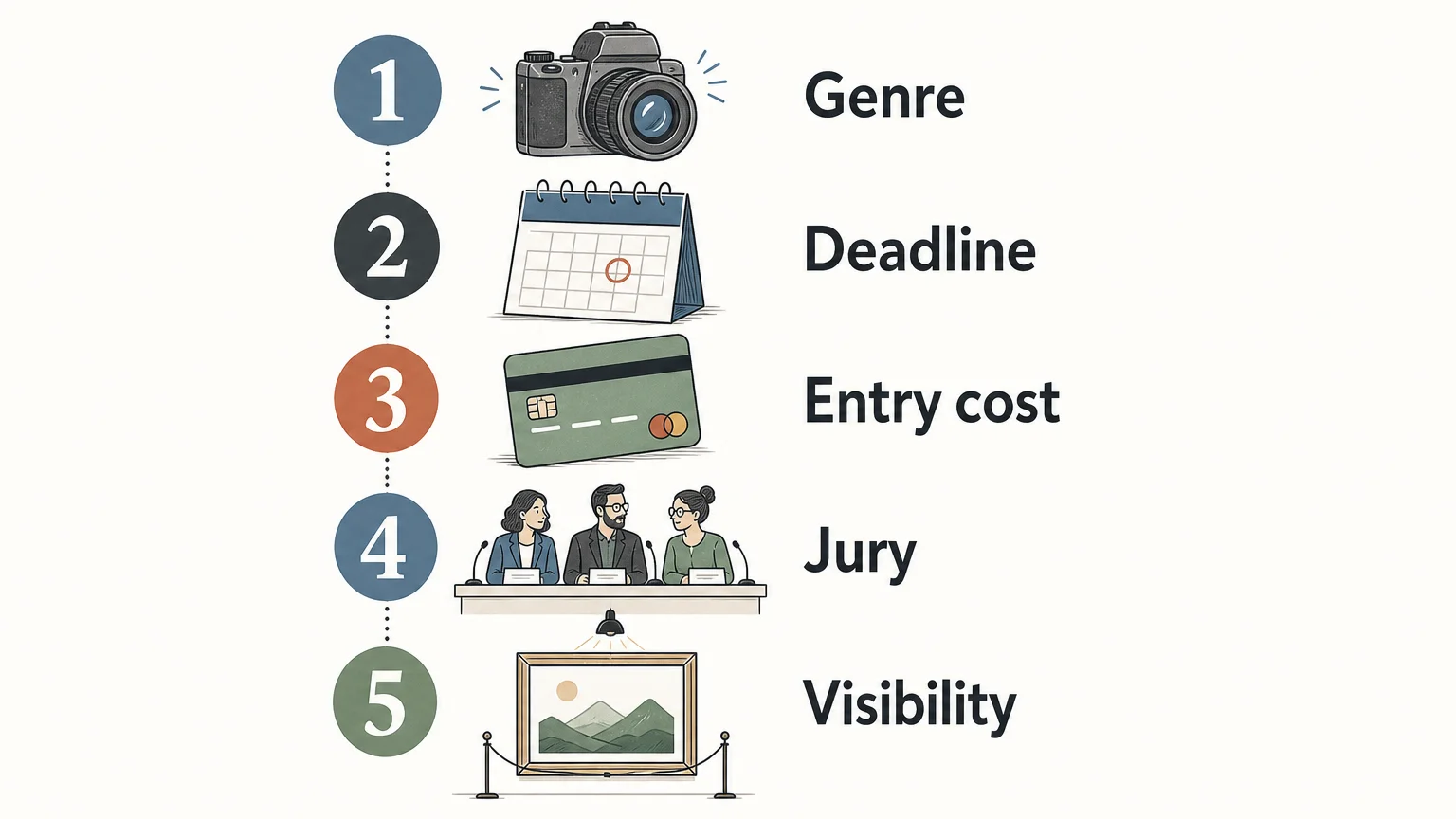
Choosing the right award is easier when you assess the opportunity against your actual goals. Start with genre. A documentary photographer may prefer World Press Photo, while a bird specialist may gain more relevance from Audubon.
Next, check whether the 2026 deadline is still open. Some programs on this list have concluded, while Xposure and Global Photography Awards remain relevant for late September submissions. For future planning, free programs such as Sony World Photography Awards can reduce financial risk.
Entry cost also matters. Paid programs may offer substantial prizes, exhibitions, or professional visibility, but the fee should match your budget and the realistic value of the opportunity. Review whether the program accepts single images, series, or both.
Finally, examine the judging model and the recognition offered. A professional jury, written feedback, exhibition, book publication, winner logo, interview, or editorial feature can each serve a different career objective. Creators comparing photography competitions in 2026 should also verify image rights, age limits, regional rules, and whether benefits depend on selection or plan tier.
For photographers prioritizing cash-prize opportunities, compare the prize amount with the entry structure and the type of visibility attached to the result. Our guide to photography awards with cash prizes can help you assess those differences more precisely.
Conclusion
The strongest photography awards for 2026 are not identical, and the best choice depends on your genre, experience, deadline, budget, and career objective. Art Vision Awards is the most flexible option in this selection for creators seeking professional jury review, international recognition, cash-prize opportunities, and possible editorial visibility. Specialist programs remain valuable when your work is documentary, sports, wildlife, or focused on a particular photographic format.
Submit Your Work to Photography Awards
Your choice should reflect both the image you want to submit and the recognition you want to build. If you are looking for an international platform with flexible participation and professional evaluation, Art Vision Awards provides a practical starting point for photographers and visual creators.
We offer a free starting point, one-time submission packs, and monthly plans for access to competitions, awards, and editorial visibility. Selected participants may receive certificates, cash prizes, winner recognition, publication, social exposure, statuettes, or interviews, depending on the award and applicable benefits. Explore our photography awards and choose the participation route that matches your creative goals.
Frequently Asked Questions
Which photography award is best for beginners?
Beginners may prefer programs with free entry, broad categories, or clear participation steps. Art Vision Awards also provides a free starting point and professional jury review for submitted work.
Are the best photography awards free to enter?
Some major awards are free, while others charge by image, series, or category. Always compare the entry cost with the prize structure, judging quality, exhibition opportunities, and professional visibility.
Can one photograph be submitted to several awards?
Many competitions allow previously submitted work, but each program has its own rules. Check image rights, exclusivity requirements, publication history, and category restrictions before entering the same photograph elsewhere.
What should photographers check before submitting?
Review the deadline, eligible genres, image format, age or regional restrictions, entry fee, judging criteria, and permitted image manipulation. You should also confirm whether publication or other benefits are guaranteed or selection-dependent.
Are photography awards useful for professional visibility?
They can support credibility when the award has relevant categories, transparent judging, and meaningful exposure. Exhibition, editorial publication, interviews, winner logos, and press coverage may help you present your work to future clients or creative professionals.


Comments are closed.