
The Ultimate Photography Gear Audit: How to Streamline Your Kit for Maximum Creative Focus
The Ultimate Photography Gear Audit: How to Streamline Your Kit for Maximum Creative Focus
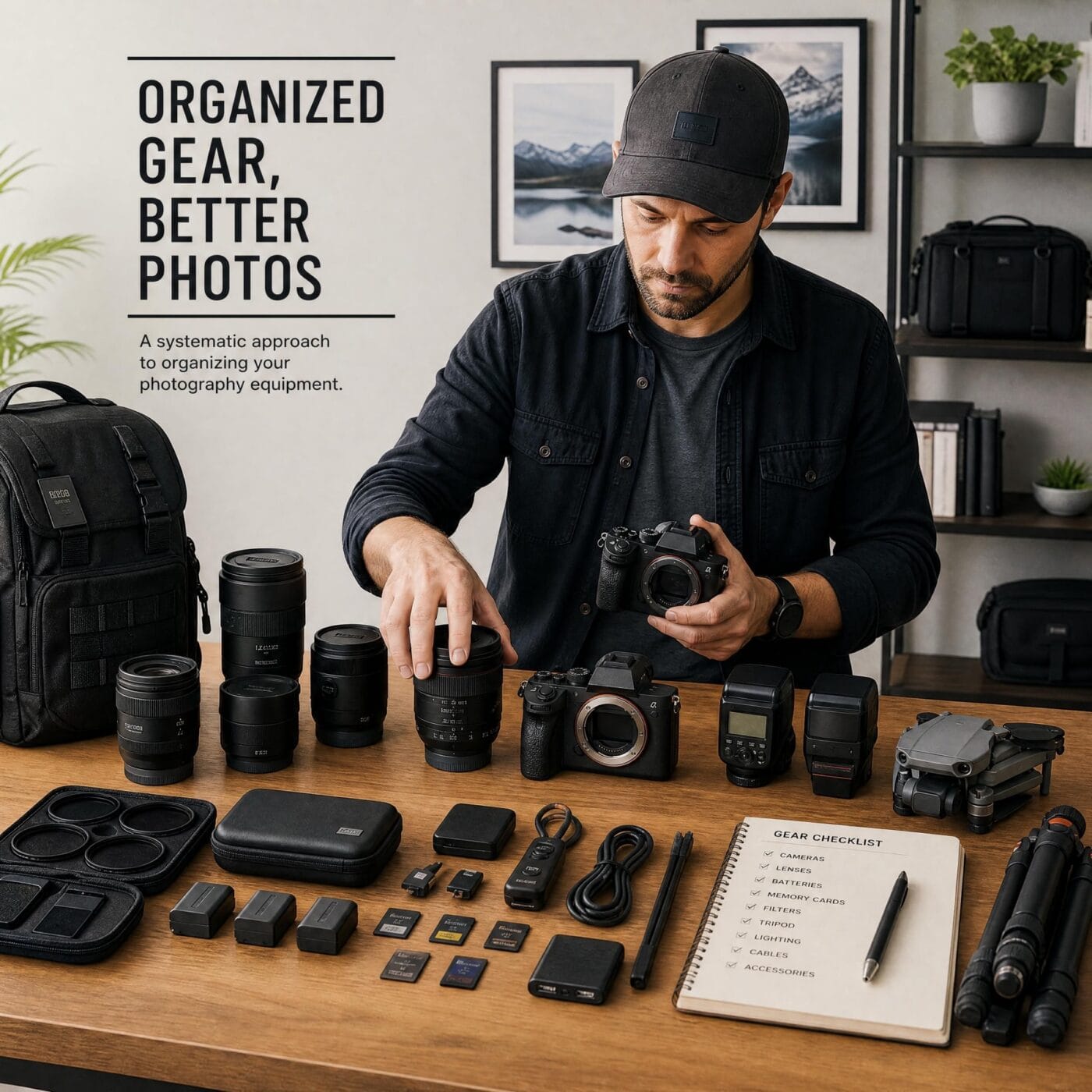
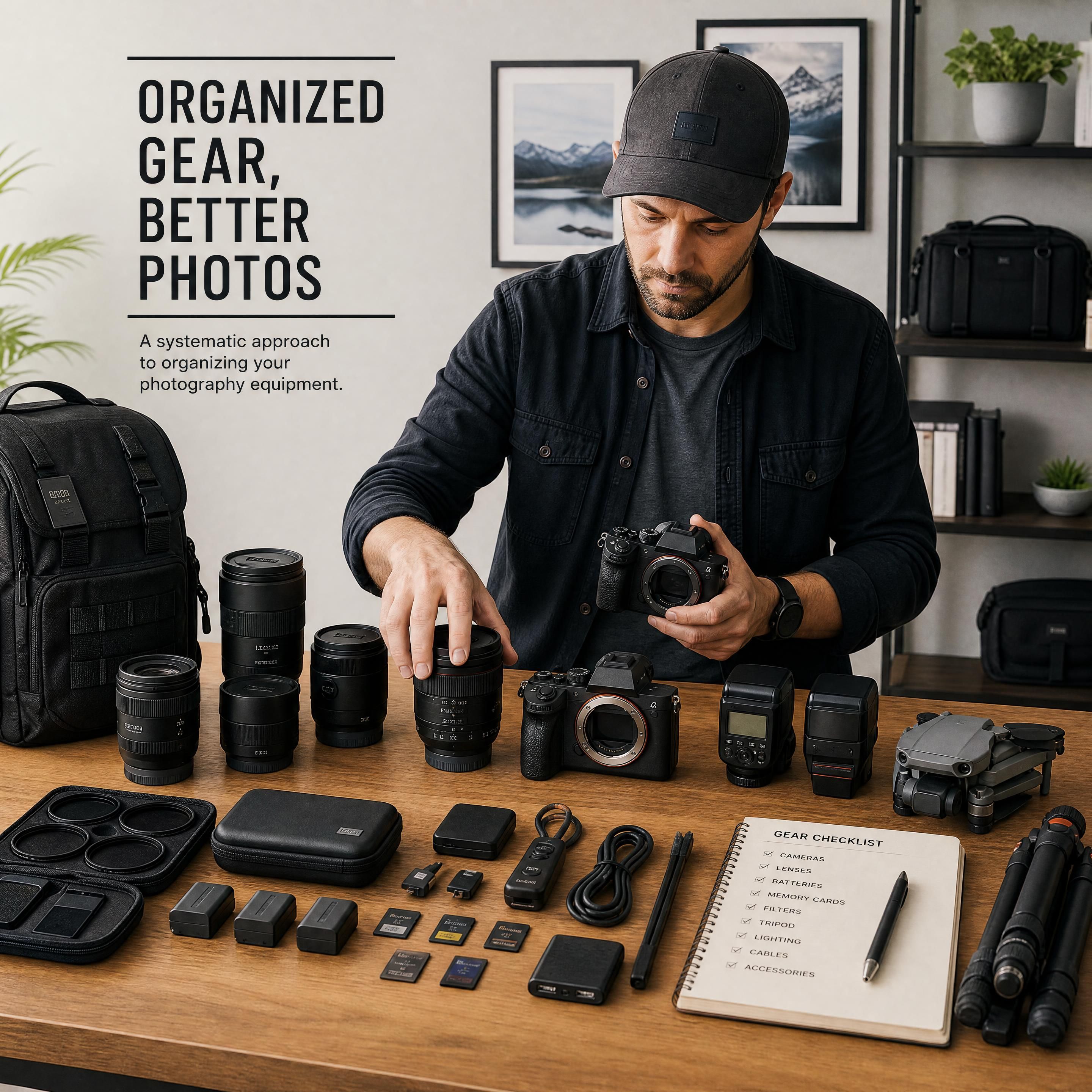
Every photographer knows the physical and mental toll of an overpacked camera bag. You stand at a breathtaking landscape at sunrise, or navigate a bustling city street, feeling the literal weight of three zoom lenses, two camera bodies, and a tripod you haven't unfolded once. In the pursuit of being prepared for every possible scenario, we often end up weighed down, distracted, and suffering from decision fatigue.
In 2026, the temptation to over-accumulate is stronger than ever. Manufacturers are releasing incredibly advanced mirrorless cameras at a rapid pace, making older gear feel prematurely obsolete. But does more gear actually lead to better photos? The truth is, the best photography gear is the setup that gets out of your way and lets you focus on the art of capturing the moment.
This comprehensive, step-by-step guide will walk you through a practical photography gear audit. By analyzing what you actually shoot, comparing your current equipment to modern standards, and systematically downsizing, you can build a streamlined, highly efficient setup that elevates your creativity and saves your spine.
Table of Contents
- Why You Need a Photography Gear Audit in 2026
- Step 1: The Metadata Audit (Analyze What You Actually Shoot)
- Step 2: Camera Comparisons — Keeping vs. Upgrading Your Body
- Step 3: Streamlining Your Lenses (The Rule of Three)
- Step 4: Assessing Your Photography Equipment and Accessories
- Who Is a Streamlined Kit Best Suited For?
- The Balanced Verdict
- Frequently Asked Questions (FAQ)
- Key Statistics
Why You Need a Photography Gear Audit in 2026
We have officially entered the mature era of mirrorless technology. Traditional DSLRs have rapidly declined; early 2026 shipment data from the Camera & Imaging Products Association (CIPA) shows DSLR shipments dropping by 36% year-over-year, while mirrorless systems continue to dominate the interchangeable lens market > "DSLR shipments down 36% year-over-year in early 2026, while mirrorless continues to grow"
— PhotoWorkout.
However, this rapid industry transition has fueled a severe case of Gear Acquisition Syndrome (GAS). Many photographers have accumulated a messy hybrid of old DSLR lenses, multiple adapter rings, and redundant mirrorless bodies.
Recently, industry professionals have begun advocating for a return to simplicity. For instance, in August 2026, prominent landscape photographers documented their own "Great Camera Gear Culls," selling off the majority of their complex kits to return to a simpler, more focused shooting experience > "The Great Camera Gear Cull: Why I’m Selling off most of my Kit"
— The Cotswold Photographer.
A systematic audit helps you:
- Reduce Decision Fatigue: Fewer choices in the field mean faster reaction times and more immersion in the scene.
- Improve Mobility: A lighter bag allows you to walk further, climb higher, and shoot longer without physical exhaustion.
- Free Up Capital: Selling unused gear allows you to reinvest in high-quality equipment that you actually use, or fund travel to new shooting locations.
Step 1: The Metadata Audit (Analyze What You Actually Shoot)
The most common mistake when auditing gear is relying on emotion. We keep lenses because of "what if" scenarios. To perform an objective audit, you must look at the hard data hidden inside your photo catalog.
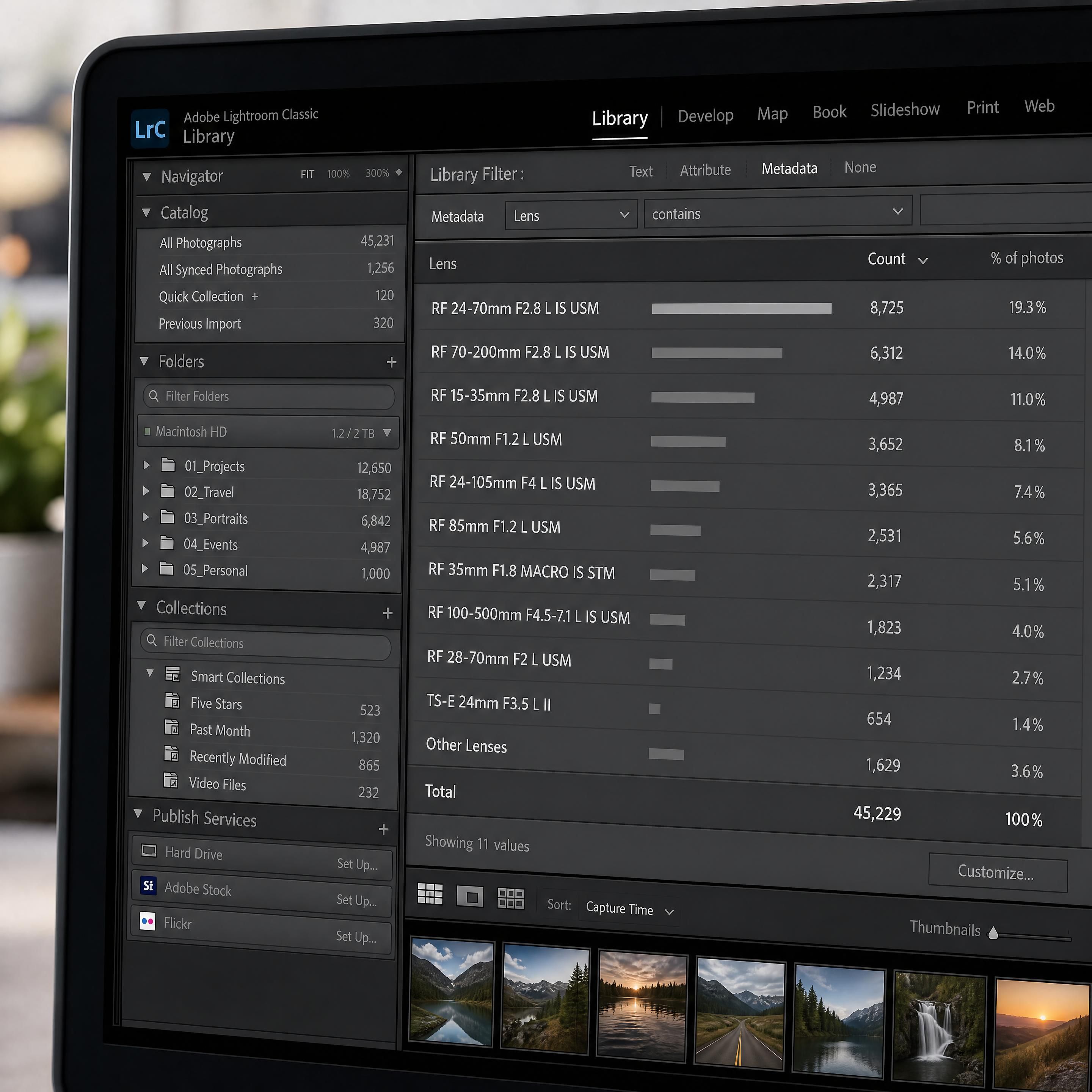
If you use Adobe Lightroom Classic or Capture One, you can perform a metadata audit in under five minutes:
- Open your master catalog and select "All Photographs."
- Toggle the Library Filter bar by pressing the backslash key (
\) in Lightroom. - Click on "Metadata" at the top of the grid view.
- Set your columns to display: Camera, Lens, and Focal Length.
What the Data Tells You
Look closely at your most-used focal lengths. You might carry a heavy, expensive 70-200mm f/2.8 zoom lens on every hike, only to discover that 90% of your favorite landscape images were captured between 24mm and 50mm.
Conversely, you might find a prime lens that you bought after reading glowing camera reviews, but the metadata reveals you haven't taken a single shot with it in the last 18 months. If a piece of gear hasn't been used in a year, it is no longer an asset—it is clutter.
Step 2: Camera Comparisons — Keeping vs. Upgrading Your Body
When reading the latest camera comparisons, it is easy to feel like your current camera body is holding you back. However, before pulling the trigger on a flashy new release, it is vital to perform an honest specifications and value analysis.
Strengths of Modern Upgrades
The latest 2026 mirrorless bodies offer incredible technological leaps. For example, the Canon EOS R5 Mark II features futuristic Eye Control AF and a 45MP stacked sensor capable of 30 fps bursts. If you shoot fast-moving sports or wildlife, these autofocus advancements can genuinely increase your keeper rate.
Limitations of Upgrading
However, these high-end bodies come with significant trade-offs. High-resolution sensors (45MP to 100MP) produce massive raw files that will quickly clog your hard drives and slow down your computer's editing performance. Furthermore, high-speed stacked sensors require substantial battery power, meaning you will need to carry more spare batteries, adding weight back into your kit.
If your primary focus is travel, landscape, or street photography, you do not need to overspend on flagship speed. More compact, budget-friendly full-frame options like the Nikon Z5 II or APS-C powerhouses like the Fujifilm X-T5 offer incredible image quality and handling at a fraction of the weight and cost.
| Setup Profile | Target Audience | Core Body Example | Suggested Lens Configuration | Key Advantage |
|---|---|---|---|---|
| The Minimalist | Travel, Street, Everyday | Sony Alpha 7C II / Fujifilm X-T5 | 1 Compact Prime (e.g., 35mm or 50mm equivalent) | Extreme portability, highly discreet, lightweight |
| The Hybrid Creator | Video, Events, Portraits | Nikon Z6 III / Canon EOS R6 II | 1 Standard Zoom (24-70mm f/2.8) + 1 Fast Portrait Prime | Maximum versatility, excellent low-light performance |
| The High-Res Specialist | Landscape, Studio, Commercial | Canon EOS R5 II / Fujifilm GFX 100S II | 2 High-End Zooms or Primes | Unmatched detail, extensive cropping flexibility |
Step 3: Streamlining Your Lenses (The Rule of Three)
Lenses are the heaviest and most expensive part of any photographer's kit. To streamline your lens collection, we recommend implementing the Rule of Three. No matter what genre you shoot, you should aim to have a maximum of three lenses in your active bag.
Option A: The "Holy Trinity" Zooms
For event, wedding, and sports photographers, the classic zoom trio remains the gold standard:
- Wide Zoom (16-35mm f/2.8 or f/4)
- Standard Zoom (24-70mm f/2.8 or f/4)
- Telephoto Zoom (70-200mm f/2.8 or f/4)
Tip: If you want to save weight, consider swapping f/2.8 zooms for f/4 versions. Modern mirrorless cameras have such exceptional high-ISO and low-light performance that the extra stop of light is rarely worth the double weight and cost for travel or landscape work.
Option B: The Prime Trio
For street, portrait, and documentary photographers, a prime lens setup forces creative growth and keeps your camera incredibly light:
- The Storyteller: 28mm or 35mm (for environmental portraits and street scenes)
- The Naturalist: 50mm (mimics human vision, excellent all-rounder)
- The Portraitist: 85mm or 135mm (for beautiful background separation)
Step 4: Assessing Your Photography Equipment and Accessories
An audit shouldn't stop at cameras and lenses. Secondary photography equipment—such as tripods, camera bags, filters, and audio gear—often accounts for a massive portion of your carrying weight.
Actionable Strategies for Accessory Auditing:
- The Tripod Test: If you primarily shoot hand-held or rely on the excellent In-Body Image Stabilization (IBIS) of modern mirrorless bodies, do you really need to carry a heavy 3-section aluminum tripod? Swapping to a lightweight carbon-fiber travel tripod, or even a compact tabletop tripod, can shave pounds off your back.
- Modern Audio Consolidation: For hybrid video creators, bulky audio receivers are becoming obsolete. Compact, highly integrated solutions like the DJI Mic Mini 2S (released in August 2026) show that professional sound quality no longer requires heavy, complex mounting hardware > "Audio For Any Occasion: We Review The New DJI Mic Mini 2S"
— Fstoppers.
- The "One-In, One-Out" Rule: To prevent future clutter, commit to a strict rule: for every new accessory or piece of gear you purchase, you must sell or donate one existing piece of gear.
Who Is a Streamlined Kit Best Suited For?
Streamlining your gear looks different depending on your creative focus:
- Travel and Street Photographers: You benefit the most from extreme downsizing. A compact setup built around a body like the Sony a7CR or Fujifilm X-T5 with a single pancake prime lens allows you to blend into crowds and shoot for twelve hours straight without neck pain.
- Portrait and Wedding Photographers: Consolidating to two high-quality prime lenses (e.g., a 35mm and an 85mm) on two compact bodies allows you to shoot an entire event seamlessly, completely eliminating the need to stop and swap lenses during crucial moments.
- Landscape and Wildlife Photographers: While you still require specialized, robust gear, you can streamline by using a single high-resolution body (like the Canon R5 II). Its 45MP sensor allows you to crop deeply in post-production, which can effectively replace the need to pack a heavy teleconverter or a secondary long-range lens.
The Balanced Verdict
There is no denying the thrill of unboxing new gear, but a bloated camera bag is a quiet creativity killer. When you spend your energy managing multiple lenses, charging five different battery types, and worrying about the safety of expensive accessories, you have less mental bandwidth left for composition, lighting, and storytelling.
By conducting a systematic metadata audit, honestly comparing your gear's performance against your actual needs, and committing to a streamlined setup, you will rediscover the joy of photography. A lighter bag leads to a more active, adventurous, and ultimately more successful photographic journey. Once your kit is streamlined, explore our guide to the top photography awards of 2026 to put your strongest images in front of a professional jury.
Frequently Asked Questions (FAQ)
How often should I perform a gear audit?
We recommend performing a comprehensive gear audit once a year, preferably during your creative off-season. This gives you time to analyze your catalog, identify unused equipment, and sell items before they lose too much market value.
Is it better to trade in gear or sell it privately?
Trading in your gear to reputable camera retailers is the fastest, safest, and most convenient method, though you will generally receive 30% to 40% less than market value. Selling privately on dedicated photography forums or local marketplaces yields higher returns but requires more time, effort, and caution against online scams.
Should I keep an older camera body as a backup?
If you are a working professional shooting weddings, live events, or commercial projects, a backup body is non-negotiable. However, if you are an advanced amateur, hobbyist, or travel photographer, keeping a secondary body "just in case" usually results in an expensive tool sitting in a drawer gathering dust. Consider selling it to fund a high-quality lens upgrade instead.
Can a high-resolution camera body really replace a telephoto lens?
To an extent, yes. With modern 45MP to 60MP full-frame sensors, cropping an image by 50% still leaves you with a highly usable 12MP to 15MP file, which is more than enough for web use and medium-sized prints. This "digital zoom" capability allows travel photographers to leave heavy telephoto lenses at home.
Key Statistics
📊 Shipped units fell 36% year-over-year in early 2026 – DSLR Market Decline
📊 Shipped units grew 16% year-over-year in early 2026 – Mirrorless Market Dominance
📊 Fixed-lens compact camera shipments grew 36% year-over-year in early 2026 – Compact Camera Resurgence


Comments are closed.