
Nadav Kander at Foam Amsterdam: The Edge of Things and the Quiet Power of Photography
Nadav Kander at Foam Amsterdam: The Edge of Things and the Quiet Power of Photography
In the landscape of contemporary photography, few artists navigate the delicate threshold between the intimate and the monumental with the grace of Nadav Kander. Renowned globally for his atmospheric landscapes and psychological portraits, Kander has spent over four decades crafting images that linger in the mind like half-remembered dreams. Opening this autumn, Nadav Kander — The Edge of Things at Foam represents a major milestone: the first comprehensive solo survey of his illustrious career. Running from September 18, 2026, to January 20, 2027, at the Foam photography museum in Amsterdam, this landmark exhibition curated by David Campany traces the subtle, poetic threads that unite his seemingly disparate bodies of work > "The Edge of Things traces the threads that connect his work: a deep concern with the fragility of human existence, the passage of time, and the quiet intensity of everyday life."
— Foam Amsterdam. By sifting through decades of image-making, the exhibition invites viewers to step into a realm of quiet contemplation, where the boundaries between portraiture, landscape, and studies of the human form dissolve into a singular, profound exploration of human vulnerability and the passage of time.
Table of Contents
- Who Is Nadav Kander?
- Nadav Kander: The Edge of Things – Connecting Four Decades of Photography
- The Quiet Power of Nadav Kander’s Photography
- Portrait Photography: Beyond the Famous Face
- The Obama Administration Portraits
- David Lynch and Psychological Portraiture
- Yangtze, The Long River
- Human Presence Inside the Landscape
- Chernobyl and Landscapes Marked by History
- The River Thames
- The Human Form
- Light, Colour and Atmosphere
- Composition and Negative Space
- What Portrait Photographers Can Learn from Nadav Kander
- What Landscape Photographers Can Learn
- Why Photographic Projects Matter
- Photography and the Passage of Time
- Why The Edge of Things Matters in 2026
- What Photographers Can Learn from the Exhibition
- Foam Photography Museum Amsterdam
- Practical Information
- Nadav Kander and Art Vision Awards
- Frequently Asked Questions
- Conclusion
Who Is Nadav Kander?
Nadav Kander is a London-based photographer, artist, and director whose career spans more than three decades of rigorous and influential image-making > "Nadav Kander is a London-based artist and director, internationally acclaimed for his portraiture and large-format landscape photographs."
— Foam Amsterdam. Born in Israel in 1961 and raised in Johannesburg, South Africa, Kander began taking photographs at the age of 13 before relocating to London in 1982. He has achieved international acclaim for his ability to move seamlessly between editorial portraiture, large-format landscape photography, and deeply personal artistic projects.
His singular voice has earned him some of the photographic world’s most prestigious honors, including the Prix Pictet in 2009, an Honorary Fellowship of the Royal Photographic Society in 2015, and the Outstanding Contribution to Photography award from the Sony World Photography Organisation in 2019. Most recently, Kander was awarded a grant by the prestigious Pollock-Krasner Foundation in 2025, supporting the development of this major survey.
📊 Over 4 Decades of Image-Making - Career Longevity
Nadav Kander: The Edge of Things – Connecting Four Decades of Photography
The core philosophy of this landmark exhibition lies in its subversion of traditional genres. Rather than segregating Kander’s work into neat categories of portraiture, landscape, or still life, Nadav Kander: The Edge of Things traces the hidden thematic threads that connect his entire oeuvre. Curated by David Campany, Creative Director of the International Center of Photography in New York, the survey highlights a persistent preoccupation with human vulnerability, the passage of time, historical memory, and the power of silence.
For contemporary photographers, this curatorial approach is highly instructive. It demonstrates that a photographer's identity is not defined by their subject matter, but by the consistency of their vision. Whether framing a world leader or a desolate industrial riverbank, Kander’s gaze remains unmistakably his own.
📊 First Comprehensive Career Survey - Major Solo Survey
The Quiet Power of Nadav Kander’s Photography
Kander’s visual language is defined by a slow, meditative restraint. In an era dominated by loud, saturated imagery, his work derives its strength from atmosphere and psychological distance. There is a muted visual tension in his frames, a stillness that feels heavy with unspoken narratives.
Rather than reducing his style to a simple aesthetic formula, Kander uses shadow, emptiness, and silence as active compositional elements. His calmest images often contain the most intense historical or emotional weight, inviting the viewer to look beyond the surface and engage with the underlying psychological atmosphere.
Portrait Photography: Beyond the Famous Face
In the realm of portraiture, Kander’s work is legendary. He has photographed some of the most recognizable figures of our time, including Rosamund Pike, David Lynch, and Werner Herzog. Yet, an exploration of portrait photography through Kander's work reveals that his approach goes far beyond simple celebrity recognition.
For Kander, a face is a landscape to be explored. Through the precise use of negative space, controlled directional lighting, and an emphasis on body language, he captures a profound psychological presence. The famous face is stripped of its public persona, revealing a fragile, quiet humanity that exists in the space between the subject and their environment.
The Obama Administration Portraits
A pivotal highlight of Kander’s portraiture career is his landmark 2009 commission for The New York Times Magazine. Shortly after Barack Obama’s inauguration, Kander photographed 52 members of the incoming administration > "In 2009, shortly after the inauguration of Barack Obama, Kander was commissioned by The New York Times Magazine to produce a landmark series of fifty-two portraits of members of the Obama administration."
— Foam Amsterdam.
This project remains highly significant for portrait photographers studying unified visual language. By maintaining a rigorous aesthetic consistency—using the same desaturated, painterly background and stark, sculptural lighting—Kander allowed the individual character and psychological weight of each subject to emerge, creating a powerful collective portrait of political power and human responsibility.
📊 52 Portraits in a Single Issue - Obama Administration Commission
David Lynch and Psychological Portraiture
Among Kander's most iconic portraits is his study of filmmaker David Lynch (David Lynch I, Los Angeles, 2007). This photograph serves as a masterclass in psychological portraiture. Stripped of distracting props, the image relies on absolute simplicity: Lynch’s expressive, weathered face emerges from a deep, velvety shadow.
The light is soft yet highly focused, sculpting the contours of his face and hands. By leaving the background entirely dark, Kander creates a sense of psychological ambiguity that perfectly mirrors Lynch’s own cinematic universe, proving that the most powerful portraits are often those that leave room for mystery.
Yangtze, The Long River
In 2009, Kander won the prestigious Prix Pictet for his monumental series Yangtze, The Long River. Over several years, Kander traveled along the banks of China's longest river, documenting the rapid industrialization and environmental transformation of the landscape.
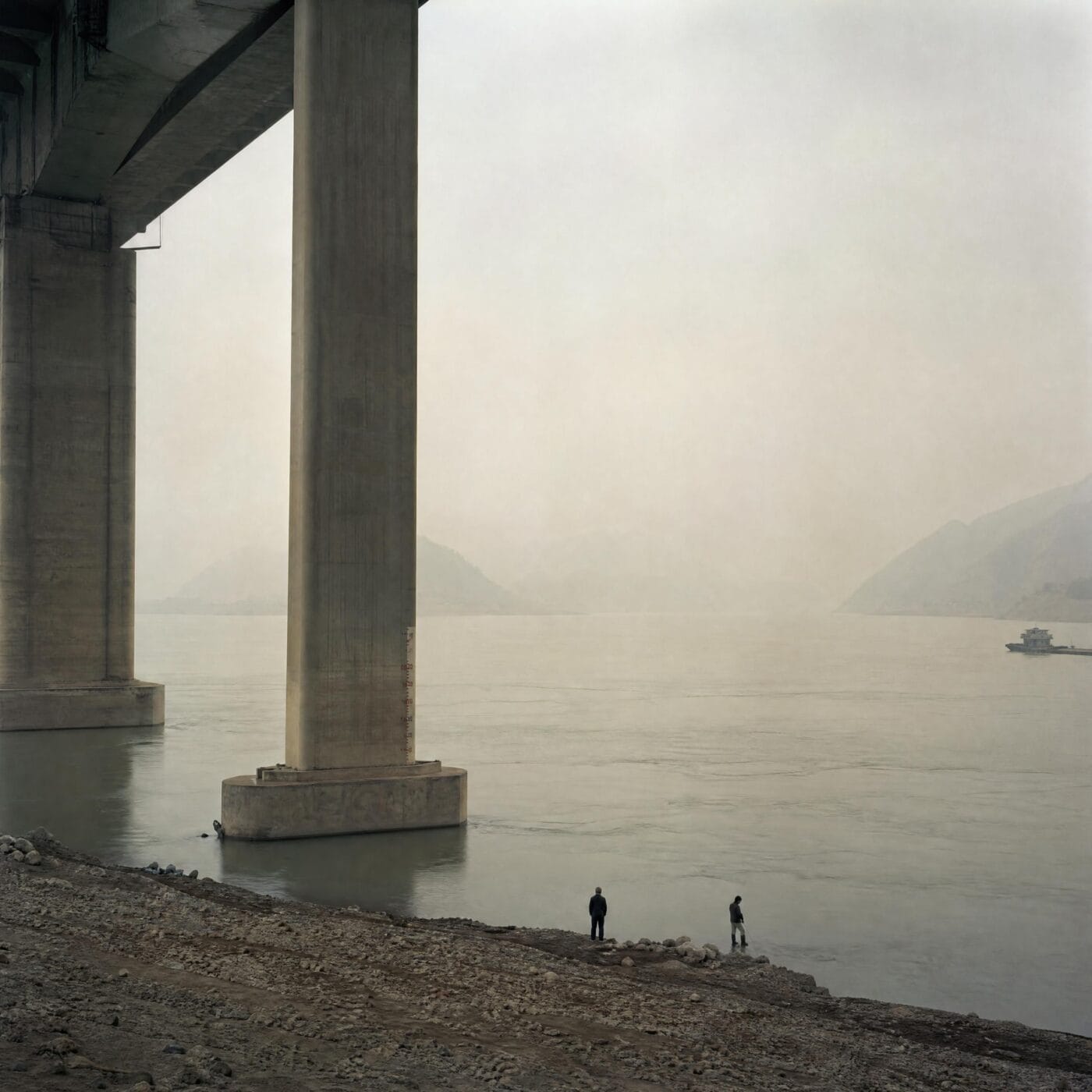
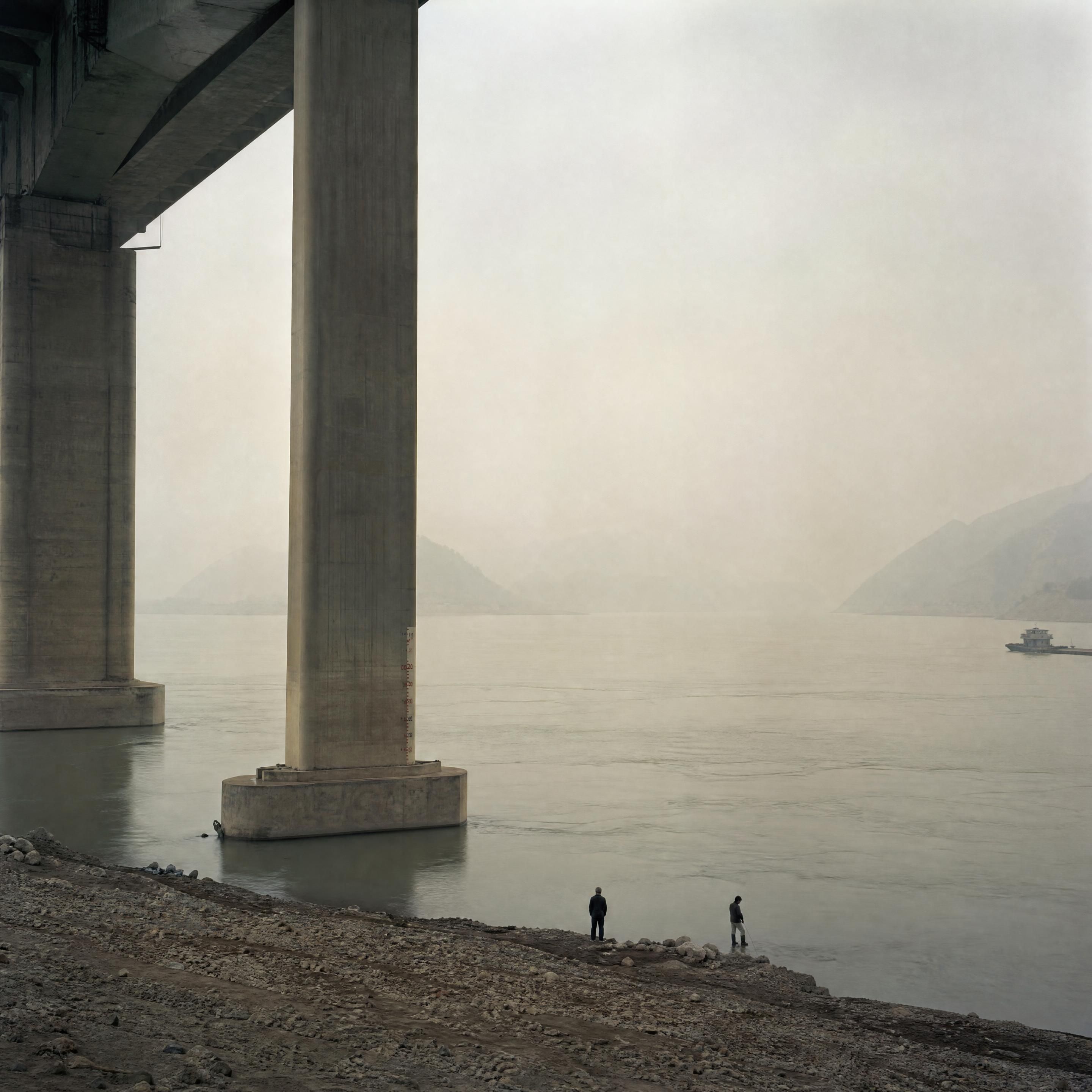
The resulting large-format photographs are breathtaking in their scale and desaturated, painterly color palette. They depict colossal concrete bridges, towering half-built skyscrapers, and vast expanses of water shrouded in smog. Rather than acting as a simple documentary record, the series is a poetic meditation on progress, displacement, and the fragile relationship between humanity and the changing earth.
Human Presence Inside the Landscape
A defining feature of Kander’s landscape photography is the strategic placement of human figures. In the Yangtze series, tiny human forms are often positioned against the colossal scale of industrial infrastructure. A group of bathers stands at the foot of a massive bridge; a solitary figure walks along a misty shoreline.
This dramatic contrast in scale serves a deep thematic purpose. By rendering human presence small, Kander highlights our vulnerability and isolation within the vast, changing environments we construct. This visual dialogue between humanity and the landscape has become a cornerstone of contemporary landscape photography, illustrating both our power to transform the earth and our ultimate insignificance.
Chernobyl and Landscapes Marked by History
Kander's exploration of landscape extends to places heavy with historical memory and trauma, most notably Chernobyl. In these stark, quiet images, documentary photography becomes an act of bearing witness to absence.
Rather than focusing on sensational ruins, Kander captures the silent, slowly decaying spaces of the exclusion zone. The photographs record more than physical geography; they capture the invisible weight of history, political failure, and environmental damage. Every empty building and overgrown field becomes a monument to what is no longer there, evoking a deep, meditative melancholy.
The River Thames
In contrast to the epic scale of the Yangtze, Kander’s work on the River Thames estuary explores a landscape closer to home, yet equally rich in atmosphere. He approaches the Thames not as a picturesque waterway, but as a dark, industrial boundary where land and water dissolve.
The images are characterized by heavy, overcast skies, muddy shores, and desaturated tones. Conceptually, the Thames series mirrors his work in China, examining how rivers serve as silent witnesses to human history, commerce, and the relentless passage of time.
The Human Form
Kander’s artistic practice also includes striking, abstract studies of the human form. In these works, the body is treated with the same sculptural and atmospheric reverence as his landscapes.
Through tight framing, soft directional light, and desaturated skin tones, Kander transforms the human body into a landscape of contours, shadows, and textures. These studies emphasize fragility and gesture, stripping away identity to focus on the raw, universal physical presence of the human form, showcasing how the boundaries between portraiture and landscape can completely dissolve.
Light, Colour and Atmosphere
For photographers, Kander’s technical mastery of light and color is a primary source of inspiration. He rarely relies on dramatic, high-contrast sunlight. Instead, he favors soft, diffused, and overcast lighting conditions that wrap his subjects in a quiet, painterly atmosphere. His color palettes are meticulously controlled, often desaturated to earthy tones, muted blues, and soft greys.
To understand Kander's distinct visual approach across different subjects, we can examine how his core aesthetic principles translate:
| Visual Element | Portraiture Approach | Landscape Photography Approach |
|---|---|---|
| Lighting | Soft, directional key light sculpting psychological depth | Diffused, natural light, often filtered through haze or overcast skies |
| Color Palette | Desaturated, painterly skin tones against neutral backgrounds | Muted earth tones, pastel blues, and soft, atmospheric greys |
| Negative Space | Tight framing with heavy shadows or empty backdrops | Vast, empty horizons and misty skies that dwarf human elements |
| Atmospheric Tension | Psychological intimacy and quiet, introspective distance | Historical memory, industrial decay, and silent environmental change |
Composition and Negative Space
Compositionally, Kander is a master of negative space. He understands that what is left out of the frame is often just as important as what is kept in. Large expanses of empty sky, deep shadow, or blank walls are used intentionally to create visual tension and psychological distance.
This deliberate use of empty space slows down the viewer's eye, forcing a contemplative engagement with the image. The empty space acts as a visual pause, allowing the atmosphere of the photograph to breathe and resonate on a deeper emotional level.
What Portrait Photographers Can Learn from Nadav Kander
Aspiring and professional portrait photographers can draw valuable lessons from Kander’s extensive portfolio:
- Embrace Restraint: A powerful portrait does not require exaggerated expressions or dramatic poses. Quiet, neutral expressions often reveal more psychological depth.
- Utilize Negative Space: Do not fear empty space. Framing a subject off-center or leaving large areas of shadow can communicate isolation, elegance, or tension.
- Light for the Mood: Lighting should never be purely technical. Use light and shadow dynamically to support the psychological tone of the portrait.
- Develop a Concept for Famous Subjects: When photographing public figures, look past their fame. Create a distinct visual concept that strips away their public persona.
- Prioritize Series Consistency: When building a portrait series, maintain a unified aesthetic language through lighting, background, and color grading.
What Landscape Photographers Can Learn
For those dedicated to capturing the natural and built environment, Kander's landscapes offer a wealth of knowledge:
- Look Beyond Conventional Beauty: Landscape photography is not merely about pristine vistas. Industrial sites, scarred lands, and ordinary edges can hold immense poetic meaning.
- Incorporate Human Traces: The inclusion of human figures or man-made structures adds a layer of narrative, scale, and emotional tension to the frame.
- Harness Atmospheric Conditions: Rain, fog, smog, and overcast skies are not obstacles; they are powerful atmospheric tools that can become the subject itself.
- Utilize Scale: Contrast small elements against vast environments to evoke feelings of vulnerability, isolation, and environmental power.
- Commit to Long-Term Projects: Sustained, multi-year projects allow a photographer to capture deep environmental and cultural transformations that single images cannot reveal.
Why Photographic Projects Matter
In a contemporary culture dominated by the rapid consumption of single images on social media, Kander’s career is a testament to the power of the long-term photographic project. Series like Yangtze, The Long River require years of research, repetitive visits, and disciplined editing.
Developing a sustained project allows a photographer to move beyond superficial aesthetics and build a complex, cohesive visual narrative. It forces a deeper relationship with the subject, resulting in work that possesses lasting cultural, artistic, and historical value.
Photography and the Passage of Time
At its core, Kander's photography is an exploration of time. Every photograph is a record of a moment that has already slipped into the past. Landscapes change, rivers flow, buildings decay, and human beings age.
Kander’s images capture this transient nature of existence with a gentle, melancholic beauty. By focusing on places marked by history and faces marked by experience, his work becomes a profound meditation on memory, mortality, and the relentless, silent flow of time.
Why The Edge of Things Matters in 2026
In 2026, the photographic world finds itself at a fascinating crossroads, saturated with instant digital feeds, rapid social media consumption, and the rise of AI-generated imagery. In this fast-paced visual landscape, Nadav Kander: The Edge of Things arrives as a crucial, grounding experience.
Kander’s slow, deliberate, and deeply contemplative approach reminds photographers of the irreplaceable value of physical presence, sustained attention, and human intentionality. His work proves that true artistic resonance cannot be automated or rushed; it requires time, emotion, and an authentic connection to the physical world.
What Photographers Can Learn from the Exhibition
Visiting the exhibition at Foam offers a comprehensive masterclass in visual storytelling. Photographers can take away several vital principles:
- Cultivate a Singular Voice: Focus on developing a consistent way of seeing rather than chasing fleeting visual trends.
- Think in Narrative Series: Train yourself to build cohesive bodies of work rather than isolated, disconnected images.
- Master restraint: Allow shadow, silence, and ambiguity to invite the viewer into the creative dialogue.
- Observe Relationships: Pay close attention to how human beings interact with, and are shaped by, their environments.
- Give Projects Time: Allow your personal projects to develop slowly, letting the visual language mature over years.
Foam Photography Museum Amsterdam
Situated on the historic Keizersgracht canal, Foam is an internationally acclaimed photography museum and organization based in Amsterdam. Dedicated to presenting all genres of photography, from documentary to fashion and contemporary art, Foam serves as a vibrant global platform for both established masters and emerging talents. Through its world-class museum exhibitions, the highly respected Foam Magazine, and extensive digital programming, Foam remains a vital hub for contemporary photography discourse in Europe and beyond.
Practical Information
- Exhibition: Nadav Kander — The Edge of Things
- Venue: Foam, Keizersgracht 609, 1017 DS Amsterdam, The Netherlands
- Exhibition Dates: September 18, 2026 – January 20, 2027
- Festive Opening Event: Thursday, September 17, 2026, at 18:30 (RSVP required)
- Opening Hours: Daily from 10:00 to 18:00, Thursday and Friday until 21:00
- Ticket Prices: Adults €16.00, Students €12.80, Under 18 / CJP €11.75, Children up to 12 Free (Foam Members enter free)
- Official Exhibition Page: Nadav Kander — The Edge of Things at Foam
Nadav Kander and Art Vision Awards
Nadav Kander’s extraordinary body of work perfectly embodies the core values celebrated by the Art Vision Awards photography competition. As an international platform dedicated to recognizing visual storytelling, the awards champion photographers who push the boundaries of contemporary image-making through personal vision, atmosphere, and emotional depth.
For visual creators seeking to refine their craft and gain global recognition, studying Kander’s atmospheric landscapes and psychological portraits offers endless inspiration. These artistic qualities and deep visual narratives are regularly explored and highlighted within the pages of our guide to the leading photography awards and AVA Magazine, serving as a guiding light for the next generation of international photographic talent.
Frequently Asked Questions
What is Nadav Kander — The Edge of Things?
It is a major solo survey exhibition of the internationally renowned photographer Nadav Kander, tracing the recurring thematic threads—such as human fragility, memory, and time—that connect his portraiture, landscapes, and studies of the human form over four decades.
Where is the exhibition taking place?
The exhibition is hosted at Foam, located at Keizersgracht 609, 1017 DS Amsterdam, The Netherlands.
When does the exhibition open?
The festive opening event takes place on Thursday, September 17, 2026, at 18:30. The exhibition officially opens to the public on Friday, September 18, 2026.
How long is it on view?
The exhibition is on view from September 18, 2026, until January 20, 2027.
What type of photography is Nadav Kander known for?
Nadav Kander is internationally acclaimed for his large-format landscape photography, psychological portraiture, and abstract studies of the human body.
Did Nadav Kander photograph Barack Obama?
Yes. In 2009, shortly after Barack Obama's inauguration, Kander was commissioned by The New York Times Magazine to photograph a landmark series of 52 portraits of members of the Obama administration.
What is Yangtze, The Long River?
It is Nadav Kander's award-winning photographic series documenting the rapid industrialization, environmental transformation, and human scale along China's Yangtze River.
Did Nadav Kander win the Prix Pictet?
Yes, Nadav Kander was awarded the prestigious Prix Pictet Earth in 2009 for his celebrated series Yangtze, The Long River.
Where can I find official visitor information?
Official visitor information, ticket reservations, and exhibition details can be found on the official Foam website at https://www.foam.org/events/nadav-kander.
Conclusion
Ultimately, Nadav Kander: The Edge of Things at Foam Amsterdam is far more than a retrospective of beautiful images. It is a profound testament to the power of a unified artistic vision. Across portraiture, large-format landscapes, and intimate studies of the body, Kander consistently returns to the same essential questions about human vulnerability, historical memory, and the environments we inhabit.
For photographers, the exhibition offers an invaluable, timeless lesson: a recognizable and powerful photographic voice does not stem from technical equipment or fleeting aesthetic trends. Instead, it is born from the quiet, persistent questions an artist continues to ask through their lens over the course of a lifetime.

Comments are closed.