How to Win an Amateur Photography Competition in 2026
How to Win an Amateur Photography Competition in 2026
Summary: An amateur photography competition invites enthusiasts to submit images for jury evaluation, with prizes, publication, and exposure at stake. Success depends on choosing the right contest, reading the theme closely, and preparing a technically sound, emotionally resonant entry. In 2026, global online contests have made professional-level recognition accessible to photographers at every stage of their journey.
In 2026, a single international contest attracted 2,709 images from 597 photographers across 61 countries in one cycle. That scale illustrates how quickly a private hobby can reach a worldwide audience. Entering a well-chosen amateur photo contest is one of the fastest ways to test your work against peers and earn credible recognition. For a structured starting point, you may consult our complete 2026 entry guide before you commit to any deadline.
Those figures were reported by the Florida Museum of Photographic Arts, whose 2026 international competition drew submissions from dozens of nations. The lesson is clear: contests are no longer reserved for full-time professionals. With a considered approach, an amateur can compete credibly, gain feedback from expert jurors, and build a portfolio that stands out.
What an amateur photography competition actually is
An amateur photography competition is a structured open call where non-professional photographers submit images to be judged by a panel, usually against a defined theme or category. Eligibility rules vary. Some contests define an amateur by income earned from photography, while others simply welcome enthusiasts alongside seasoned entrants.
The format matters because it shapes your strategy. Single-image contests reward one decisive frame. Portfolio categories, by contrast, assess a series that must hold together thematically and visually. Understanding these distinctions early prevents wasted entries and helps you target the photo contests that suit your strengths.
Themes are the second variable to decode. Categories such as portrait, landscape, black and white, travel, and street photography each carry their own conventions. If you are unsure where your work fits, our overview of photo contest themes can help you match your images to the right open call.
Why entering contests accelerates your growth
Why should an enthusiast invest time in submissions at all? Because few activities compress learning as efficiently. Preparing an entry forces you to edit ruthlessly, study winning work, and confront how strangers read your images without your explanation attached.

Recognition also compounds. A shortlist mention, a published image, or a jury award becomes evidence of quality that you can cite for years. Persistence pays here: many accomplished photographers submit the same work to several contests before a single juror responds positively.
There is a broader commercial backdrop too. According to a photography services market analysis, North America is projected to hold roughly 45 percent of the global market between 2026 and 2035, followed by Western Europe at around 25 percent. A visible contest record can help an emerging photographer stand out within that competitive landscape.
How to choose the right competition for your work
Imagine two photographers with equally strong portfolios. One wins; the other is overlooked. Often the difference is fit, not talent. Selecting a contest whose theme, judging criteria, and audience align with your images is the most underrated decision in the process.
Start by auditing the practical terms. Review the deadline, the entry fee, the permitted number of images, and the rights you grant on submission. Then weigh the reward that matters most to you, whether that is a cash prize, editorial publication, or exposure to an international jury.
- Theme alignment: Does your strongest image genuinely answer the brief?
- Eligibility: Do you meet the amateur definition, if one applies?
- Recognition type: Do you value prizes, publication, or profile visibility?
- Reputation: Is the jury named and the organiser transparent?
When you are ready to enter a credible international open call, our photography awards welcome submissions from photographers worldwide for review by a professional jury.
Preparing a submission that stands out
Consider how a juror first encounters your image: often as a small thumbnail among thousands. That single detail should shape every editing choice you make. A frame that reads instantly at reduced size has a decisive advantage in the first round.
Strong submissions typically share a few disciplined habits. The composition is deliberate, the technical execution is clean, and the concept answers the theme with a clear point of view. As Communication Arts notes for its 2026 photography competition, a concise written description in the contest language genuinely helps the judges understand your intent.
Before you upload, apply a short pre-flight checklist:
- Confirm resolution, file format, and dimensions against the rules.
- Remove images that merely repeat a stronger frame.
- Verify that a series works as a set, not as isolated shots.
- Reread the theme and cut anything that does not serve it.
If you would like a structured walkthrough of this stage, our guide on how to prepare a strong submission covers editing, sequencing, and presentation in detail.
Understanding prizes, recognition, and value
Prizes are the visible reward, yet they are only part of the return on a submission. Cash matters, but editorial publication, a named jury credit, and social visibility often carry more weight for a developing career. Evaluate each contest on the full package it offers, not the headline figure alone.
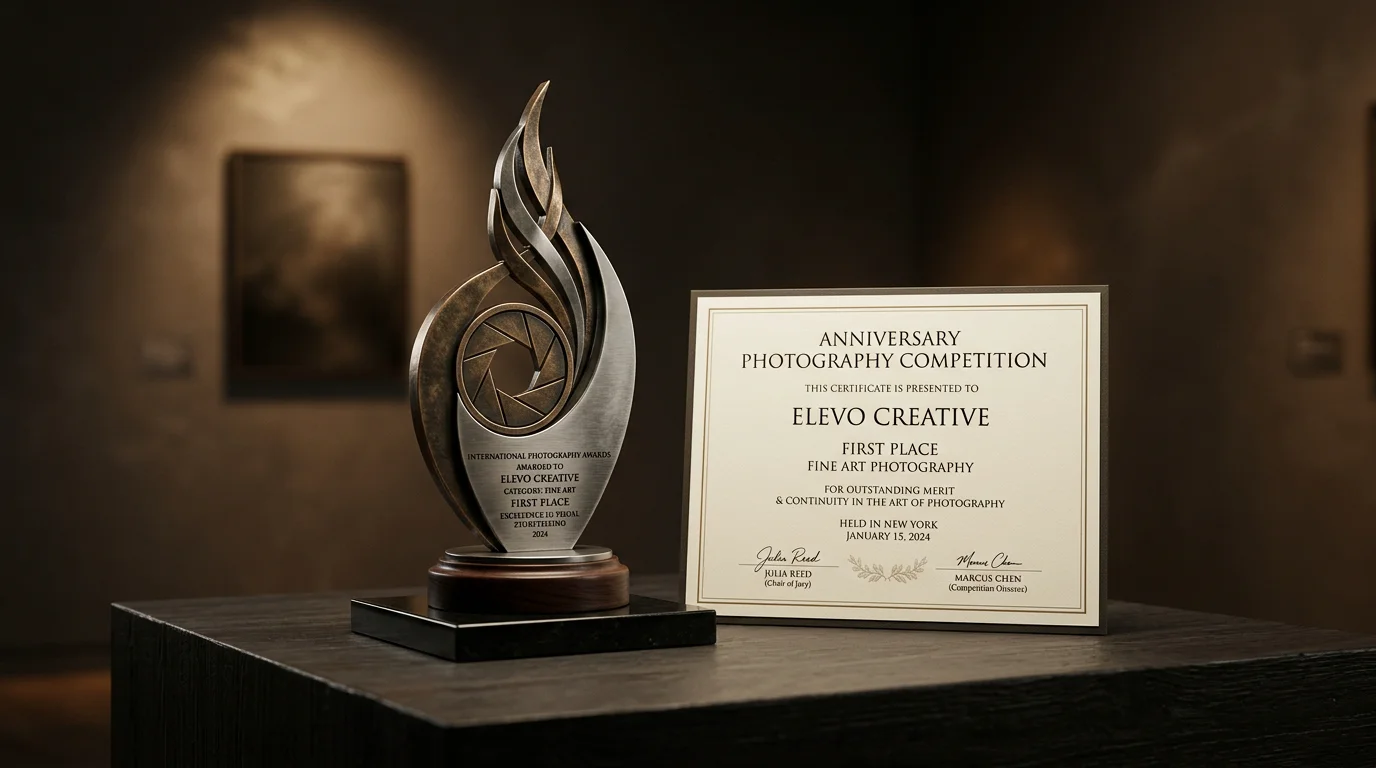
To illustrate how a transparent reward structure can be organised, the table below outlines the prize breakdown and recognition tiers we offer through our international competition.
| Placement | Cash prize | Additional recognition |
|---|---|---|
| 1st Prize | €1,000 | AVA Magazine feature, statuette, Cannes ceremony invitation |
| 2nd Prize | €500 | Editorial publication and winner logo |
| 3rd Prize | €200 | Digital certificate and profile badge |
| 4th to 10th | €100 each | Digital certificate and profile badge |
Recognition tiers, from Spotlight to Signature to Prestige, allow entrants to build visible credibility over time. Treat every placement, including a finalist mention, as a durable asset for your portfolio and profile.
Common mistakes that cost entrants a win
What separates a discarded entry from a shortlisted one? Frequently, avoidable errors rather than weak photography. The most common is ignoring the brief and submitting a technically fine image that simply does not answer the theme.
Other recurring pitfalls include over-editing, submitting near-duplicate frames, and missing the technical specifications. Late uploads are surprisingly common too, since many photographers underestimate how long careful selection takes. Give yourself days, not minutes, before a deadline.
Finally, do not enter only once and stop. Rejection is routine even for excellent work, because taste is subjective and fields are crowded. Persistence, refined by feedback, is the habit that separates occasional entrants from repeat winners.
Turning your next entry into recognition
Entering an amateur photography competition rewards preparation far more than luck. Choose a contest whose theme and jury match your strengths, edit with discipline, and read every rule before you submit. Value the full spectrum of recognition, from cash to publication to a credible jury credit, and treat each result as a building block. Above all, keep submitting: consistent, thoughtful participation is the most reliable path from private practice to public acknowledgement.
Take action with Art Vision Awards
You have refined your images and understood what jurors look for. The next step is placing your work in front of an international panel that can offer meaningful recognition. We built our competition for exactly that moment in a photographer’s development.
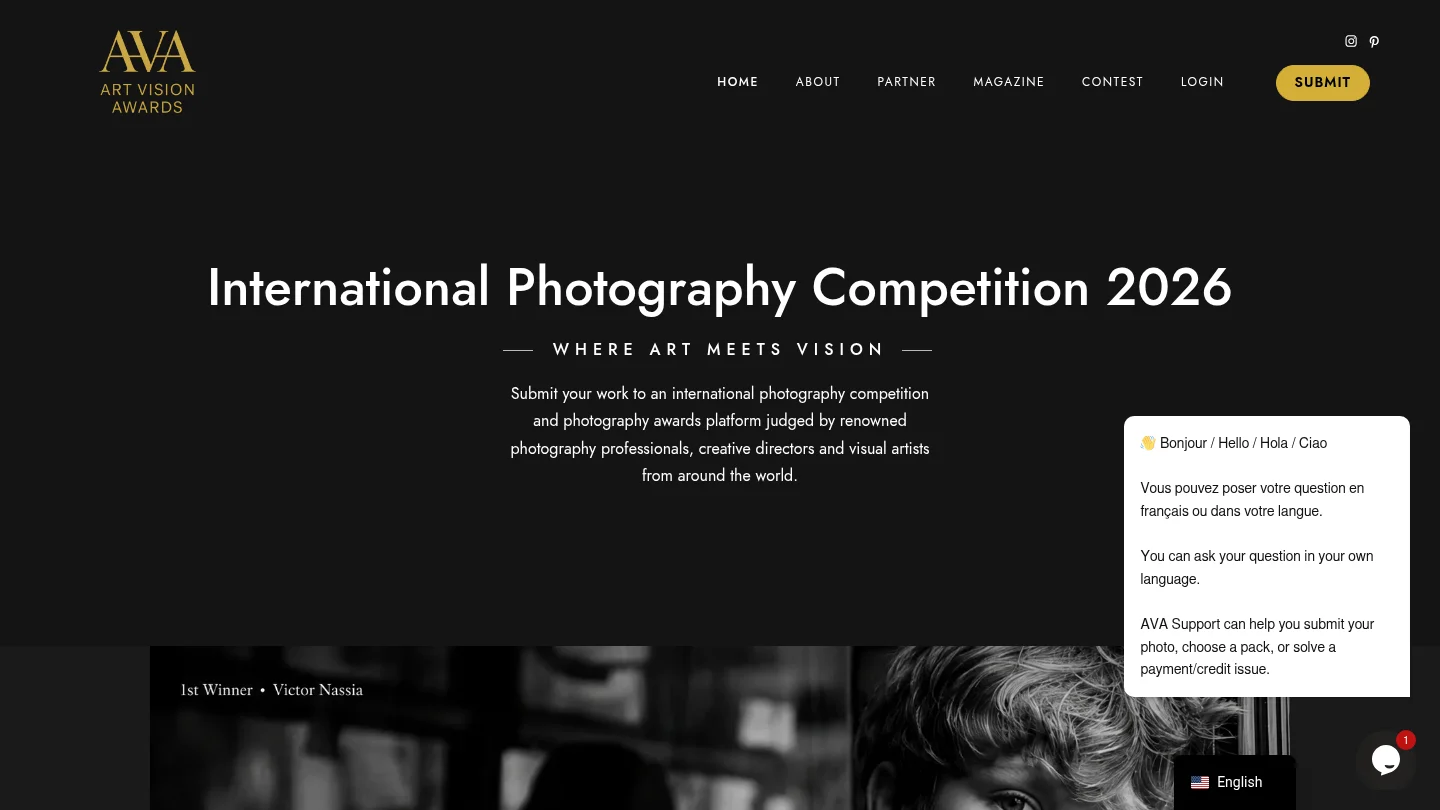
Through our International Photography Competition 2026, photographers and visual artists worldwide submit their work for review by a professional jury. Selected entries can receive cash prizes up to €2,500, editorial publication in AVA Magazine, downloadable winner logos, and profile badges, while premium placements include a physical statuette and a ceremony invitation in Cannes. Submission plans start with a single entry, so you may begin at the scale that suits you.
Frequently Asked Questions
Who qualifies as an amateur photographer for a contest?
Definitions vary by organiser. Many contests define an amateur by limited income earned from photography over a twelve-month period, while others simply welcome enthusiasts alongside experienced entrants. Always read the eligibility clause before you submit.
How many images should I submit to a competition?
It depends on the category. Single-image contests reward one decisive frame, while portfolio categories usually require a coherent series of several images. Submit only work that genuinely answers the theme, rather than filling every available slot.
Are paid photo contests worth the entry fee?
They can be, provided the organiser is transparent and the rewards are substantial. Weigh the fee against the prize, the publication opportunity, and the jury’s reputation. Free options exist too, though they may offer less visibility.
What recognition can I earn beyond cash prizes?
Recognition often includes editorial publication, digital certificates, winner logos, and profile badges. Through our photography awards, selected works may also gain magazine features and social media visibility, which support long-term portfolio credibility.
How do I improve my chances of winning?
Match your strongest image to the theme, edit for impact at small sizes, and follow every technical rule precisely. Persistence also matters, since many photographers submit repeatedly before a juror responds. Feedback from earlier entries should guide each new submission.


Comments are closed.