
Film Photography vs Digital Photography: Why Film Is Still Popular
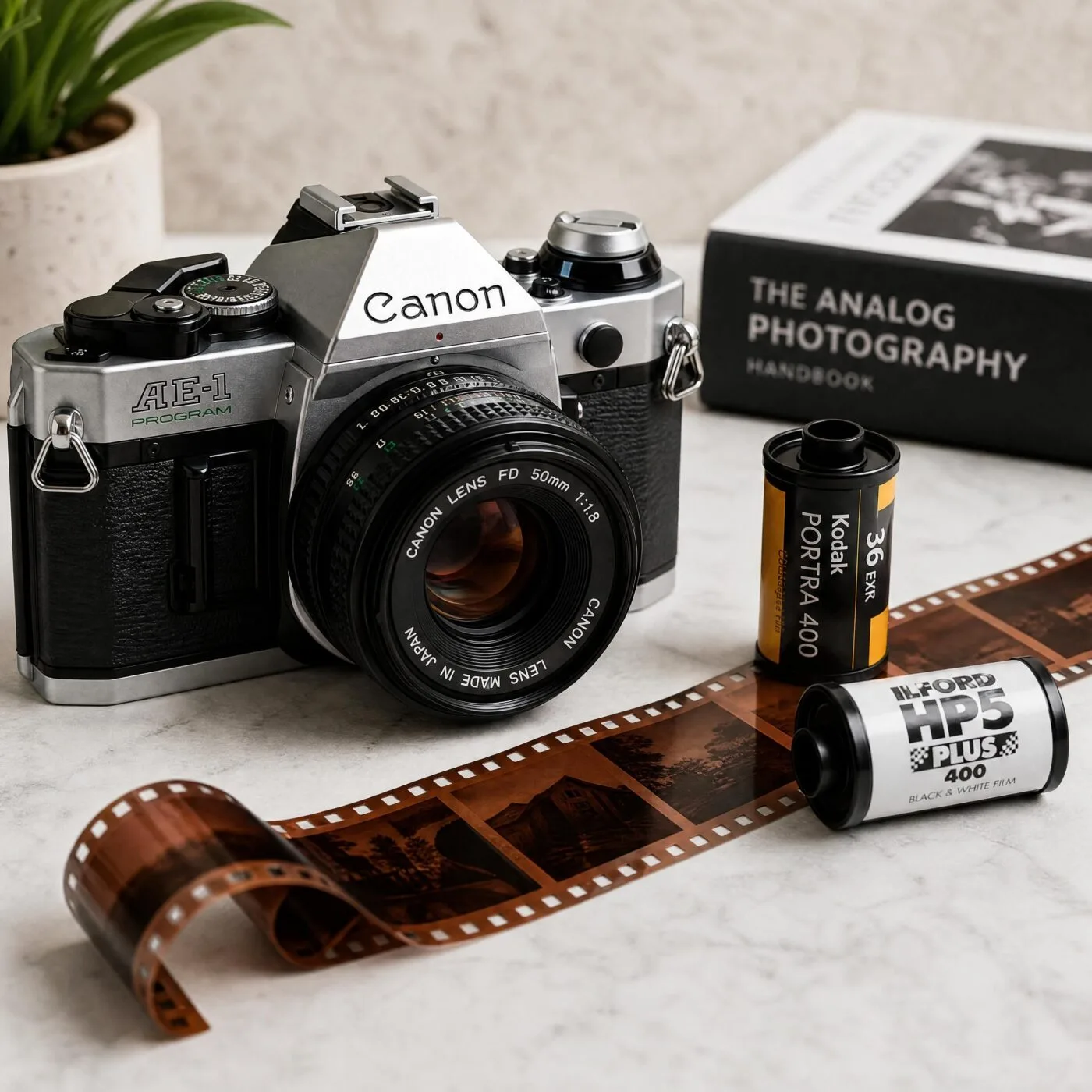
Film Photography vs Digital Photography: Why Film Is Still Popular
In an era dominated by rapid technological advancement, ultra-high-resolution smartphone sensors, and AI-driven image processing, a curious phenomenon has taken hold of the creative world. Photographers are increasingly looking backward. The central question of modern imaging remains: Why are photographers still choosing analog formats when digital photography is faster, cheaper per image, and technically far more advanced?
The debate of film photography vs digital photography is no longer about which medium is technically superior. Instead, the enduring attraction of film is deeply connected to the tactile shooting experience, the unmistakable visual character of the physical medium, the deliberate development process, and a creative discipline that digital often fails to replicate. In 2026, analog photography is experiencing a structural revival that is reshaping both the hobbyist and professional landscapes.
What Is Film Photography?
At its core, film photography is a chemical process. When you press the shutter button on an analog camera, light passes through the lens and strikes a strip of plastic coated with a light-sensitive emulsion containing microscopic silver halide crystals. This exposure creates a latent, invisible image that must be chemically processed before it can be viewed.
There are several primary formats and types of film that photographers use today:
- 35mm Film: The most common format, offering 24 or 36 exposures per roll, balanced for portability and detail.
- Medium Format Film: Larger film sizes (such as 120 film) that capture significantly more detail and offer a shallower depth of field, favored by portrait and fine-art photographers.
- Black-and-White Film: Emphasizes contrast, texture, and light without the distraction of color.
- Color Negative Film: The standard color format, known for its wide latitude and ease of development (C-41 process).
- Slide Film (Color Reversal): Produces positive, vibrant images directly on the film strip, requiring highly precise exposure.
Because you cannot immediately review your photos, the physical negatives must be developed in a darkroom or sent to a specialized laboratory to be processed and scanned into digital files or printed onto paper.
What Is Digital Photography?
In contrast, digital photography relies on an optoelectronic sensor—typically a CMOS or CCD chip—to capture light. Instead of a chemical reaction, millions of light-sensitive pixels convert incoming photons into electrical signals, which are then processed by an onboard computer and saved as digital data.
Digital systems offer unparalleled technical advantages:
- Instant Image Review: The ability to check exposure, focus, and composition immediately on an LCD screen.
- RAW Files: Uncompressed digital files that capture the maximum amount of sensor data, providing immense editing flexibility in post-production.
- High ISO Performance: Exceptional low-light capabilities with minimal noise, allowing for handheld shooting in near-darkness.
- Advanced Autofocus: AI-driven eye and subject tracking that ensures tack-sharp focus in milliseconds.
- Massive Storage: High-capacity memory cards that can hold thousands of images without needing to reload.
These efficiencies are precisely why digital photography quickly became the dominant format for commercial, editorial, and everyday photography starting in the early 2000s.
Film Photography vs Digital Photography: Main Differences
To understand how these two mediums compare in practice, it is helpful to look at their technical and operational specifications side-by-side.
| Feature | Film Photography | Digital Photography |
|---|---|---|
| Cost per photograph | High (ongoing cost of film rolls & processing) | Extremely low (free after initial equipment purchase) |
| Initial equipment cost | Low to moderate (vintage cameras are often affordable) | Moderate to high (modern digital bodies and lenses are expensive) |
| Image review | Delayed (requires chemical development) | Instant (on-camera LCD or tethered monitor) |
| Resolution | Variable (35mm equivalent to ~20MP; medium format can exceed 80MP) | Exceptionally high (modern sensors range from 24MP to over 100MP) |
| Dynamic range | Excellent highlight retention (color negative) | Excellent shadow recovery (RAW files) |
| Low-light performance | Limited by film speed (typically max ISO 1600 or 3200) | Outstanding (usable up to ISO 12800 and beyond) |
| Color rendering | Fixed by chemical emulsion of the specific film stock | Highly customizable (profiles, RAW white balance, and post-processing) |
| Grain vs digital noise | Organic, visually pleasing silver halide grain | Digital noise (chrominance/luminance artifacts, often undesirable) |
| Editing flexibility | Limited (mostly darkroom techniques or scanning adjustments) | Virtually limitless (non-destructive RAW editing in Lightroom/Photoshop) |
| Shooting speed | Slow and manual (often single frame or 1-3 frames per second) | Extremely fast (continuous shooting up to 20-120 frames per second) |
| Storage | Physical negative binders and archival sleeves | Hard drives, SSDs, and cloud storage |
| Long-term archiving | Highly stable if stored in cool, dry conditions (negatives last 100+ years) | Vulnerable to digital rot, file corruption, and format obsolescence |
| Workflow | Slow, physical, and highly hands-on | Fast, streamlined, and computer-centric |
| Learning curve | Steep (mistakes are costly and immediately visible upon development) | Forgiving (instant feedback allows for rapid trial and error) |
Why Is Film Photography Still Popular?
Given the clear technical superiority of modern digital cameras, the ongoing film photography comeback in 2026 might seem counterintuitive. However, the resurgence of analog photography is driven by factors that are experiential rather than technical.
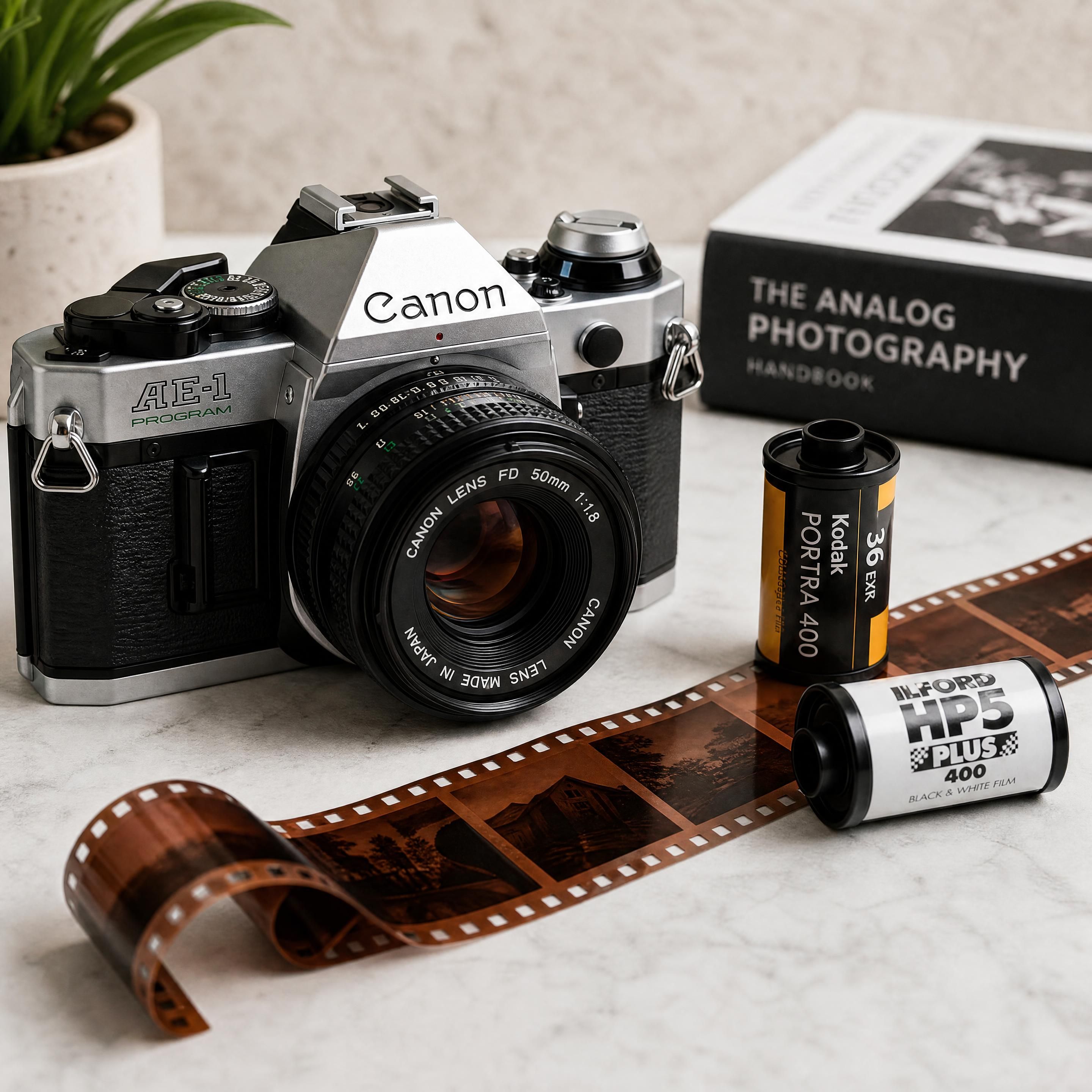
When exploring why film photography is popular today, we must look beyond technical specs. First, film forces a slower and more intentional shooting process. When you only have 24 or 36 exposures on a roll of film, every press of the shutter button has a financial and creative cost. This limitation encourages photographers to pause, analyze the light, check the composition, and wait for the perfect moment before taking the shot.
Furthermore, there is a deep appreciation for the mechanical nature of vintage film cameras. Operating a completely mechanical camera—feeling the weight of the metal, winding the advance lever, and hearing the physical snap of the cloth shutter—creates a tactile connection to the craft that menus and touchscreens cannot replicate.
Finally, the anticipation of waiting for film to be developed brings a sense of surprise and joy back to photography. The physical reality of holding a tangible negative strip provides an archival security and a sense of permanence that digital files, buried in hard drives, rarely offer.
📊 127% increase since 2020 – Global Film Wholesale Demand
Choosing Your Gear: The Best Film Cameras for Beginners and Pros
If you are looking to get started, some of the best film cameras are classic mechanical SLRs and rangefinders. For beginners, the Pentax K1000, Canon AE-1, and Olympus OM-1 are widely considered the gold standards due to their robust mechanical builds and fully manual controls. For advanced and professional photographers, cameras like the legendary Leica M6 rangefinder or the medium-format Hasselblad 500C/M remain highly prized tools that hold their value exceptionally well in the vintage camera market.
The Film Photography Aesthetic
One of the primary drivers of analog’s popularity is the unique film photography aesthetic. This aesthetic is characterized by distinctive visual traits:
- Organic Grain: The physical structure of silver halide crystals creates a texture that adds depth and three-dimensionality.
- Highlight Roll-Off: Film retains details in bright areas exceptionally well, transitioning smoothly from light to shadow without harsh digital clipping.
- Color Response: Different chemical emulsions have unique color palettes. For example, Kodak Portra is famous for warm, natural skin tones, while Fujifilm Velvia is celebrated for highly saturated, dramatic landscapes.
- Contrast and Imperfections: Gentle chromatic aberrations, subtle vignette, and organic contrast curves give film images a perceived warmth and “soul.”
Importantly, the film look is not a single, uniform appearance. Selecting a specific film stock is a creative decision akin to choosing a digital color profile, but with physical, chemical consequences. However, it is a misconception to claim that film automatically creates better-looking photographs; rather, it provides an organic starting point that many find more emotionally resonant than the clinical perfection of digital.
Film Grain vs Digital Noise
While both represent texture in low-light or high-sensitivity images, film grain and digital noise are fundamentally different. Film grain is composed of physical clumps of silver halide crystals. Because these grains are randomly distributed across each frame, they create an organic, textured pattern that many photographers find aesthetically pleasing, even comparing it to the texture of a canvas.
Digital noise, on the other hand, is an electronic artifact caused by signal interference when a digital sensor’s ISO is pushed. It appears as geometric, colored pixels (chrominance noise) or static-like grain (luminance noise). Because digital noise is mathematically structured and can degrade color accuracy, photographers generally strive to eliminate it, whereas they often deliberately choose high-ISO film stocks like Kodak Tri-X or Ilford Delta 3200 precisely for their heavy grain.
Image Quality: Is Film Better Than Digital?
When comparing image quality, a balanced perspective is essential. Modern digital sensors have achieved an extraordinary level of technical perfection. A modern full-frame digital camera easily outperforms 35mm film in terms of absolute sharpness, resolution, and low-light clarity.
However, film quality scales dramatically with format size:
- 35mm Film: Generally resolves details equivalent to roughly 15 to 20 megapixels, depending on the film stock and the quality of the scanner.
- Medium Format (120): Offers a much larger surface area, easily matching or exceeding 50 megapixels of resolving power when paired with high-end drum scanners.
- Large Format (4×5 or 8×10): Captures an astonishing amount of detail that can surpass even the most expensive medium-format digital systems.
Ultimately, digital cameras provide unmatched technical image quality, consistency, and convenience. Film, however, offers a different kind of quality—one defined by character, depth, and organic rendering rather than raw megapixel counts.
Dynamic Range and Highlights
Dynamic range refers to the ratio between the brightest highlights and the darkest shadows that a camera can capture. Here, film and digital handle light in fundamentally different ways.
Color negative film is highly forgiving of overexposure. Because of the way chemical emulsions react to light, highlights roll off gently, preserving detail even when overexposed by several stops. This makes film highly popular for outdoor portraits in bright sunlight, where harsh highlights are common.
Conversely, digital sensors excel at shadow recovery. If a digital image is underexposed, a modern RAW file allows photographers to pull incredible detail out of the shadows in post-production. However, if digital highlights are overexposed (“blown out”), that data is permanently lost, resulting in harsh, white patches.
Cost of Film Photography vs Digital Photography
The financial realities of both mediums are vastly different and depend heavily on your shooting volume.
The Ongoing Cost of Film:
- Consumables: A single roll of 35mm film in 2026 costs between $10 and $20, depending on the stock.
- Processing & Scanning: Professional laboratory development and high-resolution scanning add another $15 to $25 per roll.
- Per-Image Cost: At roughly $1.00 per shot, film requires financial discipline.
📊 Kodak Alaris roll prices increased by £1 to £3 in early 2026 – Film Pricing Pressures
The Upfront Cost of Digital:
- Equipment: A professional digital camera body and a set of high-quality lenses can easily cost thousands of dollars upfront.
- Infrastructure: Digital photography requires memory cards, powerful computers, storage drives, and software subscriptions (such as Adobe Creative Cloud).
- Depreciation: Digital camera bodies depreciate rapidly as manufacturers release upgraded models every few years.
While digital photography is significantly cheaper per photograph after the initial investment, film photography presents a lower barrier to entry with inexpensive vintage cameras, despite its high ongoing operational costs.
Does Film Make You a Better Photographer?
A common argument within the photographic community is that learning on a film camera vs digital camera accelerates your understanding of photographic fundamentals. Because film offers no instant feedback, you cannot rely on trial and error.
To successfully shoot film, you must understand the exposure triangle (aperture, shutter speed, and ISO) before you press the shutter. You must meter the light accurately, focus manually, and compose deliberately. This forced discipline discourages “spray and pray” habits—the practice of taking hundreds of rapid-fire digital images in the hope that one will turn out.
While film does not magically bestow talent, the limitations of the medium act as an excellent teacher, training your eye to see light and composition more critically.
Film Photography for Portraits
In the realms of fashion, editorial, and wedding photography, film remains a highly prized tool. Portrait photographers are drawn to the way specific film stocks render human skin. The organic grain structure and gentle contrast curves of films like Kodak Portra 400 or Fujifilm Pro 400H provide a soft, flattering rendering of skin tones that digital sensors often render too sharply or clinically.
Furthermore, the slower pace of an analog portrait session changes the dynamic between the photographer and the subject. Without the distraction of constantly checking the LCD screen, the photographer remains engaged with the subject, resulting in more natural expressions and a more intimate creative connection.
“Film’s transition to a specialty product creates higher margins and a sustained, data-supported growth rather than temporary hype.”
— Serrano Rey
Film Photography for Street Photography
Street photography has a rich, historical connection to 35mm film photography. Masters of the craft like Henri Cartier-Bresson and Vivian Maier captured iconic moments using compact, quiet rangefinders and twin-lens reflex cameras.
Today, many street photographers prefer vintage mechanical cameras because they are lightweight, unobtrusive, and do not rely on battery power. Shooting street scenes on film encourages a state of hyper-awareness. Without autofocus or auto-exposure to rely on, the photographer must zone-focus and anticipate the action, capturing a fleeting slice of life at the exact decisive moment.
Why Younger Photographers Are Discovering Film
The current resurgence of film is heavily driven by a demographic shift. In 2026, Gen Z and millennial creatives represent a massive portion of the analog market.
📊 Under-25 photographers represent 41% of new film customers – Gen Z Market Share
For a generation raised entirely on digital screens and smartphone algorithms, film represents a tangible rebellion against digital perfection. The physical process of loading a roll, winding the shutter, and holding physical negatives offers a sensory experience that digital cannot match. Social media platforms have also played a significant role, exposing millions of young creatives to the warm colors, soft grain, and nostalgic feel of traditional film stocks.
Can Digital Photography Reproduce the Film Look?
With modern software, the visual gap between film and digital has narrowed significantly. Camera manufacturers like Fujifilm build highly sophisticated film simulations directly into their digital cameras, replicating the color profiles of classic stocks like Classic Chrome, Provia, and Astia. Additionally, Lightroom presets, LUTs, and advanced grain engines allow digital editors to mimic highlight roll-off, color shifts, and grain structures with remarkable accuracy.
However, while digital tools can recreate the final visual output of film, they cannot replicate the physical process. The deliberate pace, the lack of instant gratification, the mechanical feedback of vintage gear, and the chemical magic of the darkroom remain entirely unique to analog.
The Advantages of Digital Photography
To appreciate both mediums, we must recognize why digital remains the undisputed king of the professional industry:
- Immediate Turnaround: Critical for news, sports, and commercial shoots where clients require images in real-time.
- Low-Light Mastery: The ability to shoot clean images at high ISOs opens up creative possibilities that film simply cannot support.
- Workflow Efficiency: Digital files are easily backed up, edited non-destructively, and delivered globally in seconds.
- Cost-Effectiveness: For high-volume shooters (such as sports or wedding photographers), digital is financially indispensable.
The Advantages of Film Photography
Conversely, film offers distinct advantages of film photography that keep it vital in 2026:
- Distinct Character: An organic, timeless aesthetic straight out of the camera without hours of digital post-processing.
- Mindful Process: A meditative workflow that encourages artistic discipline and creative focus.
- Physical Legacy: Archival negatives that exist in the physical world, safe from hard drive crashes and digital obsolescence.
- Tactile Connection: A mechanical, hands-on relationship with the tools of the craft.
Should You Shoot Film or Digital?
Choosing between film and digital depends entirely on your creative goals, workflow requirements, and budget.
Choose film if:
- You want to slow down and enjoy a highly deliberate, tactile creative process.
- You appreciate the physical permanence of negatives and darkroom prints.
- You love the organic colors, textures, and highlight roll-off of specific film stocks.
- You want to master manual exposure and composition discipline.
Choose digital if:
- You shoot professionally under tight deadlines and require immediate delivery.
- You need advanced features like high-speed autofocus, rapid burst rates, and exceptional low-light performance.
- You shoot large volumes of images (e.g., sports, wildlife, events).
- You prefer a highly flexible, computer-based editing workflow.
Choose both if:
- You want the best of both worlds. Many modern photographers use digital cameras for their professional, high-volume work, while carrying a vintage 35mm or medium-format film camera for personal projects, travel, and creative experimentation.
Key Statistics
📊 127% increase in global wholesale film demand since 2020 (Source: Serrano Rey Industry Report 2026)
💡 312 new film laboratories opened globally in 2025 alone (Source: Glyn Dewis Analog Market Analysis)
📈 41% of new film customers are under the age of 25, highlighting Gen Z’s role in the analog resurgence (Source: Serrano Rey Market Trends 2026)
🔋 $1.68 Billion is the projected valuation of the vintage camera market by 2031 (Source: Cognitive Market Research 2026)
Frequently Asked Questions
Is film photography better than digital photography?
Neither medium is universally “better” than the other. Digital photography is technically superior in terms of speed, convenience, low-light capability, and cost efficiency. Film photography, however, offers a unique aesthetic character, physical permanence, and a tactile, intentional shooting experience that many photographers find more creatively fulfilling.
Why is film photography becoming popular again?
The film photography comeback is driven by a desire for a slower, more mindful creative process, digital fatigue, and an appreciation for the organic visual aesthetic of analog film. Younger generations, in particular, are drawn to the physical and tactile nature of vintage cameras and physical negatives.
Is film photography expensive?
Yes, film photography has become increasingly expensive. While vintage film cameras can be purchased affordably, the ongoing costs of buying film rolls, chemical development, and high-resolution scanning add up quickly, averaging $25 to $45 per roll in 2026.
Does film have better image quality than digital?
Technically, modern digital sensors deliver higher resolution, sharpness, and low-light clarity than standard 35mm film. However, medium and large-format film can still capture extraordinary levels of detail that rival or exceed high-end digital systems, while offering a unique highlight roll-off and organic color rendering.
Is 35mm film still worth using?
Absolutely. 35mm film remains the most accessible and versatile analog format. It offers a wide variety of film stocks, a massive selection of affordable vintage cameras, and a classic aesthetic that is perfect for learning the fundamentals of photography.
Do professional photographers still use film?
Yes, many professional photographers in portraiture, fashion, weddings, and fine art continue to shoot film. They use it both for its distinctive aesthetic and to offer a premium, slow-paced experience to their clients.
Can digital cameras reproduce the film look?
Digital cameras and editing software can simulate the colors, contrast, and grain of film very closely through presets, profiles, and film simulations. However, they cannot replicate the physical experience, delayed gratification, and deliberate creative discipline of shooting on physical film.
Is film photography good for beginners?
Yes. Although it has a steeper learning curve and every mistake costs money, shooting film is one of the best ways for a beginner to thoroughly learn manual exposure, composition, and the core mechanics of photography.
Conclusion
The enduring debate of film photography vs digital photography ultimately reveals that photography is about far more than technical efficiency and megapixel counts. Film has not survived because digital technology failed; rather, it has flourished because the physical, chemical, and mechanical process of analog photography offers something that digital cannot duplicate: a slow, mindful, and tactile connection to the art of capturing light.
Digital photography remains the most practical, powerful, and versatile tool for the vast majority of photographic applications. Yet, film continues to coexist alongside it as a vital, expressive medium. By understanding the unique strengths of both formats, photographers in 2026 do not have to choose a side—they can embrace both as powerful tools in their creative arsenal.
“Film photography was supposed to be dead… Yet here we are in 2026, and something remarkable is happening.”
— Glyn Dewis
Comments are closed.