
Black and White Award 2026: A Complete Guide for Photographers

Black and White Award 2026: A Complete Guide for Photographers
Summary: A black and white award in 2026 is an international competition that judges monochrome photography on tonal control, composition, and emotional impact. Entrants submit single images or series, compete across categories such as portrait, street, and landscape, and can earn cash prizes, certificates, and editorial publication. Success depends on strong concept, clean contrast, and careful category selection.
How does a single monochrome frame rise above thousands of entries to claim an international title? Every year, photographers across the world confront that question when they enter our photography awards and other juried competitions. The appeal of the black and white photography awards in 2026 lies in the discipline itself, where color is removed and only light, form, and feeling remain to persuade a jury.
Monochrome is not a relic. According to PetaPixel and Lomography, black and white film stocks have taken a larger share of community uploads over the past fifteen years, with titles such as Ilford HP5 gaining ground since 2018. That renewed appetite is one reason juried monochrome competitions continue to attract serious talent, and it shapes how you should approach an entry this year.
What a black and white award 2026 actually rewards
The term black and white award 2026 covers a family of international contests that celebrate monochrome imagery across genres. These competitions do not reward color grading or saturation. They reward tonal range, contrast, texture, and the ability to communicate a subject when the palette is stripped to grays.
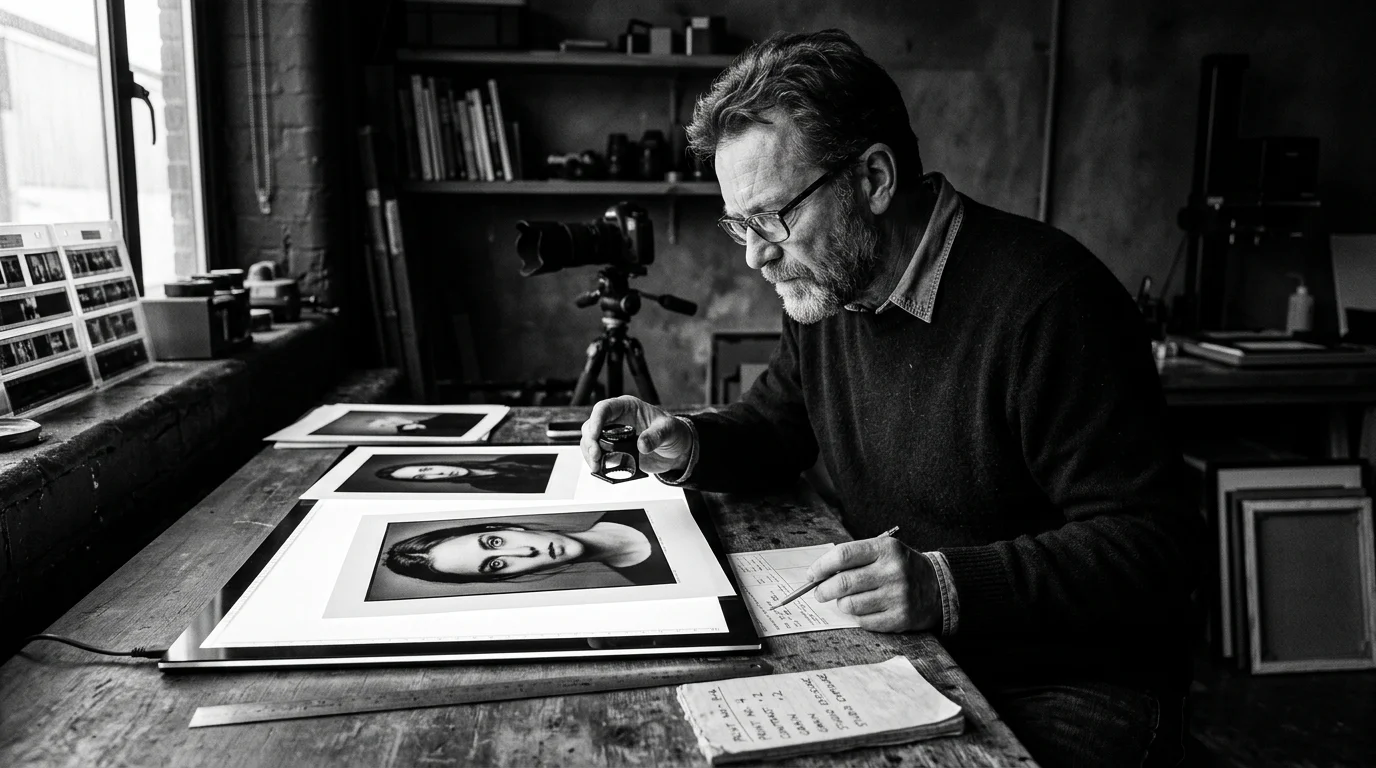
Most reputable competitions accept both traditional film and digital captures converted to monochrome. Judges look for intent, not gimmickry. A technically clean image with no idea rarely outperforms an imperfect frame carrying genuine emotion. If you want to understand why the medium still resonates with juries, our editorial on why black and white still feels timeless explains the aesthetic and psychological pull of monochrome.
Why monochrome photography endures with juries
There is a practical explanation behind the staying power of black and white work. Analog interest has grown steadily, and demand for monochrome materials reflects it. The global market for black and white photographic paper in Europe was valued at roughly 252 million dollars in 2025, with projections toward 383 million dollars by 2033, signaling that darkroom and fine-art printing remain commercially alive.
The broader industry provides context for why competitions matter. The global photography market was valued at about 105.2 billion dollars in 2023, according to figures compiled from Verified Market Reports, and it continues to expand at a compound annual rate near 4.4 percent. Within a crowded visual economy, a monochrome award functions as a filter of credibility, a mark that separates deliberate artistry from casual output.
Timeless monochrome imagery also travels well across cultures. Because it removes the distraction of color, a strong grayscale frame reads with the same clarity in Tokyo, Paris, or New York. That universality is precisely what an international jury values when the entry pool spans dozens of countries.
Categories and themes to expect
Consider a street photograph of a lone figure crossing a rain-slick square at dawn. Where does it belong? Category selection is a strategic decision, not an afterthought. Most monochrome photography competitions organize entries into recognizable themes so that similar work is judged fairly against its peers.
Common categories across international black and white contests include:
- Portrait and human presence, where expression and gesture carry the frame
- Street photography, rewarding timing and decisive moments
- Landscape and architecture, where geometry and tonal separation dominate
- Fine art and conceptual, allowing abstraction and staged narratives
- Nature and wildlife, emphasizing texture and form
- Open or experimental themes, for images that resist a single label
Portrait work deserves particular attention this year. If you photograph people, our photography competitions for 2026 include a dedicated human presence and portrait category built specifically for that discipline. Choosing the category that matches your intent gives your image the fairest possible reading.
Prizes, recognition, and what winners receive
Cash matters, but it is rarely the whole story. Recognition, publication, and visibility often outlast a single payout. The table below compares the kinds of rewards you may encounter, positioning what we offer alongside the typical structures of entry-level and premium monochrome contests.
| Reward | Art Vision Awards 2026 | Typical entry-level contest | Typical premium contest |
|---|---|---|---|
| Cash prizes | Up to €2,500 (1st €1,000) | Small or none | Varies by fund |
| Editorial publication | Yes, in AVA Magazine | Rare | Sometimes |
| Physical trophy | Yes, AVA statuette for premium tiers | No | Occasionally |
| Digital badges and certificates | Yes, plus AVA Winner logo | Sometimes | Usually |
| International jury review | Yes, named professional panel | Limited | Yes |
Beyond the prize itself, the most valuable outcome is often exposure. Editorial features, downloadable winner logos, and profile recognition give your work a professional footprint that supports commissions and gallery interest well after the announcement.

How to prepare a winning submission
Contests reward preparation as much as talent. Reportedly, more than 60 percent of professional photographers enter competitions to gain exposure and clients, according to a WifiTalents report, which means your entry competes against motivated peers. A disciplined process improves your odds.
Follow a clear sequence before you upload:
- Edit ruthlessly. Submit only images that hold up at full resolution, with clean blacks and controlled highlights.
- Match image to category. A misplaced entry weakens an otherwise strong photograph.
- Refine the conversion. Deliberate contrast and tonal separation matter more than heavy filters.
- Consider a series. A coherent set of images can demonstrate vision more convincingly than a single frame.
- Read the rules. File format, dimensions, and eligibility requirements are non-negotiable.
Understanding how juries actually decide is a genuine advantage. Our guide on what it takes to become a photography contest winner breaks down the qualities that repeatedly separate finalists from honorable mentions.
Deadlines, fees, and entry logistics
Timing shapes your strategy. Many international monochrome competitions run early-bird and final deadlines, with lower fees for entrants who commit sooner. Submission plans commonly scale by the number of images, so entering one, four, or seven photographs changes both your cost and your statistical exposure across categories.
Plan your entry around three fixed points: the final deadline, the eligible file specifications, and the categories you intend to target. Submitting several strong images across complementary categories generally improves your chances more than flooding a single theme with variations of the same idea.
Turning your monochrome vision into recognition
The path to a black and white award in 2026 is less about equipment and more about judgment. Choose images that say something when color is removed, place each one in the category that serves it best, and respect the technical requirements to the letter. Monochrome continues to earn its place in a saturated visual world precisely because it demands intention. Curate a small, confident selection, refine your tonal work, and submit with a clear point of view. The photographers who advance are rarely the ones with the most entries; they are the ones with the clearest ideas.
Take action with Art Vision Awards
If you are ready to place your monochrome work in front of an international professional jury, now is the moment to act. We built our competition to give photographers and visual artists a credible route to recognition, editorial exposure, and lasting professional visibility.
Through our International Photography Competition 2026, you can submit your work for jury review, compete for cash prizes, and earn editorial publication in AVA Magazine along with downloadable winner badges. Flexible submission plans let you enter one, four, or seven images, and premium placements include a physical AVA statuette. Start for free and let your monochrome vision reach a global audience.
Frequently Asked Questions
Who can enter a black and white photography award in 2026?
Most international monochrome competitions welcome both professionals and amateurs from any country. Eligibility usually depends on image rights and technical specifications rather than experience level. You should confirm each contest’s specific rules before submitting.
Can digital photos qualify, or only film?
Both are generally accepted. Reputable awards judge black and white images created through traditional film or digital capture converted to monochrome. The jury evaluates tonal quality and intent, not the recording medium.
What do winners typically receive?
Rewards commonly include cash prizes, certificates, and downloadable badges. Through our Art Vision Awards competition, selected work can also earn editorial publication in AVA Magazine, and premium placements include a physical statuette. Recognition and exposure often prove as valuable as the cash itself.
How many images should I submit?
Quality outperforms quantity. It is wiser to submit a few carefully edited images across the categories that suit them than to flood one theme. Many competitions offer submission plans of one, four, or seven photographs.
How should I choose the right category?
Match each image to the theme that best serves its subject and intent. A strong portrait entered under landscape will be judged unfavorably against its peers. Read the category descriptions carefully and place each photograph where it competes fairly.

Comments are closed.