How Photography Competitions Are Judged: A 2026 Guide
How Photography Competitions Are Judged: A 2026 Guide
Summary: Photography competitions are evaluated by professional jurors who score each entry against defined criteria. These usually combine technical execution with originality, composition, emotion, storytelling and overall visual impact. Depending on the contest, a single judge or a multi-round panel assigns scores, compares finalists and reaches a consensus on the strongest images.
A single photograph may pass through several rounds of review before it reaches a shortlist, and the difference between a finalist and a forgotten entry often comes down to how each juror reads the frame. If you are preparing to enter an international contest, understanding the mechanics of evaluation matters as much as owning capable equipment. For a practical starting point, consult our guide on how to prepare a strong submission before you finalize your selection.
Understanding how photography competitions are judged removes much of the mystery from the process and helps you enter with intent. The stakes are genuinely global: in the 2026 World Press Photo Contest, organizers reported that entrants local to Africa rose by 33% in 2025, a sign that competition pools are widening and that jury standards are applied to an increasingly diverse field.
What jurors actually evaluate in an entry
Most reputable contests do not reward a photograph for a single quality. Instead, jurors weigh a cluster of factors that together determine whether an image stands apart. The International Photography Awards, for instance, asks each judge to assess entries on originality, creativity, excellence of execution and overall impact, along with relevance to the chosen category.
Across the industry, the recurring pillars are consistent. Jurors look for technical execution, meaning sharp focus, controlled exposure and clean handling of light. They also look for emotional impact, the reaction that makes a viewer pause. Beyond these, they weigh originality, composition and storytelling. A frame that is merely well exposed and in focus rarely advances, because those qualities are considered a baseline rather than an achievement.

How the scoring and panel process works
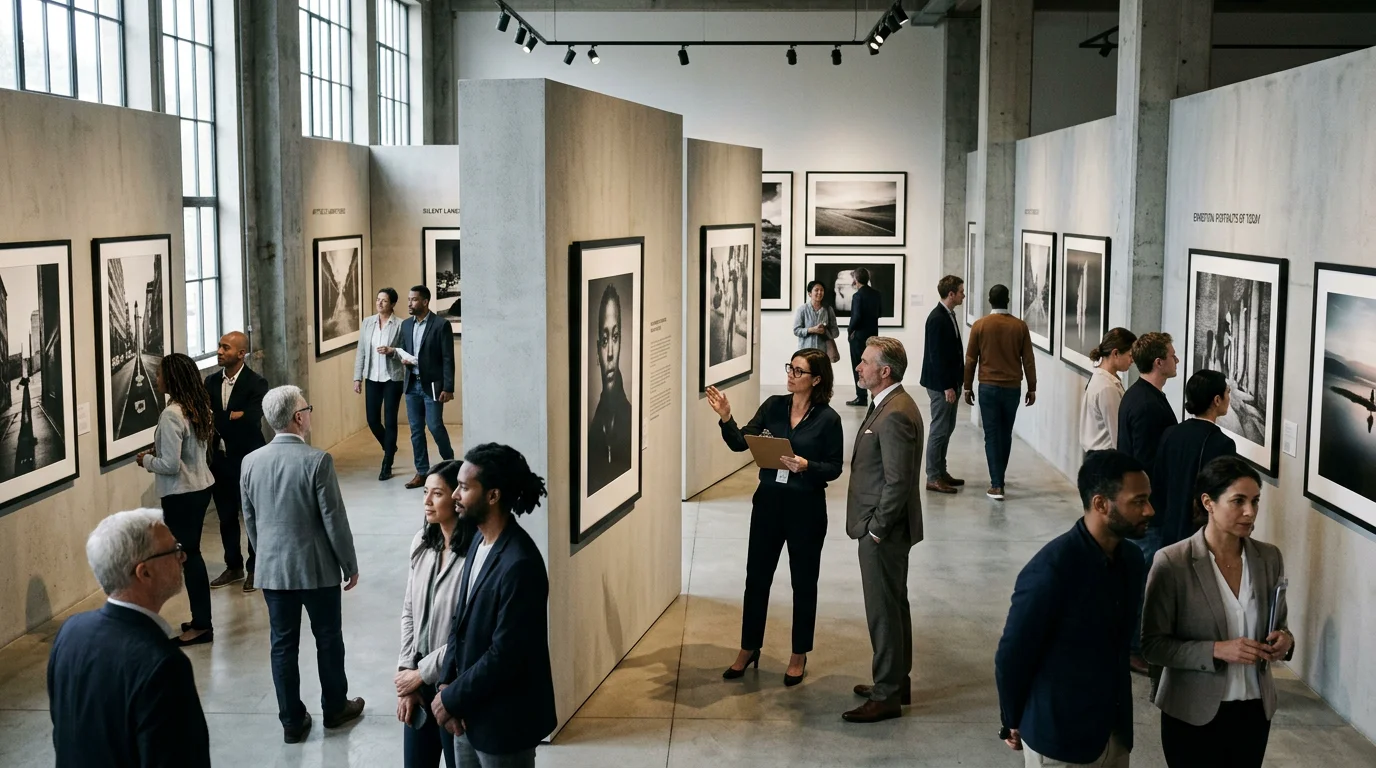
The structure of evaluation varies with the scale of the contest. At the club level, a single experienced photographer may score every entry alone, which places significant weight on one person’s taste. At the professional level, competitions are typically judged by a panel, where each juror scores independently before scores are aggregated and discussed.
Large international contests formalize this further through multiple rounds. The World Press Photo Contest, for example, uses regional juries composed of five professionals who bring cultural and political knowledge of the area they assess, before entries progress toward a global stage. A panel model reduces individual bias, because an image that one juror underrates can be defended, challenged and rescored by others.
Some organizations judge against a fixed standard rather than head to head, scoring each image on a numeric scale so that every entry competes against a benchmark of excellence. Understanding which model a contest uses helps you anticipate how your work will be read. If you wish to see how a structured international review is organized, our overview of how it works outlines each stage clearly.
Comparing common judging models
The table below summarizes the main approaches you are likely to encounter, so you can gauge how much a single opinion or a collective consensus will shape your result.
| Judging model | Who evaluates | Typical basis |
|---|---|---|
| Single judge (club level) | One experienced photographer | Personal expertise and commentary |
| Professional panel | Around five jurors scoring independently | Aggregated scores with rescoring |
| Standard-based scoring | Panel scoring against a benchmark | Numeric scale, image versus standard |
| Art Vision Awards | International professional jury | Quality, originality and visual impact across rounds |
No single model is inherently fairer than another, but multi-juror structures generally distribute subjectivity more evenly. At Art Vision Awards, we rely on an international professional jury so that entries are assessed by varied expertise rather than a single viewpoint. You can review the composition of our jury to understand the range of backgrounds involved.
Why emotion and storytelling separate winners
Ask any experienced juror what distinguishes a shortlisted image, and the answer rarely stops at sharpness. A photograph that documents a scene competently but conveys no feeling tends to plateau in scoring. The images that advance carry a personal signature, a moment, or a mood that resonates beyond the literal subject.
This is where connotation, the implied meaning of a frame, matters more than mere description. Jurors reward work that communicates intent through light, gesture, tone and framing. If your photograph makes a viewer feel curiosity, tension or wonder, it is already competing on the terrain that decides awards. Our reflection on what makes an award-winning photograph explores these qualities in greater depth.
Common reasons strong images are eliminated
Technical merit will not save an entry that ignores the rules. According to reporting from Digital Camera World, entries in major 2026 awards are judged on creative merit, technical execution and suitability for the intended use, yet many photographers lose eligibility for reasons unrelated to image quality.
The most frequent pitfalls include:
- Submitting outside the stated category or theme.
- Exceeding permitted editing or manipulation limits.
- Ignoring file, resolution or format requirements.
- Failing to provide original files when requested.
Ethics also carry real weight, particularly in nature and documentary genres. In the Audubon Photography Awards, for example, judges determine whether alterations to an image are significant enough to warrant disqualification, and entries that suggest harm to wildlife are penalized. Reading the full rules before you select your images is the single most reliable way to avoid an avoidable exit.
How to align your submission with juror expectations
Once you understand the evaluation logic, you can make deliberate choices. Curate ruthlessly: enter only images that combine clean technical craft with a distinct point of view. A smaller set of exceptional frames outperforms a larger set of competent but generic ones.
Match each image to the category it genuinely fits, and confirm that your files meet every specification. Finally, ask whether the photograph would still hold a stranger’s attention with no caption. If the answer is yes, you are presenting work built to survive a demanding jury panel rather than merely to satisfy a checklist.
Final perspective on entering with confidence
Grasping how photography competitions are judged transforms the way you approach every submission. The strongest entries pair disciplined technical execution with emotion, originality, composition, storytelling and genuine visual impact, then respect the practical rules that keep them eligible. Treat each contest as a conversation with informed jurors, curate with honesty, and let your clearest creative voice lead. That combination, far more than gear, is what carries a photograph from the entry pool to recognition.
Take action with Art Vision Awards
If you feel ready to test your work against an informed international standard, the natural next step is to place it in front of a professional jury that evaluates quality, originality and visual impact with care.
Through our international photography awards competition, photographers and visual artists worldwide submit their work for professional jury review, with recognition that can include cash prizes, digital award certificates, editorial publication in AVA Magazine and social media visibility. Submission plans start free and scale from one to seven entries, so you can begin at the level that suits your portfolio and your ambitions.
Frequently Asked Questions
Are photography competitions judged objectively or subjectively?
Both elements are present. Jurors apply defined criteria such as technical execution, composition and impact, yet personal response inevitably influences scoring. Panel systems reduce individual bias by aggregating several independent opinions.
How many judges usually review an entry?
It depends on the contest scale. A camera club may rely on a single judge, while professional and international competitions often use panels of around five jurors. Larger contests add multiple rounds to narrow the field progressively.
Does technical perfection guarantee a win?
No. Clean focus and correct exposure are treated as a baseline rather than a distinction. Winning images add originality, emotion and storytelling that make jurors pause and remember the frame.
What most often disqualifies an otherwise strong photograph?
Rule violations rather than image quality. Common causes include wrong category placement, excessive editing, incorrect file specifications, or failure to supply original files. Reading the full rules before submitting prevents most of these outcomes.
How does Art Vision Awards evaluate submitted work?
At Art Vision Awards, entries are reviewed by an international professional jury that assesses quality, originality and visual impact. Selected works may receive awards, certificates and editorial publication in AVA Magazine, alongside broader visibility.


Comments are closed.